Velocity data has to *change* something
Compact radar chronographs are easy enough to buy in Canada now. The better question for newer precision shooters is whether the velocity number will change the next load, zero, solver input, or range note.

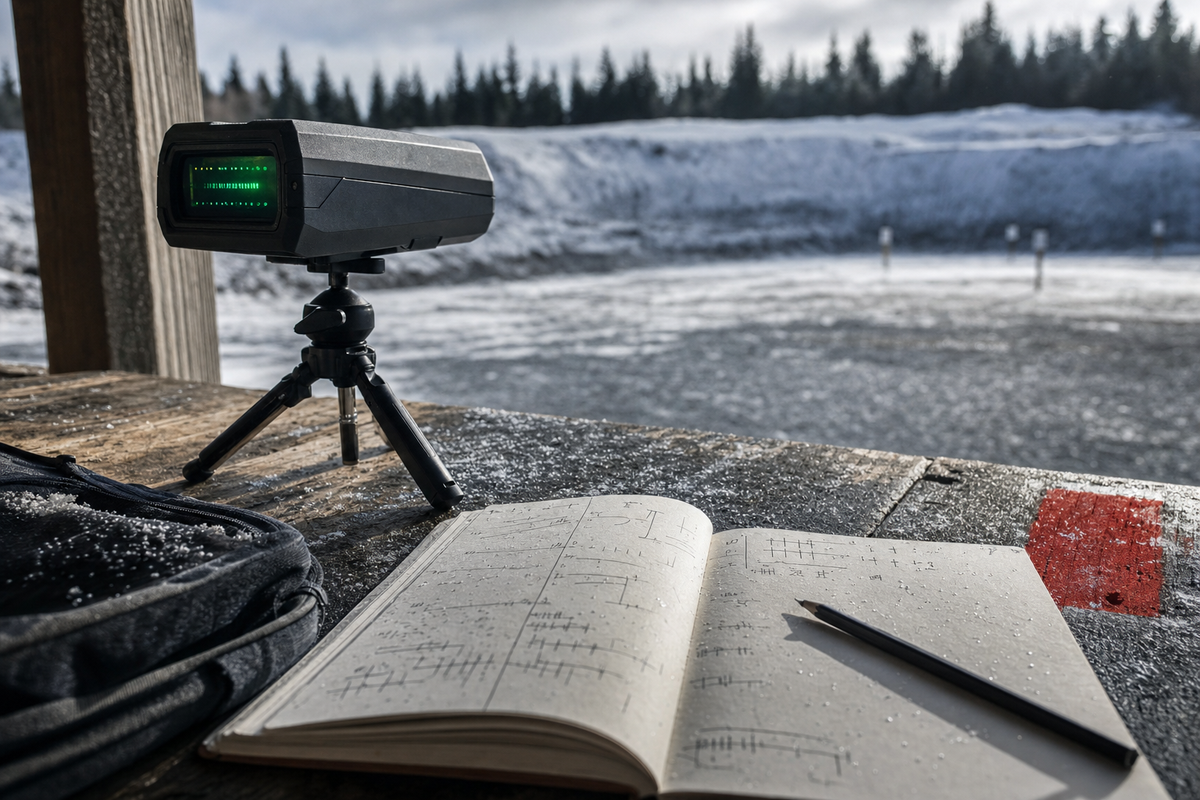
Opinion. The chronograph market has made the buying question easier and the discipline question harder.
That is a good problem, mostly. A newer Canadian precision shooter no longer has to treat velocity as a strange specialist ritual involving a fragile contraption twenty feet downrange, a cloudy sky, and the quiet fear of ventilating the only instrument on the range. Compact radar chronographs have made the category normal. Put the unit beside the shooter, fire the string, write down the number.
The trap is that easier data can still be useless data.
A chronograph is not a personality. It does not make a shooter serious by sitting in the range bag. It earns the trip when the number changes the next load, the next zero, the next solver input, the next range note, or the decision to stop before the rifle starts saying expensive things.
The buying friction got smaller
The current Canadian shelf makes the temptation obvious. GPS Central's page for the Garmin Xero C1 Pro showed the unit in stock when checked June 28, with a sale running to June 29. Tenda and Garmin describe the Xero as a compact, button-operated chronograph that measures projectile velocity from 100 fps to 5,000 fps and pairs with Garmin's ShotView app.
LabRadar's LX is the Canadian-interest unit in the set. LabRadar says the LX is a compact 60 GHz radar chronograph with an internal rechargeable battery. The brand's own about page ties LabRadar to Infinition Inc. of Trois-Rivieres, Quebec, and Infinition describes its work as ballistic instrumentation radar. LabRadar also pushes one meaningful differentiator: the LX's ballistic-coefficient module can calculate G1 and G7 values.
Athlon's Rangecraft Velocity Pro is the third name showing up in the same conversation. Athlon and Cabela's list a 65 fps to 5,000 fps measurement range, IP67 rating, a 2.4-inch LCD, and app compatibility. Fulcrum Outdoors has a Canadian listing, and a spring Canadian Gun Nutz dealer thread put the unit in front of Canadian shooters.
Call this a market read, not a side-by-side test. I have not tested these units against one another. The useful fact is simpler: the compact radar class is now ordinary enough in Canada that a newer precision shooter can ask a better question than "can I get one?"
The better question is, "What will I do differently after it gives me a number?"
Three times the number matters
The first time velocity matters is handloading. A load note without velocity is missing one of its main witnesses. Group size tells you what happened on paper. Velocity tells you whether the ammunition is behaving consistently enough for the paper to mean what you think it means.
Average velocity is the easy number. It gives the solver a starting point and lets you compare the rifle's real output against factory claims or published expectations. Extreme spread is the gap between the slowest and fastest round in a string. Standard deviation is the consistency number: how tightly the shots cluster around the average.
None of those numbers are magical. They become useful only when they change a decision. A string with a wide spread can explain vertical at distance. A suspicious jump in velocity can make a load row less charming. A stable string can let you stop blaming the ammunition and look at the shooter, which is rude, but frequently efficient.
The second time velocity matters is distance. A ballistic solver wants a real muzzle velocity, not the number printed on a box from a different barrel. At 100 yards, a bad velocity input can hide. At 600 yards, it starts billing for its time.
The third time is diagnosis. This is where the chronograph stops being a gadget and becomes a sober little witness. If the target, the rifle, the brass, and the chronograph are telling four different stories, the next range trip should not be more of the same. It should be a better question.
Canada makes the habit more important
Canadian shooters already live inside enough administrative friction. The country has trained PAL holders to bring documents, check rules, preserve receipts, watch classifications, and develop a suspicious relationship with anything described as "simple." If the chronograph becomes one more expensive object that adds friction without changing the work, it has failed the Canadian test.
That is why I like the notebook test.
Before buying the radar, look at the last few range trips. Did the notebook come out? Did the zero get recorded? Did the ammunition lot, distance, group size, correction, and next step make it onto the page? If not, the missing piece is the habit.
I have a weakness for buying the object that promises to tidy the process. Most shooters do. A small electronic box looks cleaner than a messy stack of range notes and half-remembered decisions. The box is also more fun to shop for, because no retailer has yet figured out how to put "consistent record keeping" in a sale flyer with free shipping.
The annoying truth is that the chronograph only works inside the boring system. Turn it on, shoot enough rounds for the number to mean something, write the string down, and make the next decision from the record rather than the mood.
The bench rule
For a newer shooter, the rule is plain.
If you are shooting factory ammunition at short range while building fundamentals, the chronograph can wait. Put the money into ammunition, range time, a better data habit, and the rifle setup pieces actually getting in your way.
If you are feeding a solver for longer distance, the chronograph starts to matter. Factory velocity is a guess in your rifle. A measured average is not perfect, but it is your guess, not the marketing department's.
If you are handloading rifle ammunition, the chronograph moves from useful to central. That does not mean chasing a number for sport. It means using velocity as one witness beside published data, brass condition, group behaviour, and the rifle's actual response.
And if you are comparing the current compact radar units, match the feature to the work. Garmin's appeal is the polished, pocketable tool. LabRadar LX brings the Quebec/Infinition angle and the BC module. Athlon brings another compact radar option into the same practical class.
The wrong chronograph is the one that turns into proof of seriousness instead of a source of decisions.
The number earns the trip only when it changes the next round.
Turn on the radar after the notebook is open.
Sources
- Garmin,
Xero C1 Pro Chronograph: https://www.garmin.com/en-CA/p/771164/ - Garmin Support,
Getting Started with the Xero C1 Pro Chronograph: https://support.garmin.com/en-GB/?faq=HN7LZ9Bnwx07CzyNwoBmD6 - GPS Central,
Garmin Xero C1 Pro Chronograph, checked June 28, 2026: https://www.gpscentral.ca/product/garmin-xero-c1-pro-chronograph - Tenda Canada,
Garmin Xero C1 Pro Chronograph: https://www.gotenda.com/product/garmin-xero-c1-pro-chronograph/ - LabRadar,
LabRadar LX: https://mylabradar.com/product/labradar-lx/ - LabRadar,
About us: https://mylabradar.com/about-us/ - LabRadar,
LabRadar LX Adds Ballistic Coefficient Calculation Feature: https://mylabradar.com/labradar-lx-ballistic-coefficient/ - LabRadar,
Downloads: https://mylabradar.com/download/ - Pro Shooting Supplies, LabRadar Canada official store: https://proshootingsupplies.com/shop/
- Infinition: https://infinition.com/en/
- Athlon Optics,
Rangecraft Velocity Pro Radar Chronograph: https://athlonoptics.com/product/rangecraft-velocity-pro-radar-chronograph/ - Cabela's,
Athlon Rangecraft Velocity Pro Radar Chronograph: https://www.cabelas.com/shop/en/athlon-rangecraft-velocity-pro-radar-chronograph-4433031 - Fulcrum Outdoors,
Athlon Rangecraft Velocity Pro Radar Chronograph: https://www.fulcrumoutdoors.ca/athlon-rangecraft-velocity-pro-radar-chronograph.html - Canadian Gun Nutz,
Athlon Rangecraft Velocity Pro Radar Chronograph Back In Stock: https://www.canadiangunnutz.com/forum/threads/athlon-rangecraft-velocity-pro-radar-chronograph-back-in-stock.2574838/
Keep the range notes worth reading later.
If this piece has you thinking about range time, keep the notes useful enough to read later.
Use the Holdover Range Bench Log Card to record rifle, optic, ammunition, distance, weather, zero, group notes, correction, and next test without turning a range trip into a memory test.
Safety note: the card is a note-taking worksheet, not shooting instruction, load data, legal advice, or a substitute for range rules, official guidance, manufacturer manuals, or qualified instruction.