A primer family sets the *order*
Current Canadian primer listings are less empty than they were. The useful lesson is not panic-buying. It is building a compatible bench plan around the primer family and published data you can actually support.


Opinion. A reloading bench can look magnificently prepared and still be waiting on one small cardboard box.
The Canadian primer pages I checked this morning were not empty. They were worse for lazy planning: they were uneven. Rangeview's in-stock view showed a live spread across CCI, Federal, Ginex, RWS, and Winchester categories. Ammobin's current list also ran through small and large, standard and magnum, with different brands and package sizes. That is good news, with an asterisk the size of a bench vise. A current listing is a snapshot, not a promise that the box in front of you belongs in the project you had already imagined.
That is why the primer should move up the planning order. Not because every shortage story needs another anxious sermon, but because the category view is now useful information. The right question is not, "What is the ideal cartridge on a forum?" It is, "Which primer family, compatible case, and published data can I support as one boring system?"
The categories are not one market
The current listings make the point without pretending to be a national census. A small-rifle product is not a large-rifle product with a different sticker. Standard and magnum categories are not a clearance-rack personality test. CCI's own catalogue separates standard, magnum, and bench-rest families because they are different products with different jobs. Federal does the same across its primer range.
That sounds obvious until a new reloader starts building a cart. The cartridge gets chosen first, then the bullet everyone likes, then a powder recommendation, then the primer becomes a tiny blank on the list. By the time the blank matters, the bench has acquired a press, dies, trays, and enough carefully chosen hardware to make a person feel very organized about a project that may not yet be supportable.

There is a calmer reading of the current category view. It is no longer simply empty or full. It is a set of live constraints. A Canadian page may show one large-rifle option, a few small-rifle choices, and a wider run of pistol primers. Tomorrow can change that. The useful information is not the temptation to buy every box. It is the shape of the choices the bench can honestly make.
Availability is not substitution
This is where a current stock check needs a little discipline. A product appearing on an in-stock page is a market signal. It is not a universal replacement for whatever component you had in mind last winter.
The primer belongs to the component system named by the case and the published data. A project earns its place at the bench when that whole system can be supported together. Make the decision upstream: choose the case and primer family as one plan, then use the published material that belongs to that combination. The advice is ordinary, which is exactly why it beats buying a difficult answer and calling it flexibility.
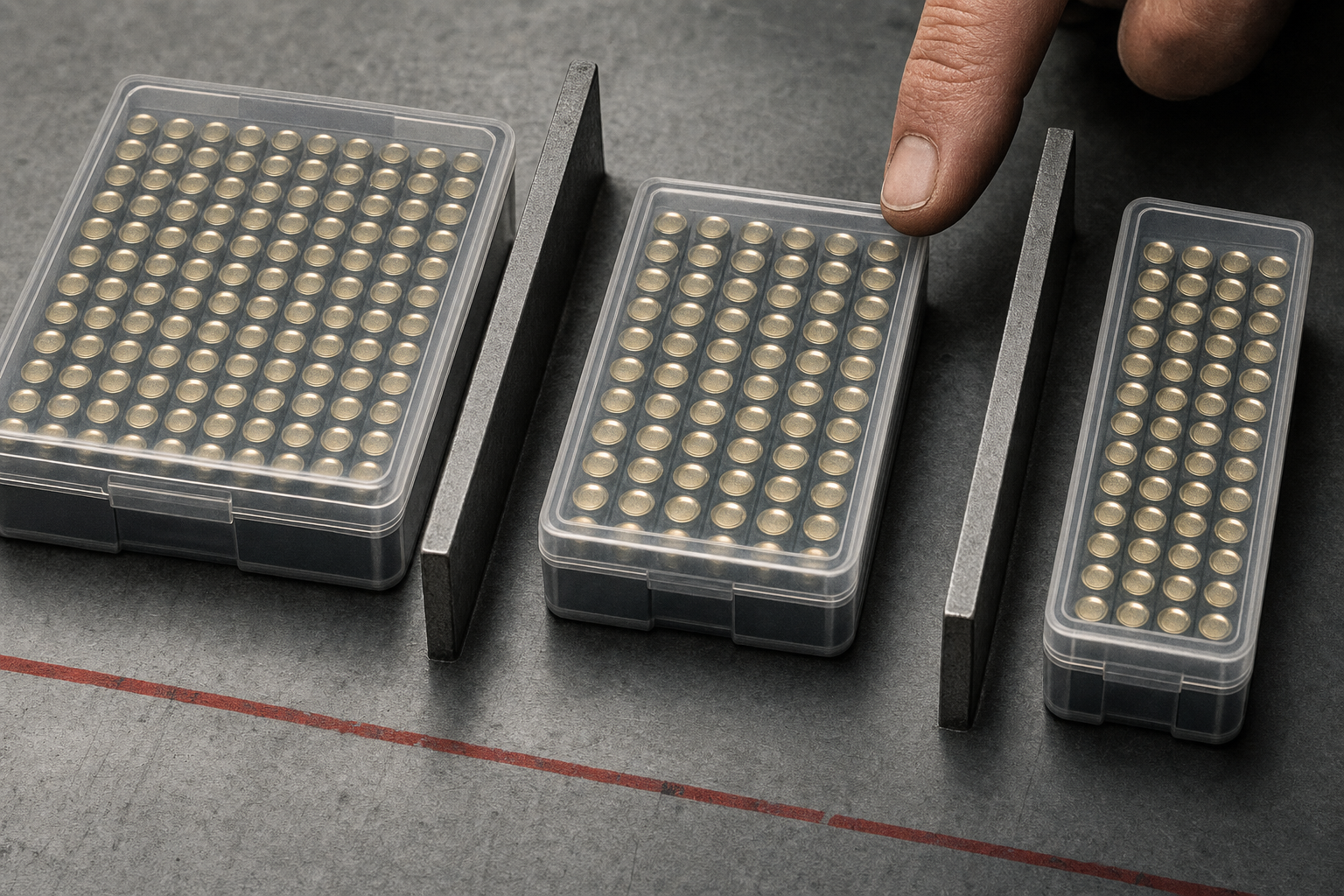
The temptation to treat every primer as close enough is understandable. The boxes are small, category availability is uneven, and a retailer page turns every green stock dot into a little burst of optimism. But reloading does not reward optimism that outruns the data. The right box can be a reason to begin a plan. The wrong box is not a reason to bend one.
Build the boring plan
I understand the easy version of the mistake. A press is vivid. Dies feel like progress. A small primer package has all the theatre of a library card. It is easy to think about the visible hardware first, then discover that the dull little input is what determines whether the whole project stays coherent.
The useful bench is not the one with the most brands or the most speculative cartridge plans. It is the one built around fewer supportable component families. That does not mean chasing a mythical perfect box or pretending current availability will stay still. It means deciding which project can be fed through ordinary Canadian channels, keeping the compatible published data with it, and leaving the rest of the bench's ambitions aside until they have earned their place.

This is also where the Canadian context matters without turning into a supply-chain article. The Ammo Source's current shipping page still notes that primers cannot travel by Canada Post and must use UPS when they are in an order. That is not a crisis, and it is not a shopping tactic. It is simply one more reason to treat a primer choice as part of the project from the start rather than a loose end to solve after every other decision has been made.
Check the categories, then check the data
The order is simple enough to remember. Look at a couple of current Canadian listings, not one exciting screenshot. Identify the primer family that the case and published data actually support. Then decide whether the cartridge project belongs on the bench now.
That approach is less exciting than a cart full of niche components. It is also less likely to leave the bench looking beautifully equipped and strangely unemployed. Let the component family set the order. Let the published data keep it honest.
Sources
- Rangeview Sports, in-stock primer listing, accessed July 10, 2026.
- Ammobin, Canadian primer listings, accessed July 10, 2026.
- The Ammo Source, shipping and returns, accessed July 10, 2026.
- CCI, primer catalogue, accessed July 10, 2026.
- Federal, primer range, accessed July 10, 2026.
- Canadian Gun Nutz, June 2026 primer availability thread, used as community context only.
Set up the bench before the first mistake.
If this piece has you thinking about a first reloading bench, slow the buying part down and make the safety/process part visible.
Use the Holdover Reloading Bench Setup Checklist to track manuals, press, dies, scale, calipers, case prep, labels, storage, bench layout, safety routine, and what still needs an experienced second look.
Safety note: the checklist does not provide load data, recommend charge weights, teach reloading, or replace current published manuals, manufacturer instructions, qualified instruction, or applicable law.