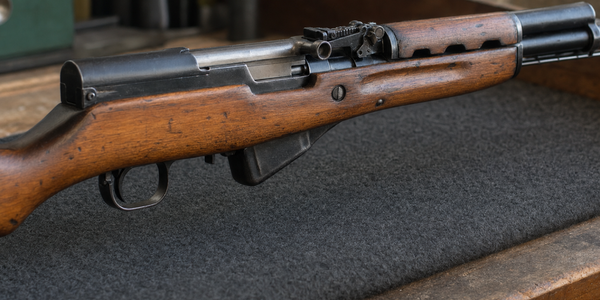
A NATO revolver enters Canadian *custody*
Mark Carney says a Turkish NATO gift is with the RCMP and has been decommissioned. Ottawa now owes Canadians a short, public custody record.

Opinion. A protocol gift can be unusual without becoming mysterious.
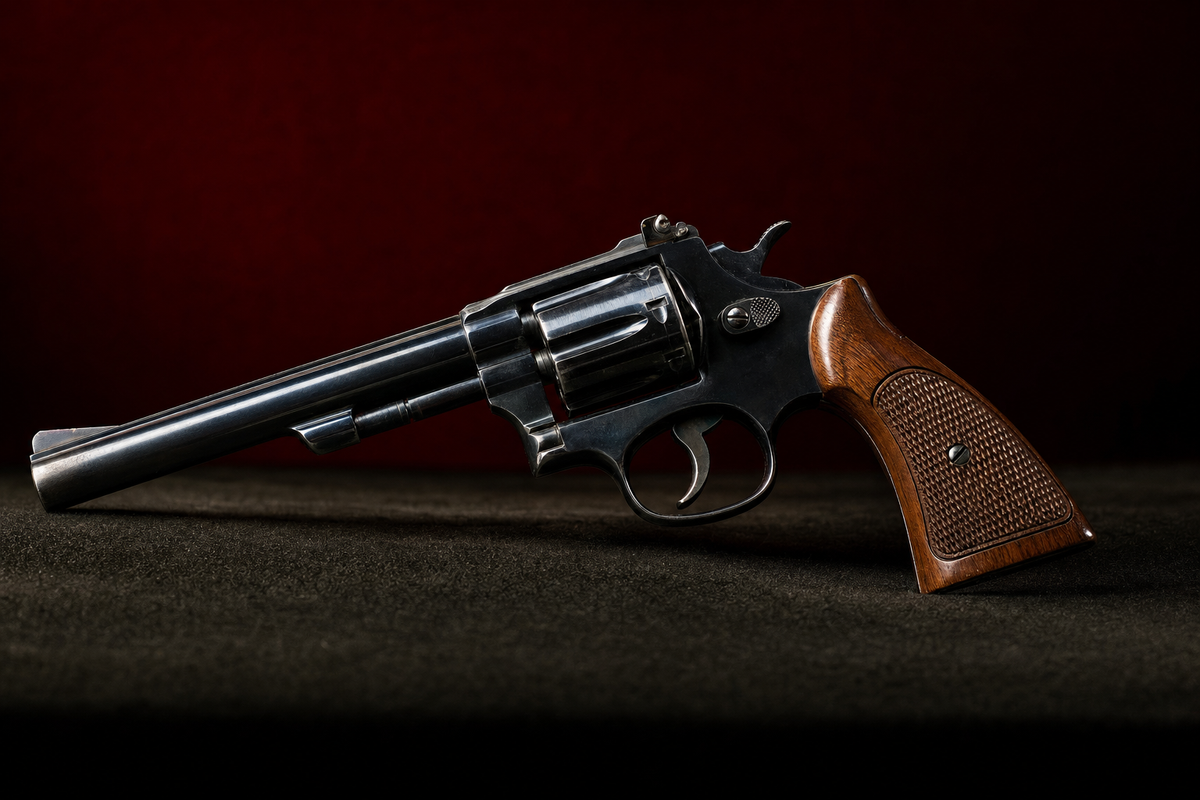
The strange part of this week’s NATO gift story is easy to picture: a personalized revolver from Türkiye, presented after the Ankara summit. The useful part begins after the photograph. Mark Carney told reporters the revolver is with the RCMP and has been decommissioned. Global Affairs Canada said the accompanying ammunition stayed in Türkiye. Carney suggested it could end up somewhere like the Canadian War Museum.[^cp]
That is a sensible direction. It still leaves four ordinary questions that deserve ordinary answers: who is the Crown custodian, what standard was used to render it non-functional, where is it headed, and where will the record live?
No one needs a security itinerary. A short public account would do.
A gift enters the public system
The Prime Minister’s Office confirms that Carney met President Recep Tayyip Erdoğan in Ankara during the NATO summit.[^pmo] The gift itself belongs to the narrower world of diplomatic protocol and government custody, not a private sale or a civilian handgun transfer.

That distinction matters because the government has a framework for protocol gifts. Section 11 of the Conflict of Interest Act permits a normal expression of courtesy or protocol. It also says a protocol gift valued at $1,000 or more is forfeited to the Crown unless the Commissioner determines otherwise.[^coi]
The Canadian Press report supplies neither a valuation nor a final disposition. This article makes no assumption about either. The custody question remains: what is the documented route from protocol gift to final public home?
I have stood at the counter and waited through enough Canadian firearms paperwork to know its basic promise. Somebody is named, somebody receives the item, and a record survives the handoff. A firearm in public custody deserves that same clarity in public form.
Decommissioned needs a standard
The word “decommissioned” sounds complete because it is a strong word. The RCMP gives it a technical floor: for the Canadian Firearms Registry to consider a firearm deactivated, an authorized gunsmith must confirm it can no longer be considered a firearm under the Criminal Code.[^rcmp-deactivation]
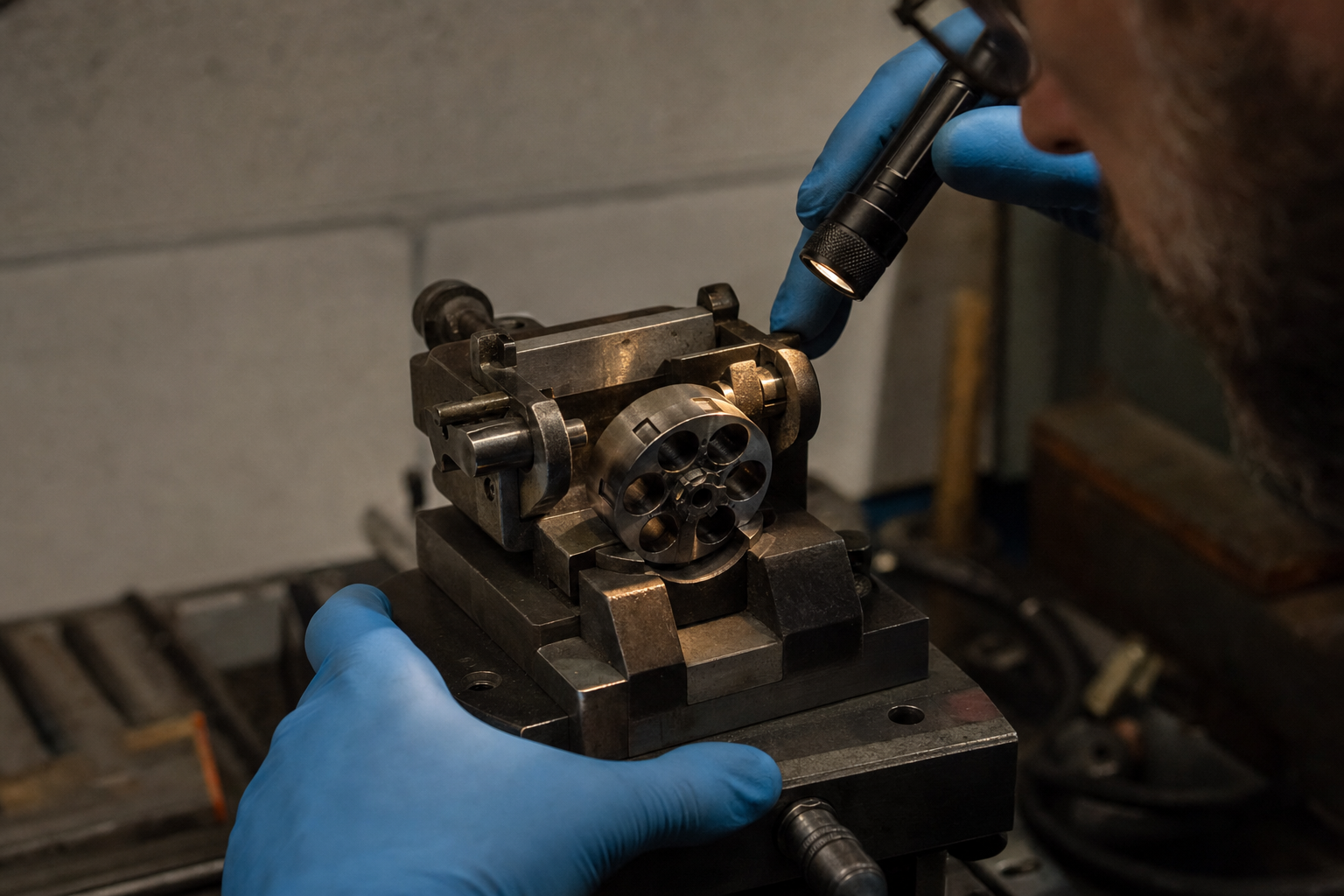
That does not prove that every detail of a public-agency process is identical to a civilian route. It does explain why the government should name the standard it used. If the revolver was made non-functional to that recognized threshold, say so. If a distinct public-agency procedure applies, name it and describe the resulting custody status.
There is no need to turn that into a fight over who gets special treatment. The strongest version of the opposing view is straightforward: a diplomatic gift is a rare object, and the government has security and protocol concerns that an ordinary owner does not. Fair enough. Those concerns are a reason to state the route clearly, not a reason to leave the route fuzzy.
That clarity protects more than the audience. It protects the people handling the object. A named custodian distinguishes possession from ownership. A named standard distinguishes a confirmed technical outcome from a press-office shorthand. A named destination lets the public separate a serious historical accession from a temporary holding arrangement. Each answer can be given without publishing a storage address or a security plan.
A museum is a named destination
Carney raised the Canadian War Museum as a possible home. The Canadian Press report does not make that a final decision, and it should not be treated as one.[^cp]

The RCMP’s published transfer guidance recognizes museums, licensed businesses, and public service agencies as possible destinations within the firearms system.[^rcmp-transfer] That is context, not proof of this particular route. It does show why “a museum” is not the end of the story. A museum has a name, a receiving decision, an accession record, and a responsibility for the object it accepts.
An unusual NATO gift can become a non-functional historical artifact without being turned into a trophy. It can also remain visible enough that Canadians know where it went and why. Those are compatible goals.
Four lines would settle it
Ottawa does not need a long statement. It needs four clean lines:
- the gift’s declared status and Crown custodian;
- the authority that received it and the route used;
- the deactivation standard or public-agency procedure; and
- the final institution or other public disposition.
The ordinary firearms system depends on a named recipient, an authoritative route, and a record that can be checked later. A diplomatic gift may travel under different rules. The public account should still be legible. Applying that discipline to a gift from a NATO summit is not an attack on protocol. It is the adult way to handle it.
The revolver is only interesting because it is unusual. The record is interesting because it should not be.
Sources
[^cp]: The Canadian Press report on the NATO revolver gift and the announced disposition [^pmo]: Prime Minister of Canada readout of Carney’s July 7 meeting with Erdoğan [^coi]: Conflict of Interest Act, section 11 [^rcmp-deactivation]: RCMP guidance on authorized firearm deactivations [^rcmp-transfer]: RCMP guidance on buying, selling, and transferring firearms
The amnesty file is still moving.
If this piece sent you back to government pages, do not wait for the next portal, Gazette, or court move to find you by accident.
The Dispatch follows Public Safety, RCMP, Canada Gazette, court, compensation, collection, and amnesty updates so the next change comes with the source that moved.
Safety note: the tracker is a worksheet for source hygiene, not legal advice or a substitute for current official guidance.