Three rifles, 200 rounds, and five days at the *bench*
Cutting my range rotation from six or seven rifles to three improved the pace of each shot. It also left 150-200 cases waiting for most of the week.

Handloading. For a while, I brought six or seven rifles to the range and turned the day into a race against my own ammunition boxes.
I rarely shot all of them. On the days when I tried, I spent too much time watching the clock and deciding which case to open next. Apparently, packing more rifles does not create more range.
One of the range officers told me that many precision shooters concentrate on one rifle. They settle on the cartridge and setup they care about, work through load development and zero, then extend the distance as their results improve.
The advice was inconvenient because it described the opposite of what I was doing.
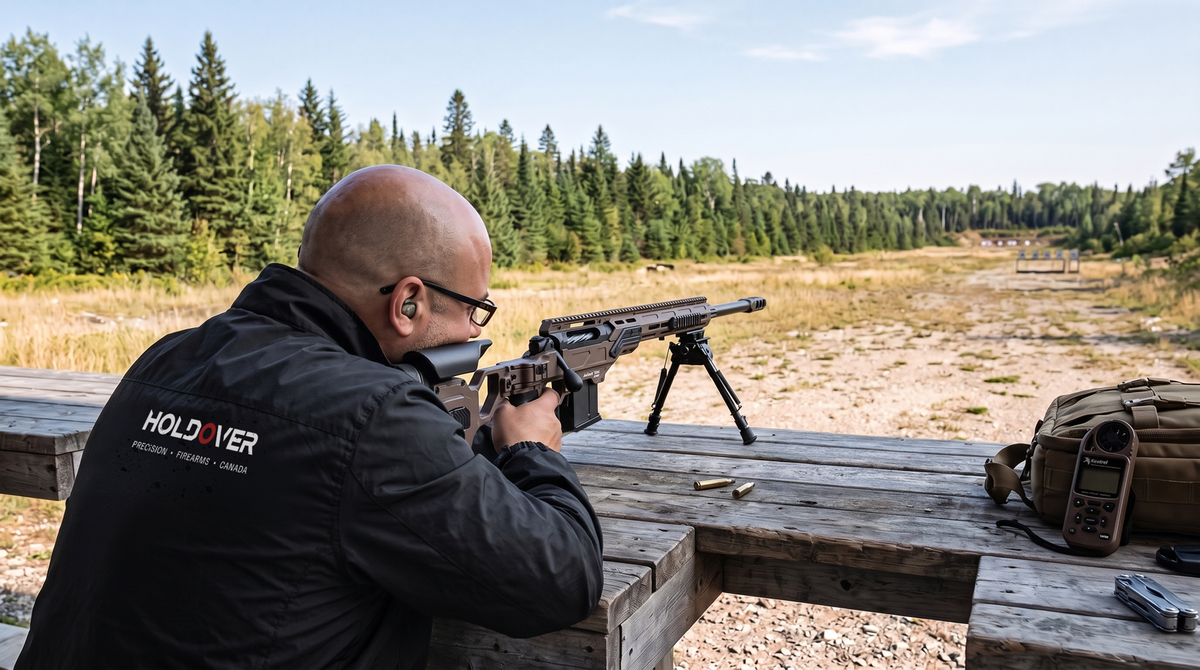
For the past month, I have cut the rotation to three Cadex rifles: 6 BR Norma, .308 Winchester, and .338 Lapua Magnum. Some sessions may end up with two. The smaller rotation has changed the day more than another accessory would have.
Three rifles slowed the day down
My normal range rhythm changes with the season. Through spring, fall, and winter, I tend to shoot once a week for four or five hours. Summer can mean a weekday visit and another session on the weekend when the schedule allows. The weekly total still lands around four to six hours.
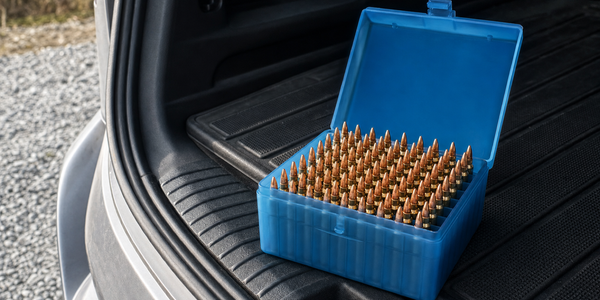
Across the three-rifle rotation, I shoot about 150-200 rounds.
The round count has stayed high. The pace feels different. I spend more time settling my breathing, checking rifle level, watching barrel heat, and getting comfortable before the next shot. I spend less time trying to reach the bottom of every box because I carried it through the gate.
Has it improved my shooting? A little, perhaps. I still catch myself sending the next round sooner than it deserves. That may be the useful part of the change: I can see the hurry now.
With six or seven rifles on the ground, rushing felt productive. With three, it looks like what it is.
The range day follows me home
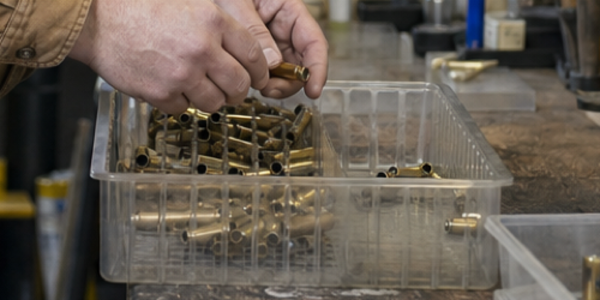
The 150-200 rounds leave 150-200 cases waiting for me.
Rebuilding the boxes means depriming, wet tumbling, drying, sorting, annealing, sizing, trimming, mandrel work, priming, charging, and seating. I fit those steps around work and the rest of life, so one range week can occupy the bench for three to five days.
This is the part of precision shooting that disappears in the photographs. The rifle looks good on the bags. The target gets measured. The brass comes home and quietly takes over several evenings.
The cartridge mix changes the component use. In my current setup, 6 BR uses about one-third the powder of .338 Lapua, with .308 sitting between them. That economy has not reduced the weekly round count. It gives the smaller cartridge more room to work without making each trigger press feel like a withdrawal from the powder account.
The 6 BR also remains absurdly accurate in my rifle. It has earned its place in the rotation on performance, not thrift.
The lube rag gets the last shift
My least favourite bench job is cleaning case lube.
I use spray lube for some sizing and apply sizing wax by hand for some cases. Either way, the residue has to come off. I wipe every case. A dry tumbler may solve that job for some handloaders; my current method involves a cloth, a row of brass, and enough repetition to reconsider several purchasing decisions.
Mandrels add another layer. The dry neck lube leaves graphite on the case exterior, and graphite has a talent for reaching everything near it. That also needs cleaning.
The irritation would feel easier to accept if I knew the mandrel was improving my ammunition. I still do not know. A conventional expander ball in the sizing die may give me everything I need with less work. I have yet to build a test that would answer the question with any confidence.
Until I do, every graphite-stained case carries the same small accusation: prove this step earns its place.
The tool I hope stays unused
A broken-case extractor now sits among the useful tools on my bench.
I have experienced case-head separations in .300 Winchester Magnum and .338 Lapua Magnum. The bolt comes back with the case head while part of the case stays in the chamber. The range session stops. Then comes the immediate question of how much of the problem I can solve and whether the rifle is headed to a gunsmith.
Walking into that shop with the rifle has a particular tail-between-the-legs quality, even when embarrassment contributes nothing useful to the diagnosis.
I put together an extractor solution as insurance. I have not needed it since, which is exactly how I want that purchase to perform. Some tools earn their place by remaining untouched.
Accuracy and drama share my bench
The smaller rotation has not turned me into a small-cartridge absolutist.
Accuracy matters enough that I built the full reloading setup, buy premium components, and spend several evenings preparing another week's ammunition. The 6 BR has shown me a level of precision I have not found in my lower-calibre rifles.
I still love larger cartridges. The recent .375 EnABELR purchase makes that fairly difficult to deny. Several .22 and .223/5.56 rifles have gone close to a year without a range trip because the cartridges do not hold the same appeal for me.
For a newer shooter who wants inexpensive practice and transferable fundamentals, I would still point toward a decent .22 LR bolt-action. For someone drawn to recoil and drama, my instinct runs toward .30-06 Springfield or .300 Winchester Magnum, followed by larger magnums once the reloading skills and judgement catch up.
I offer that as my current view, with the appropriate discomfort. The difference between my shooting a year ago and today feels enormous. Then I talk with someone who has 10 or 20 years in the discipline and feel as though I have started again.
That is probably healthy.
I know enough now to recognize which habits are improving. I also have enough left to learn that one conversation with a range officer can change the rifles I bring, the pace of each shot, and most of the week that follows.
Sources
- Steve Coppola, Holdover weekly interview answers supplied July 27, 2026.
- Lapua, 6mm BR Norma case.
- Lapua, .308 Winchester case.
- Lapua, .338 Lapua Magnum case.
- Peterson Cartridge, The Next Big Thing in Extreme Long-Range Shooting - EnABELRs.
Set up the bench before the first mistake.
If this piece has you thinking about a first reloading bench, slow the buying part down and make the safety/process part visible.
Use the Holdover Reloading Bench Setup Checklist to track manuals, press, dies, scale, calipers, case prep, labels, storage, bench layout, safety routine, and what still needs an experienced second look.
Safety note: the checklist does not provide load data, recommend charge weights, teach reloading, or replace current published manuals, manufacturer instructions, qualified instruction, or applicable law.