Bank couriers, congregations, and the *carry rule*
Tafsik wants armed guards at places of worship. Current federal carry tests and Ontario's guard-licensing proposals answer different parts of that request.

Tafsik wants Ottawa to let licensed, vetted, and trained guards carry firearms while protecting places of worship and private faith-based schools. Juno News reported on November 1 that the advocacy group had taken that request to MPs. Its account of political support remains the group's claim.
Other advocates have made the case in public. At an Ontario committee hearing on October 5, B'nai Brith Canada and the Centre for Israel and Jewish Affairs urged a framework for armed security at vulnerable institutions. The request followed the September 20 attack outside Sons of Jacob Synagogue in Belleville, where an officer was seriously wounded.
The governments involved control different permissions. Ontario licenses guards. Federal law sets the circumstances for an Authorization to Carry, or ATC.
I received my restricted licence in 2025. Reading the permissions behind the acronyms has become part of owning firearms in Canada. This request turns on a separate permission, with its own decision-maker and conditions.
Two routes into the carry rules
Section 20 of the Firearms Act provides two purposes: protecting life and using a firearm in a lawful profession or occupation. The carry regulation supplies the tests.
Its protection-of-life route requires imminent danger from other people, insufficient police protection, and reasonable justification for possessing the firearm to prevent death or grievous bodily harm. Those conditions remain part of the law. Whether a particular applicant meets them requires an individual decision.
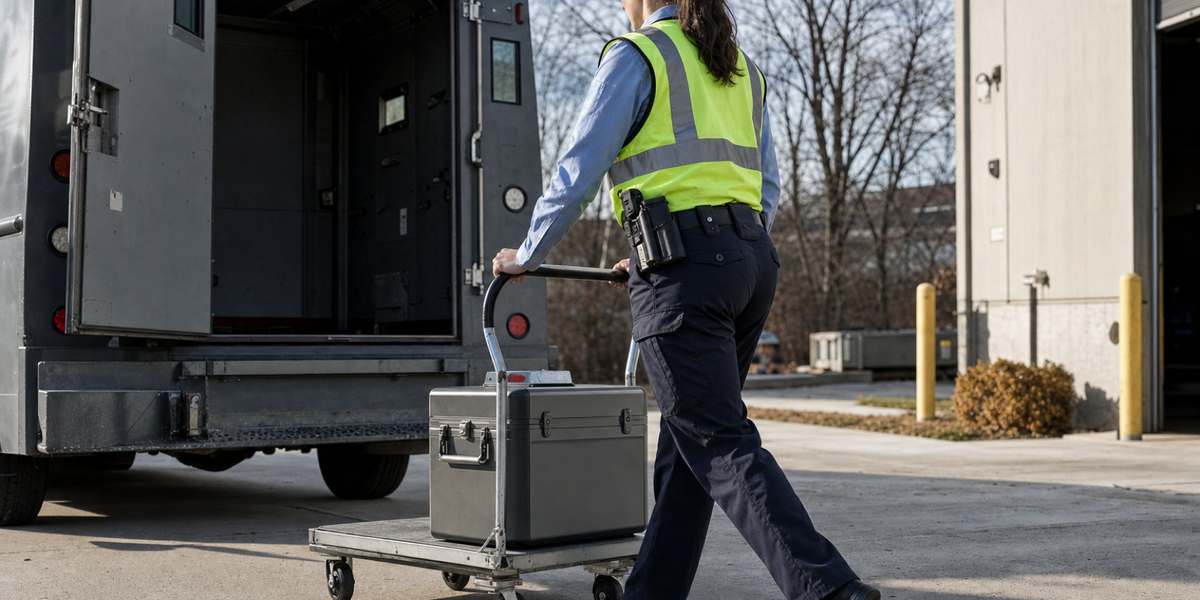
The occupational list names three circumstances: principal work handling, transporting, or protecting cash and other valuable goods; remote wilderness work requiring protection from animals; and provincially authorized, trained trapping. In the cash category, the work must require a firearm to protect the worker's life or someone else's.
A general job guarding congregants has no matching category in that occupational list. That is the distinction a new protective-security category would address. An ordinary provincial guard licence supplies no federal carry permission.
Ontario is considering the licence side

Ontario Regulation 366/07 permits a licensed guard to use a firearm in that work only with an authorization under federal section 20. The province's current requirements page states the same dependency.
Ontario has also started discussing changes. Its May 25 backgrounder said the government would explore new guard tiers for retail establishments, places of worship and other locations, with higher standards and better training. The October testimony pressed for an armed tier. Those are proposals, and the federal carry tests still apply.
Bill 119, which includes changes to private-security oversight, remains in the legislative process. The Assembly's public status page records third-reading debate adjourned on October 27. A guard still needs the separate federal authorization while Ontario debates its changes.
The federal Canada Community Security Program lists time-limited licensed security personnel or paid-duty police among potentially eligible expenses, excluding RCMP officers. Funding eligibility leaves the firearm rules in place. In their testimony, the community representatives also described limits on police availability.
Who signs the authorization
Chief firearms officers issue occupational ATCs. Since October 1, 2024, the Commissioner of Firearms has issued protection-of-life ATCs. The 2024 regulatory impact analysis says that change moved the issuing responsibility while leaving eligibility criteria unchanged.
For protection-of-life and cash-related authorizations, the regulation requires appropriate firearms proficiency and use-of-force training, and an appropriate firearm. Carry conditions include a holster and one firearm at a time. Occupational holders must report leaving the work or changing employers; cash-category holders must wear a uniform. Leaving the qualifying occupation requires revocation.
Those conditions give policymakers something concrete to discuss when they consider another occupation. Training, employment, and accountability already form part of the carrying regime.
A federal regulation and a handgun exception
Section 117(c) gives cabinet authority to prescribe the circumstances for protection-of-life and occupational need. A new occupational category could therefore proceed through a regulatory amendment. The normal section 118 process involves tabling the proposal in both Houses and committee consideration, with a thirty-sitting-day route or earlier committee completion. Section 119 contains exceptions to tabling.
There is also a handgun consequence. Under section 97.1, holders of a handgun ATC fall within an exception to the freeze's restrictions. A new qualifying category could bring additional people within that exception, while the remaining licensing and transfer requirements would still apply. That deserves an explicit answer in any proposal.
Public counts would help. The RCMP's 2025 annual firearms report records 28,052 Authorizations to Transport issued to licence holders that year. It publishes no ATC count. The report leaves readers unable to compare the size of the existing carry categories from that source.
A narrower question for Ottawa
Opinion. I favour considering a tightly defined category for licensed guards at places of worship and faith-based schools. The cash-guard provisions offer a starting point for conditions, with training and enforceable employment limits. Any proposal would also need clear site restrictions, oversight, and coordination with responding police.
An annual count split between protection-of-life and occupational authorizations would also give MPs a usable baseline. Readers could see how many permits are in force and how that changes after any amendment. The report already publishes a transport table. A carry table would let a future debate use figures that belong to the policy under discussion.
The objections deserve specifics too: how officers would identify an armed guard, who would set and inspect training standards, and who would investigate a serious incident. The proposal needs answers to each of those questions. Communities asking for protection deserve to see them before officials settle the rules.
Ottawa should explain the conditions under which it would consider that category and publish current ATC totals. The public can then judge an actual policy, with the existing protection-of-life route and the proposed occupational change both in view.
For the next verified Canadian policy development, join the free Thursday Dispatch.
Sources
- Juno News, November 1: Tafsik's request
- Ontario committee, October 5: community-security testimony
- JTA, September 21: Belleville attack
- Firearms Act, sections 20, 57, 57.1, 97.1, and 117-119
- Authorizations to Carry Regulations, SOR/98-207
- Ontario Regulation 366/07, Equipment
- Ontario guard requirements
- Ontario, May 25: community-safety backgrounder, page 7
- Ontario Bill 119: current public status
- Canada Community Security Program: eligible expenses
- Canada Gazette, September 25, 2024: ATC amendment and impact analysis
- RCMP: 2025 Commissioner of Firearms Report
The amnesty file is still moving.
If this piece sent you back to government pages, do not wait for the next portal, Gazette, or court move to find you by accident.
The Dispatch follows Public Safety, RCMP, Canada Gazette, court, compensation, collection, and amnesty updates so the next change comes with the source that moved.
Safety note: the tracker is a worksheet for source hygiene, not legal advice or a substitute for current official guidance.