Chase jury asks Ottawa to *review pellet-gun appearance*
Chase de Balinhard's inquest jury asks Canada and B.C. to review realistic pellet-gun appearance. The original verdict also calls for reviews of crisis information, response resources, and family support.

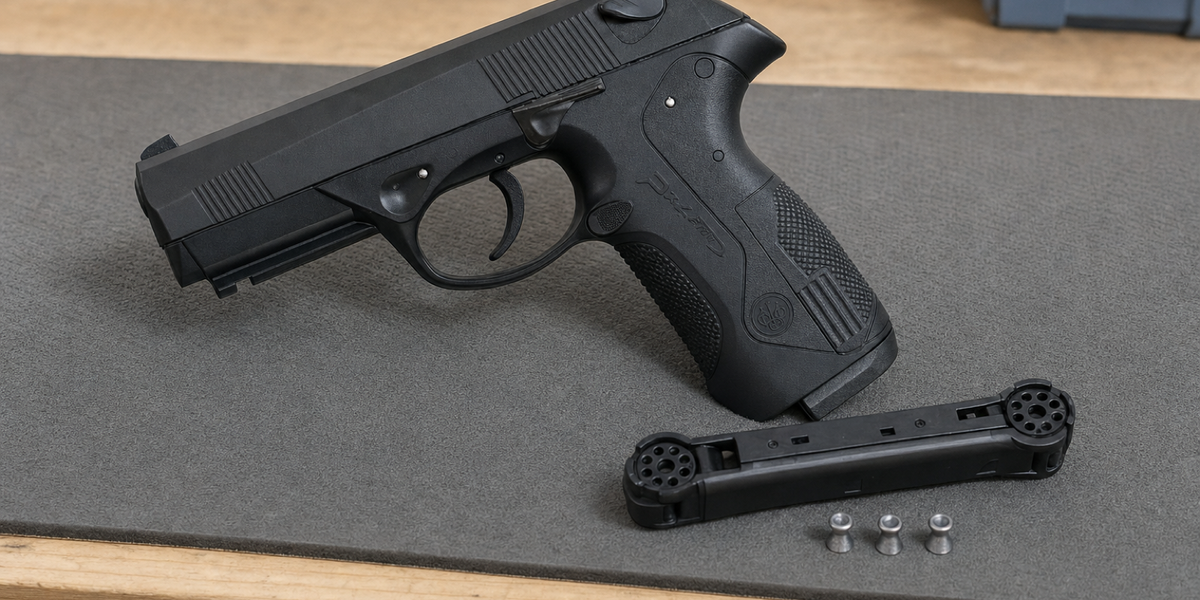
A coroner's jury has asked Ottawa and British Columbia to examine whether realistic pellet guns should look visibly different from conventional firearms. The recommendation follows the inquest into the death of 15-year-old Chase de Balinhard, who was shot by police in Surrey on February 9, 2025. It sits alongside ten others addressing crisis information, emergency response, family contact, and support for neurodivergent children.
The November 20 verdict gives both governments a specific question to answer. Recommendation five asks them to consider further measures against mistaken identification, including durable visual differences and federal product, manufacturing, or import rules. Its final clause expressly asks whether B.C. needs additional measures beyond its recently implemented Firearm Violence Prevention Act.
That deserves a serious public response. Owners and retailers should be able to see the evidence for any proposed design requirement, its practical scope, and how governments will judge its effect. The same attention belongs on the rest of the jury's prevention work.
What the jury actually asked
The jury directed recommendation five to the Government of Canada, the federal Minister of Public Safety, and B.C.'s Minister of Public Safety and Solicitor General. It asks them to examine whether low-velocity firearms and pellet guns that closely resemble conventional firearms should have a "clear, durable, and conspicuous visual difference."
The wording leaves the design open. Jurors identified visual distinction and resistance to removal or alteration as questions for review. The document supplies no prescribed colour, component, retrofit procedure, or implementation date. A future proposal would have to settle those choices and explain which products and owners it would cover.
Police and members of the public can reasonably mistake a realistic airgun for a conventional firearm. That risk is the strongest case for examining appearance, and the jury names it directly. In CityNews's report on the outcome, the apparent revolver in Chase's encounter turned out to be a pellet gun.
The verdict classifies his death as homicide and explains that this is a neutral classification carrying no implication of fault or blame. Section 38 of B.C.'s Coroners Act also prevents an inquest jury from finding legal responsibility or expressing a conclusion of law. Its role includes making recommendations arising from the evidence. CityNews reports that these recommendations are nonbinding.
The existing rules have a different job
B.C. already regulates low-velocity and imitation firearms under its Firearm Violence Prevention Act. Section 11 restricts sales, rentals, and certain supply to minors, with exemptions. Section 14 prohibits a minor from carrying, transporting, or storing a loaded low-velocity firearm and sets a locked, opaque-container requirement for low-velocity and imitation firearms, subject to the applicable exemptions. Vehicle and boat situations follow section 4 instead.
Those provisions address access, handling, and storage. The jury's fifth recommendation addresses the appearance that another person may encounter. Its request for review goes beyond repeating the packing requirements Holdover examined ahead of the October rollout.
For an owner, that distinction matters. Reading this verdict tells you what governments have been asked to examine; it supplies no instruction to modify an airgun today. Any eventual requirement needs clear product definitions, a lawful route for existing equipment, and an explanation a retailer can give across the counter without guessing.
A public response to eleven recommendations
The gun's appearance occupies one recommendation in a much wider document. The first asks health and public-safety agencies to make useful, current, voluntarily supplied crisis information easier to find and, where lawful and appropriate, available during an emergency. The second concerns the visibility, content, and review of individualized crisis or safety plans.
One proposed subject for youth plans is whether low-velocity, imitation, or conventional firearms are known to be stored at home. That sits inside a recommendation to review planning standards. It deserves careful explanation alongside the limits on sharing sensitive information.
Other recommendations address the capacity and equipment of police mental-health response teams, access to urgent health information across health-authority boundaries, and support for autistic and other neurodivergent children. Jurors also ask Surrey Police to review further family-contact attempts after an unsuccessful first attempt, and the availability of helicopter and drone resources.
The remaining work includes communication with affected families during IIO investigations, relationships between youth and police in Surrey schools, and clear information about existing supports. The verdict proposes reviews and improvements; it makes no promise that a particular change would have prevented Chase's death.
Opinion: publish the answers and the evidence
I want governments to take the mistaken-identification risk seriously. I also want lawful owners to be able to test the response against the problem the jury identified. Before imposing a visual requirement, officials should explain how it would work in the circumstances that matter, how durable the distinction would be, and which existing products would fall within it.
Manufacturers, retailers, airgun users, and frontline responders should have an opportunity to examine a concrete proposal. Its assessment should cover practical identification, alteration, existing equipment, and the effect on legitimate sporting use. A claim of prevention deserves an account of how prevention would be measured.
The health, education, and policing agencies have equally concrete questions awaiting them. Each should publish what it accepts, what it will examine, who will do the work, and when the public can expect an answer. Where an agency declines a recommendation, it should explain why.
Chase's jury has put eleven recommendations on the record. Governments can honour that work by giving the public eleven traceable responses, with the evidence and responsibilities attached.
Follow Canadian ownership and policy reporting through The Dispatch.
Sources
- BC Coroners Service: verdict at the inquest into Chase de Balinhard's death, certified November 20, 2026
- BC Coroners Service: inquest schedule, jury findings, and verdicts
- B.C. Coroners Act, sections 38, 39, and 53
- B.C. Firearm Violence Prevention Act, sections 11-16
- CityNews: jury recommendations after Chase de Balinhard's inquest, November 21, 2026