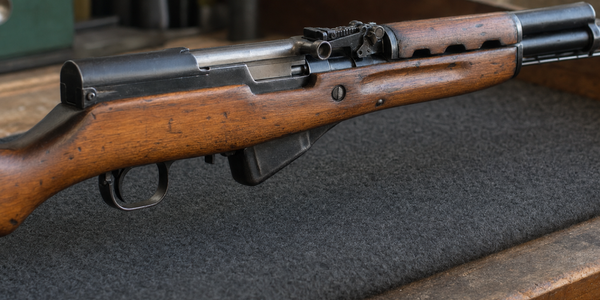
From October 1, B.C. drivers face *another firearm offence*
B.C. adds a firearm vehicle offence October 1. The actual regulations spell out airgun storage, youth transport, and a conditional exemption for temporary stops on designated property.

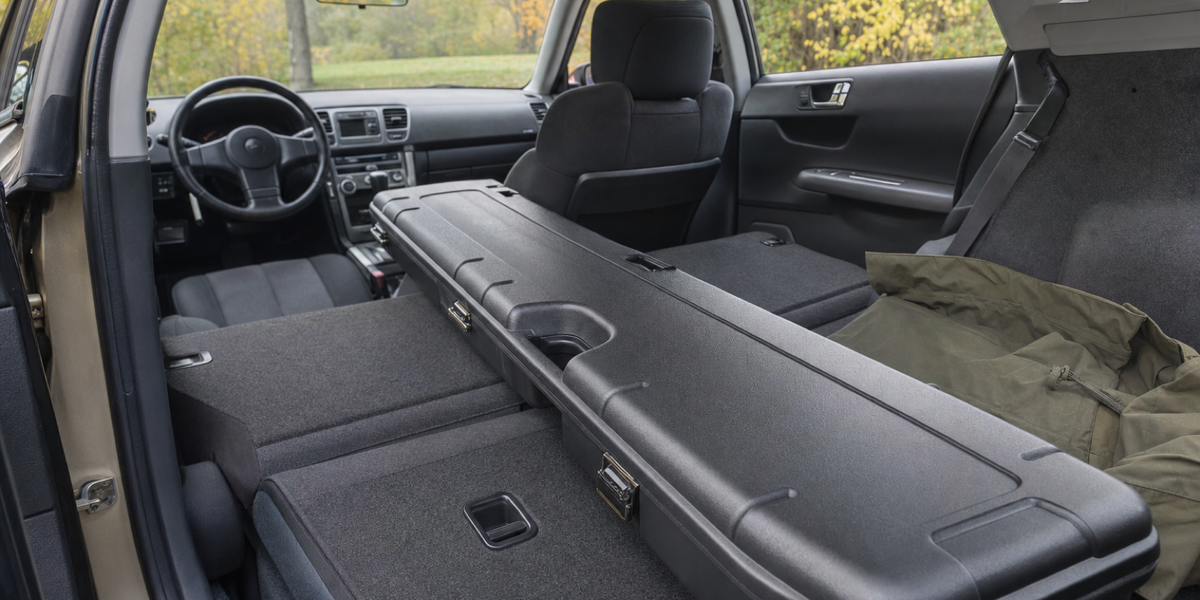
British Columbia adds a provincial vehicle offence on Thursday, October 1. A driver carrying firearms will have to satisfy the Firearm Violence Prevention Act's exemption for federally authorized possession and transport. The same rollout brings storage rules for airguns and imitation firearms, plus prohibitions on designated properties.
The useful details are in the regulations. They include a temporary vehicle exemption that matters to an owner stopping at a hospital, and different transport requirements for a person under 18 walking with an airgun and one riding in a car. Those details deserve as much attention as the government's announcement.
Whoever takes the wheel
Sections 6 and 7 of the act work together. Section 6 prohibits operating a vehicle containing a non-restricted, restricted, or prohibited firearm, prohibited ammunition, or a prohibited device. It applies even when the vehicle is stationary. Section 7 supplies the ordinary lawful-transport exemption.
For that exemption, the driver or another occupant must hold the required federal possession authorization. A restricted or prohibited firearm also requires an occupant with the applicable transport and, where required, carry authorization. The firearm, ammunition, or device must comply with federal transport, carrying, and storage requirements.
That makes the passenger's packing relevant to the driver. Someone else's licence can satisfy the possession requirement; the way the firearm travels still needs to comply. A driver who relies on a hunting partner's casual assurance has a practical reason to ask a second question.
For an ordinary non-restricted rifle, federal section 10 requires unloaded transport. The usual unattended-vehicle rule requires a securely locked trunk or similar compartment; where none exists, the firearm must be out of sight and the vehicle securely locked. Section 11 requires a restricted firearm to be rendered inoperable with a secure locking device and enclosed in a locked, sturdy, opaque container, alongside its other requirements.
The new provincial offence gives those familiar rules another consequence. Before taking the wheel, establish whose authorization covers the firearms and how they have been packed. A photograph of a closed case tells you very little about either.
Airguns get a specific storage rule
The provincial category includes low-velocity firearms and imitation firearms. Section 1 of the provincial act defines the low-velocity category using muzzle-velocity and energy thresholds. Calling something a pellet gun or an airsoft gun does not settle its classification by itself.
For vehicle and boat transport, the General Regulation, section 4, supplies a concrete storage requirement: put the low-velocity or imitation firearm inside a locked trunk or compartment. If the vehicle lacks a lockable compartment, or the item will not fit because of its size, use a locked opaque container. The act also prohibits a loaded firearm in a vehicle or boat, subject to applicable exemptions.
I own an Umarex air pistol styled after a Glock 17. That familiar shape is part of the appeal. Reading B.C.'s transport provisions brings a less entertaining purchase consideration into view: the container and the vehicle matter alongside the pistol. The storage provision gives this Ontario owner something concrete to check before travelling west.
The youth provisions concern people under 18 and need careful reading. Outside a vehicle or boat, section 14 requires a minor's low-velocity firearm to be unloaded and requires a locked opaque container for low-velocity and imitation firearms, subject to exemptions. Inside a vehicle or boat, section 14(3) expressly directs the reader to section 4 instead.
The airsoft, paintball, and laser-tag exemption in General Regulation section 35 concerns participation at a facility's premises. It should not be stretched into a blanket exemption for the journey there.
A hospital stop has an exemption
The designated-property provisions cover categories including hospitals, schools, child-care properties, places of worship, post-secondary institutions, and courts. The definitions can reach surrounding property, so a building's front door is a poor guide to the boundary.
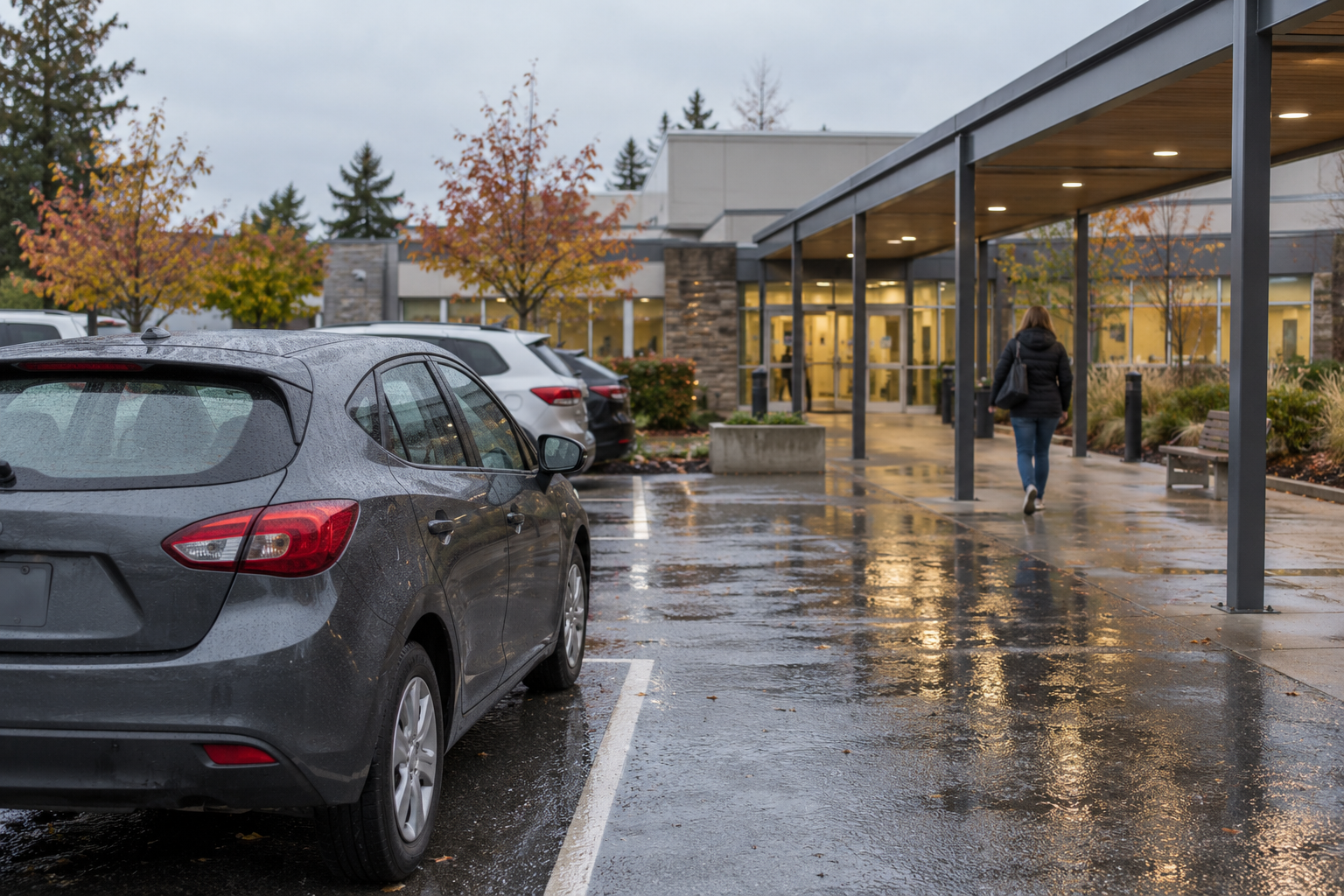
But section 67 of the Designated Property Regulation expressly covers firearms and imitation firearms in vehicles or boats temporarily on designated property. The person must have the applicable federal authorizations and meet the relevant transport requirements. Low-velocity and imitation firearms must meet the provincial vehicle-storage requirement.
That gives an owner making a temporary hospital stop a provision to read against the actual circumstances. It covers possession in or on the vehicle or boat, with conditions. Carrying the case into the building raises a different question. Court property has its own restriction: section 4 excludes it from the regulation's other exemptions and points to authorization under the Sheriff Act.
The regulation also contains conditional exemptions for firearm courses and other activities. Organizers should use the section governing their activity, including required approvals and storage arrangements, rather than treating the word "exempt" as the end of the paperwork.
Opinion: give owners the complete explanation
B.C. describes the legislation as a response to organized crime and gun violence, with tools intended to interrupt dangerous activity. Licensed owners have every reason to want that work to succeed. They also deserve guidance that makes lawful transport straightforward.
As checked September 29, the province's FVPA webpage, labelled updated September 22, still says designated-property exemptions "are being considered." The enacted regulation already sets them out. That wording leaves a reader with unnecessary uncertainty two days before commencement.
Holdover criticized the breadth of the scheme in May. The immediate job now is to explain both the offences and their exceptions accurately. B.C. should correct the page and put the temporary vehicle exemption beside the property prohibition, where an owner will find it.
The commencement order brings substantial parts of the act into force October 1 while leaving others deferred. The province expects vehicle-impoundment provisions in 2027. For Thursday's drive, the useful preparation is already available: check the occupant authorizations, the transport arrangement, and the precise exemption for the planned stop.
Sources
- Firearm Violence Prevention Act, S.B.C. 2021, c. 7, especially sections 4, 6-7, 11, 14, and 18-26
- B.C. Regulation 63/2026: commencement order, effective October 1, 2026
- B.C. Regulation 64/2026: Firearm Violence Prevention General Regulation
- B.C. Regulation 65/2026: Firearm Violence Prevention (Designated Property) Regulation
- B.C. FVPA guidance page, checked September 29, 2026
- B.C. news release and backgrounder, April 27, 2026
- Criminal Code, section 84
- Federal individual storage and transportation regulations: section 10 and section 11
Keep the first PAL steps in order.
If this piece has you mapping the licence process, keep the official steps and follow-up notes together.
Use the Holdover PAL/RPAL First-Steps Checklist to keep the official forms, course booking, references, photo, fees, and follow-up notes in one place while you work through the process.
Safety note: the checklist is an orientation aid, not legal advice or a substitute for current RCMP/CFP/CFO guidance or instructor direction.