BCTSA narrowed the training letter to one handgun
BCTSA's current exemption page generally limits a training-only applicant to one handgun. The federal law supplies no numeric cap.

Advocacy / Canadian Context. BCTSA's current exemption page asks a training-only applicant to choose one handgun and document the training behind the request.
That one-handgun line comes from the provincial governing body that supplies the annual letter. The federal statute sets no numeric handgun cap. The distinction matters because the letter, the transfer, and any import permit are separate gates controlled by separate decision-makers.
For a B.C. target-pistol shooter, the remaining legal lane now has a published width.
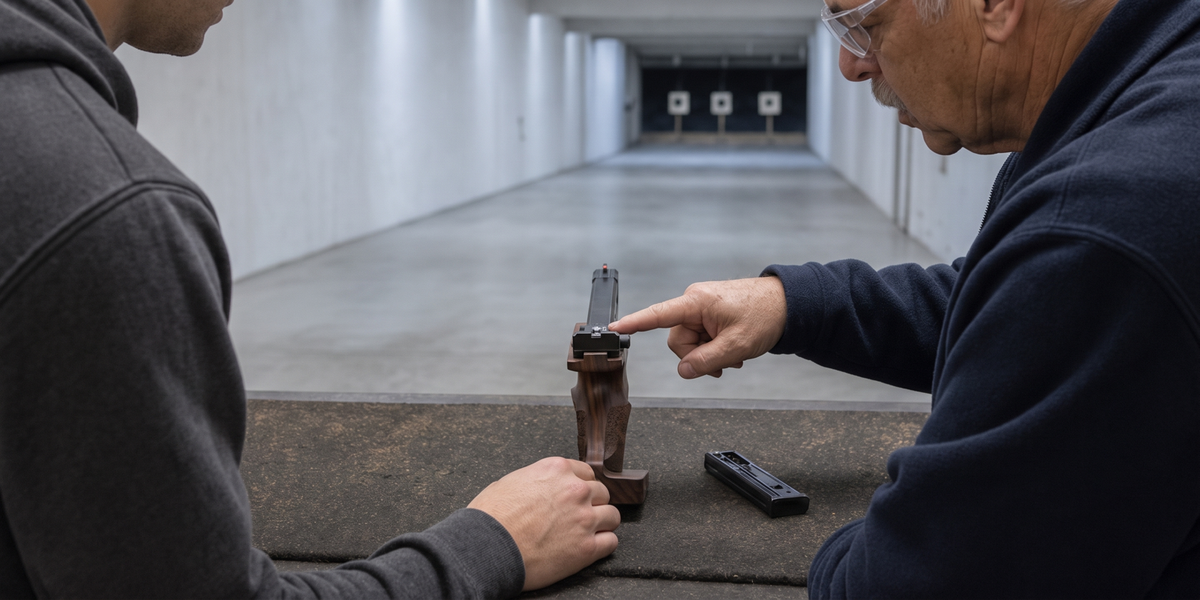
Holdover produced the feature as a fictional Canadian training-bench moment using current official sport-pistol references. The people, pistol, range, and session do not depict BCTSA, an applicant, a qualifying handgun, or a documented event.
BCTSA asks for one specific pistol
BCTSA identifies itself as the provincial governing body for the relevant International Olympic Committee and International Paralympic Committee disciplines in British Columbia. Its page routes an applicant into one of three roles: training, competing, or coaching.
The instructions start with a practical choice. Find the specific handgun first. BCTSA says a request should identify a firearm rather than become a shopping list. The page says a training-only applicant is generally limited to one exemption. A coach may support more latitude when the applicant has a coach and a training plan.
That is a consequential use of the governing body's discretion. A new shooter can face a genuine fit problem. One-handed target pistols vary in grip size, palm-shelf adjustment, balance, sight radius, trigger geometry, and the way the controls meet the hand. BCTSA's process asks the training-only applicant to settle on one example before the transfer file can move.
The page says the handgun will generally be .22 calibre. Centre-fire requests receive a narrower reception. Those are BCTSA's current operating rules for its letter process. They sit beside the federal eligibility test instead of inside its wording.
The Act requires three facts
Section 97.1 of the Firearms Act describes the annual letter. A governing body must indicate that the person is training, competing, or coaching in an Olympic or Paralympic handgun discipline. It must name the discipline. It must say the handgun is necessary for that activity.
The section establishes eligibility for the exemption. It leaves the governing body to decide whether the evidence supports those statements.
BCTSA's forms show what that judgement looks like in B.C. A training applicant submits a training log. A competitor supplies an activity record and, under the current page, should have competed within the previous 12 months. A coach supplies a coaching record. The association warns that only two or three volunteers may be providing letters, which also explains why complete records matter.
The Shooting Federation of Canada publishes a parallel route. Its page asks for membership in good standing, a valid RPAL, club membership, and the supporting documents for the applicant's role. SFC also describes issuance as discretionary.
Two letter bodies can apply the same federal section through different forms and operating judgements. The statute supplies the common floor. The issuer decides whether it can sign the annual statement.
The letter opens the next file
An exemption letter still leaves the transfer decision ahead. The RCMP's current guidance says eligibility is confirmed during the transfer process. The Chief Firearms Officer receives the file and authorizes or refuses the transfer under the applicable law and evidence.
An import adds another step. Global Affairs Notice 1106 says a new import requires an import permit along with a letter covering the same training, competition, or coaching purpose, discipline, and necessity.
This produces a clean sequence:
- the applicant identifies a qualifying role, discipline, and specific
handgun;
- the governing body decides whether its annual letter can support the file;
- the CFO decides the transfer; and
- Global Affairs decides any required import permit.
Each approval answers its own question. Carrying one document through the sequence never turns it into the next decision.
Fifty-seven transfers show the scale
Public Safety's October 2025 briefing snapshot counted 57 handgun transfers under the Olympic and Paralympic exemption since the 2022 freeze. It also counted four governing bodies able to issue letters. That figure is a dated federal snapshot, rather than a live August 2026 total.
The count gives BCTSA's page useful scale. This is a working route used by a small number of people. The governing-body letter controls access at the front of a process that still includes federal transfer scrutiny and, in some cases, an import decision.
I received my RPAL after the transfer freeze and shoot a privately leased CZ SP-01 Shadow. That arrangement lets me participate while personal acquisition remains closed outside the exemptions. It also makes the distinction between access and acquisition hard to miss. Range time can build skill. A transfer creates a different legal file.
For a new B.C. target-pistol shooter, BCTSA's current one-handgun rule makes the choice inside that file unusually important.
Read the rule at the right layer
A careful applicant can keep four questions separate:
- Does the activity and discipline meet section 97.1?
- Will BCTSA support the annual letter for this person and this handgun?
- Will the CFO authorize the transfer?
- Does the acquisition require a Global Affairs import permit?
The same separation helps anyone reporting on the exemption. Calling BCTSA's one-handgun line a federal statutory limit gives the rule to the wrong actor. Treating the annual letter as a transfer approval skips the decision that follows it. Adding current owner reports to the federal count turns anecdotes into a statistic they cannot support.
BCTSA has done owners a service by publishing its current operating line. A training-only applicant can see the constraint before choosing a pistol, assembling logs, or asking a volunteer to review the request. Competitors and coaches can see which records carry their case. Everyone can see where the association's judgement ends.
The law preserved the lane. BCTSA's current page shows who sets its practical width.
Sources
- B.C. Target Sports Association: handgun exemption
- Firearms Act, section 97.1
- RCMP: classes of firearms and transfer eligibility
- Shooting Federation of Canada: exemption letters
- Public Safety Canada: October 2025 briefing material
- Global Affairs Canada: Notice to Importers No. 1106
- Current r/canadaguns discussion that surfaced the B.C. process
The amnesty file is still moving.
If this piece sent you back to government pages, do not wait for the next portal, Gazette, or court move to find you by accident.
The Dispatch follows Public Safety, RCMP, Canada Gazette, court, compensation, collection, and amnesty updates so the next change comes with the source that moved.
Safety note: the tracker is a worksheet for source hygiene, not legal advice or a substitute for current official guidance.