Brass sizing took me *a year* to understand
A visual introduction to neck sizing, full-length sizing, shoulder bump, and the brass concepts that took me about a year to understand.

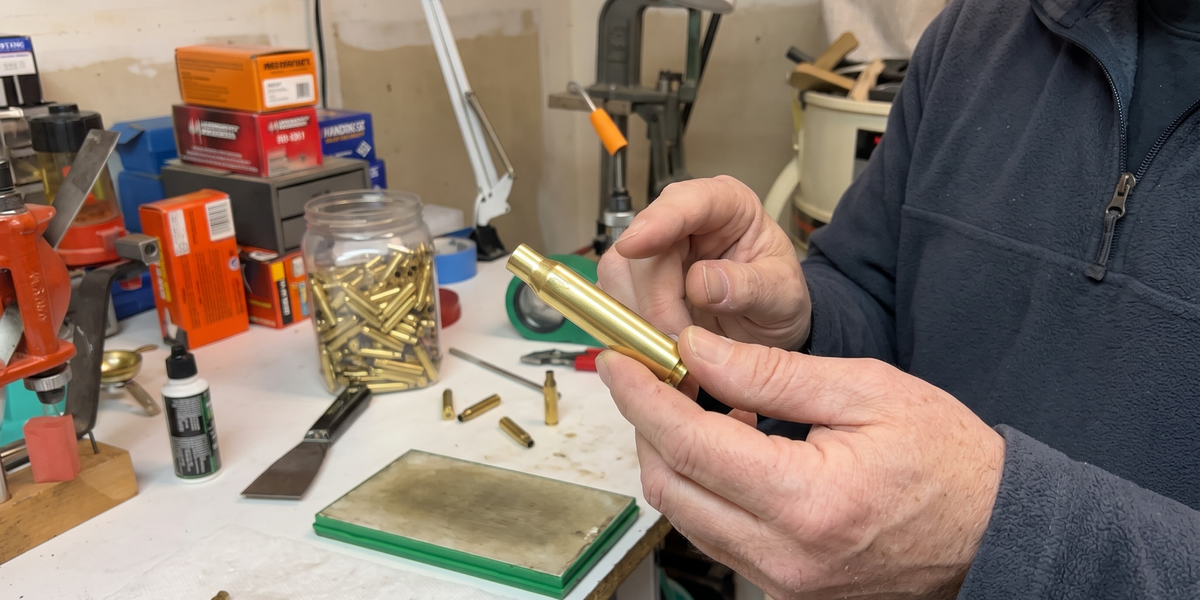
I started reloading without the faintest clue how much was involved. I picked up bits of advice at stores, at the range, and from acquaintances, then tried to piece it all together at the bench. I've learned through a shitload of trial and error.
I've ruined plenty of brass. I've also had three case-head separations across two cartridges: .338 Lapua Magnum and .300 Win Mag. Those are serious failures, and I'm still learning.
Brass sizing took me far too long to get my head around. I'd heard the words: neck sizing, full-length sizing, shoulder bump. It took about a year to reach what I'd call a working understanding of how those ideas fit together. You may get there much faster than I did.
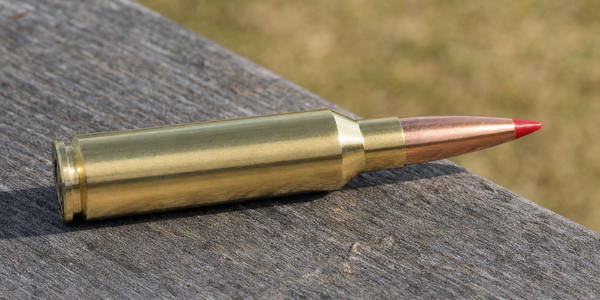
The interactive below brings a few of those concepts into view: which parts of a case change, what a shoulder bump means, and how brass changes through use. I wanted to be able to see what people were talking about.
I still enjoy the learning and experimenting. There's plenty left for me to figure out, and it's a lot of fun.
Brass, explained.
See how firing and sizing change the case. Understand what those changes mean.
What is a shoulder bump?
The shoulder moves slightly toward the case head.
Put the terms together.
Neck sizing and full-length sizing describe the scope of reshaping. Shoulder bump describes one particular change.
Scroll sideways to compare all three terms.
| What changes? | Neck sizing | Full-length sizing | Shoulder bump |
|---|---|---|---|
| Neck | Reshaped | Reshaped | The term does not specify neck change |
| Body | Retains its fired shape | Reshaped | The term does not specify body change |
| Shoulder | No intended setback | Position can change | Moves toward the case head |
| What it tells you | Which part is sized | Which parts are sized | What happened to shoulder position |
The questions behind the diagrams.
Does a shoulder bump matter?
Yes. It changes how a bottleneck case fits lengthwise in its chamber. Close fit, free chambering, and room for expansion are related. The name alone says nothing about whether a particular case is suitable for a particular firearm.
How does the shoulder move?
A sizing tool’s shoulder contour can deform the brass shoulder. “Bump” describes the resulting change in position. The animation enlarges this movement so the change is visible.
Is shoulder bump the same as trimming?
No. Trimming removes material at the case mouth. Shoulder setback changes the position of the angled shoulder. Those are different features and different changes.
What does the die design tell you?
A full-length die has body and shoulder surfaces as well as a neck-sizing region. Its name describes the tool’s design; the effect on an individual case depends on how the case and tool interact.
Does neck sizing stop the brass from wearing?
No. The neck still undergoes deformation. Repeated use also involves pressure, temperature, material history, and fit. Neither sizing label provides a dependable count of remaining uses.
One quick check.
When the case shoulder moves back, which part has changed?
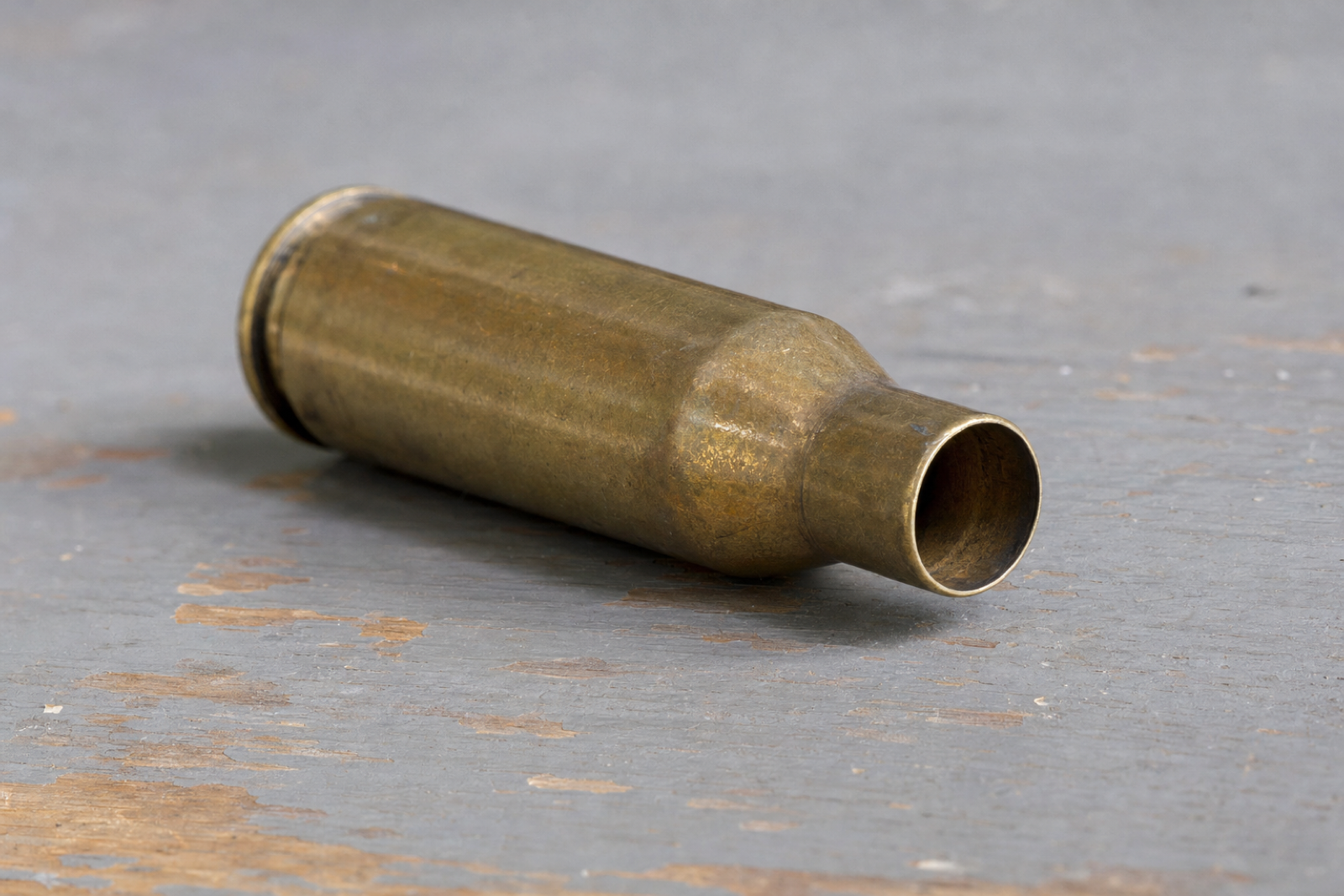
A closer look at the brass
Sources
- Hornady: Internal Ballistics explains case expansion and chamber fit.
- RCBS: Neck Sizer Die describes the neck-only sizing region.
- Annealing Made Perfect and Peterson Cartridge: Age Hardening of Brass discusses cold working and changes in hardness.
- Peterson Cartridge: Peterson Got the Belt identifies the .300 Win Mag as a belted case.
Set up the bench before the first mistake.
If this piece has you thinking about a first reloading bench, slow the buying part down and make the safety/process part visible.
Use the Holdover Reloading Bench Setup Checklist to track manuals, press, dies, scale, calipers, case prep, labels, storage, bench layout, safety routine, and what still needs an experienced second look.
Safety note: the checklist does not provide load data, recommend charge weights, teach reloading, or replace current published manuals, manufacturer instructions, qualified instruction, or applicable law.