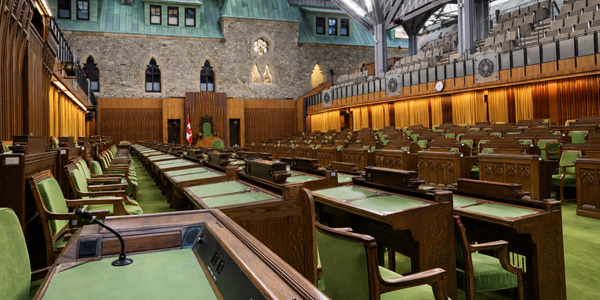
Britain dropped the moderator variation and kept the licence
Britain stopped recording each sound moderator as a firearm while keeping possession behind a valid certificate. Canada now has a concrete middle ground to answer.

Advocacy / Canadian Context. On June 29, Britain made a firearms-law change Canada should be able to understand. It stopped treating a sound moderator as a firearm in its own right. It kept possession behind a firearm or shotgun certificate.
That is the useful part. Britain changed the unit of control.
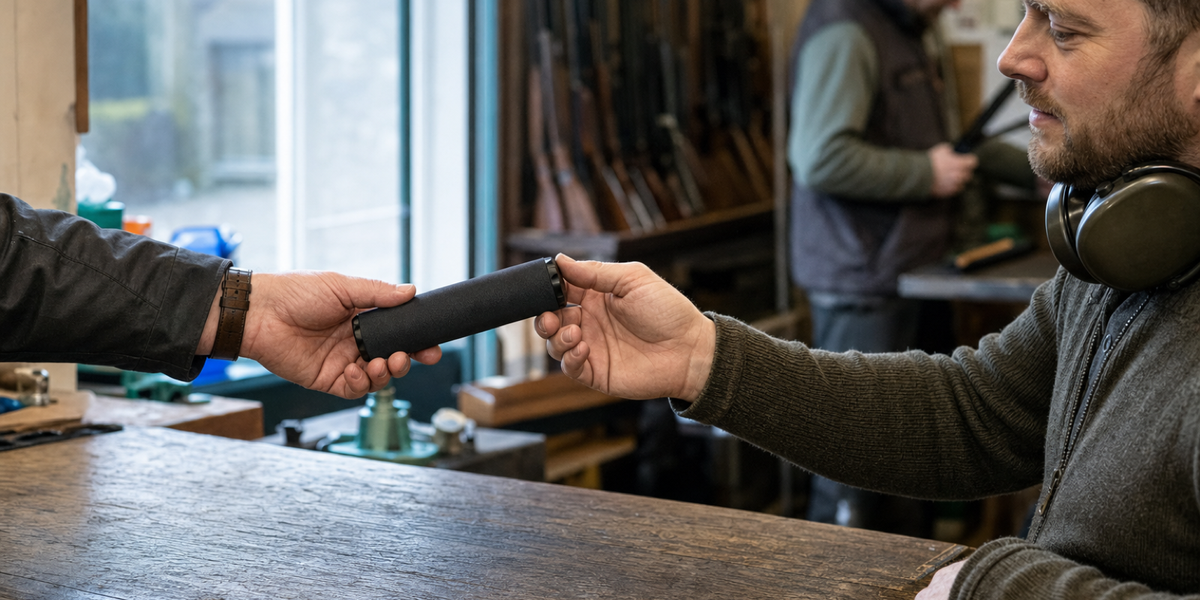
Holdover produced the feature as a fictional British club-counter handover. The people, location, accessory, and transaction are representative and do not depict an actual event or exact product.
The accessory came off the certificate
Section 44 of the Crime and Policing Act 2026 removes sound moderators and flash suppressors from the definition of a firearm in Britain's Firearms Act. The Home Office commencement circular says the measure took effect June 29 in England, Wales, and Scotland.
Before the change, a certificate holder with a legitimate need had to ask the police for a variation when acquiring or disposing of a moderator. The dealer also had to record the transaction. The new rule removes both item-level jobs.
Possession remains controlled. Section 44 creates an offence for a person who possesses the relevant accessory without a valid firearm or shotgun certificate, subject to the Act's exemptions. The official explanatory notes say the holder has already passed police suitability checks and has a legitimate purpose.
That is a modest piece of legislative engineering. Police stop processing a variation for every inert tube. Dealers stop maintaining a firearm-style record for each one. The person receiving it still has to be inside the certificate system.
Canada's rule is still categorical
Canada starts from the other end. Section 84 of the Criminal Code defines a prohibited device to include a device designed or intended to muffle or stop the sound or report of a firearm.
That remains the law. A Canadian licence leaves the prohibition intact. This article stays with policy and supplies zero acquisition, import, construction, fitting, or use advice.
The policy comparison is still fair. Britain has a firearms-licensing system, police suitability checks, dealers, certificates, and public-safety duties. Its government concluded that treating each moderator as a firearm created an administrative burden without serving a public-safety purpose. It retained a possession gate tied to the certificate holder.
Britain's certificate system is different from Canada's PAL system. Copying the statute word for word would be lazy. The structure is what matters: regulate the eligible person and stop pretending the accessory needs a separate firearm identity.
Twenty-one decibels belongs in context
The Claude seed that led to this article was built around a striking hearing- protection number. It is worth keeping, with its limits attached.
NIOSH measured firearm peaks from 144 to 172 dB SPL and recommends plugs plus muffs every time a firearm is fired. In one 12-gauge test, a particular earmuff reduced the peak by 31 dB. Adding a deeply inserted foam plug produced another 21 dB of peak reduction in that configuration.
The 21 dB figure belongs to that one configuration. Treating two package ratings as simple arithmetic would misstate it, and a different range, firearm, fit, or position changes the exposure. The test shows how much work shooters already ask personal protective equipment to do after the pressure wave leaves the muzzle.
Canadian shooters should keep using appropriate plugs and muffs. Holdover's electronic-ear-pro guide covers the practical seal, glasses, cheek-weld, and range-command questions. Source reduction and personal protection solve different parts of the same physical problem.
At a covered Canadian firing line, I wear plugs under muffs and still feel the blast from a braked centre-fire rifle several benches away. The roof gives that pressure nowhere polite to go. That lived part is why source control belongs in the policy discussion.
The new question is who gets checked
Holdover has already made the broader Canadian case for treating sound moderators as a hearing and range-neighbour issue. The British change advances that conversation by supplying a live policy design with a certificate gate and less item-level administration.
Canada already knows how to vet licence applicants, run continuous eligibility screening, regulate businesses, and attach criminal consequences to unlawful possession. Parliament could decide that those controls remain insufficient for sound moderators. It would then have to explain why the British structure fails in Canadian conditions.
That explanation should deal with the actual mechanism. Britain removed a per-item variation, removed a dealer-record requirement, and kept possession inside a police-vetted certificate population. The change saves licensing work without opening ordinary possession to everyone.
For Canadian owners, that is a better argument than a borrowed American tax stamp or another Hollywood debate about whether a moderator makes a gunshot disappear. It asks a recognizably Canadian regulatory question: once the person has passed the check, what public-safety work is the separate prohibited-device status doing?
Britain kept the person inside the check and took the inert accessory off the variation form. Canada now has to explain why that middle ground remains outside the conversation.
Sources
- UK Crime and Policing Act 2026, section 44
- UK explanatory notes: firearms licensing and sound moderators
- Home Office Circular 004/2026
- Canada, Criminal Code section 84
- NIOSH, Firearms and Hearing Protection
Keep the range notes worth reading later.
If this piece has you thinking about range time, keep the notes useful enough to read later.
Use the Holdover Range Bench Log Card to record rifle, optic, ammunition, distance, weather, zero, group notes, correction, and next test without turning a range trip into a memory test.
Safety note: the card is a note-taking worksheet, not shooting instruction, load data, legal advice, or a substitute for range rules, official guidance, manufacturer manuals, or qualified instruction.