Electronic ear pro: *between the shots*
Electronic hearing protection earns its place when it keeps the range audible and its seal intact after a rifle stock reaches the cheek weld.

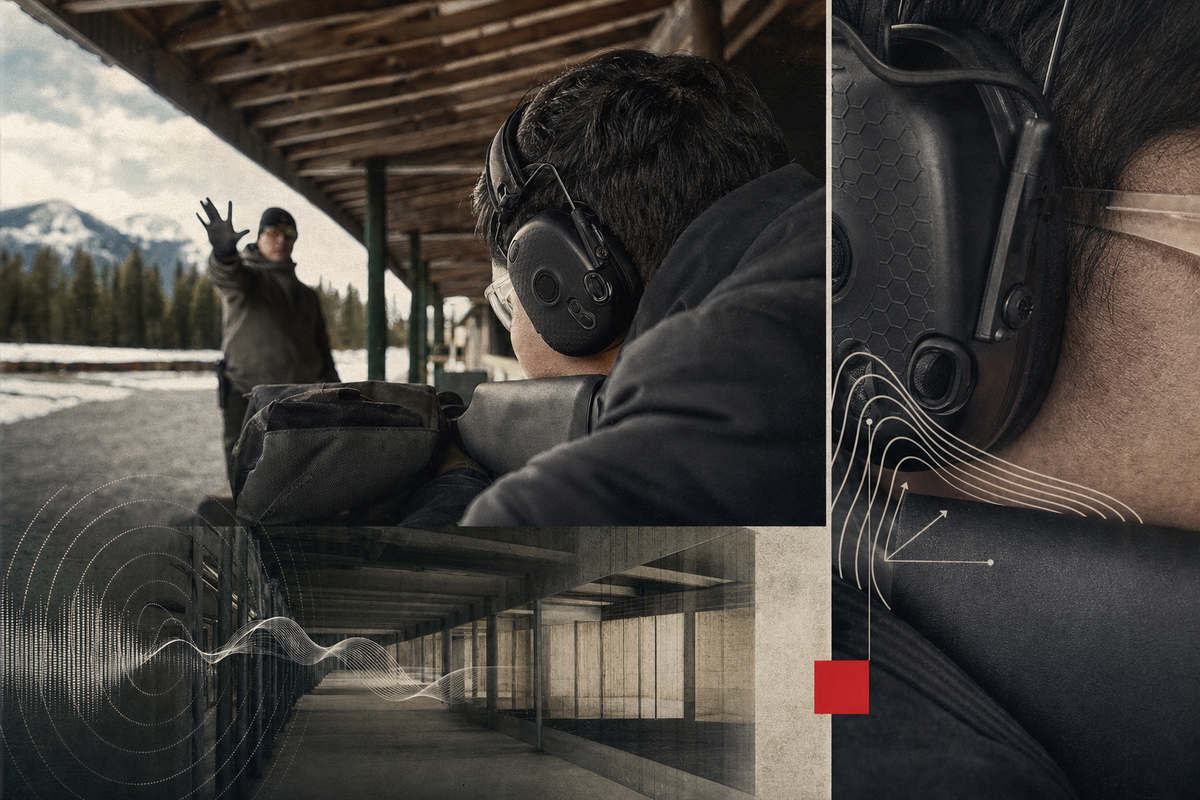
An ear cup brushing a rifle stock looks like a comfort problem until it changes the position behind the scope. The head comes up a fraction. The seal opens. Then a perfectly ordinary group gets blamed on the rifle, the ammunition, the wind, or whichever expensive upgrade is easiest to order before the next Saturday.
I have learned to watch for that small compromise. At a covered line, I want the range officer's voice between the strings. I also want the ear cup to stay where I sealed it when the rifle comes up. Those are not separate requirements. They are the reason electronic ear protection belongs early in a first-season setup.
Gunfire is an impulse, not a background sound
The Canadian Centre for Occupational Health and Safety describes impulse or impact noise as a short, loud burst that lasts less than a second. That is a more useful way to think about gunfire than the box copy on a pair of muffs. The noise arrives quickly. The fit has to exist before it does.
NRR is still a useful comparison number, but it is a laboratory rating, not permission to do gunshot arithmetic in a parking lot. CCOHS's current guidance is blunt about the part product pages cannot solve: fit, care, and use change the protection a person actually receives. Its CSA-based calculation for dual protection also does not simply add two box ratings together.
That is why the first question is not which number wins. It is whether the cup seals around your ear, stays sealed when your glasses and rifle stock get involved, and is comfortable enough that you leave it on for the whole day.

The seal has to survive the cheek weld
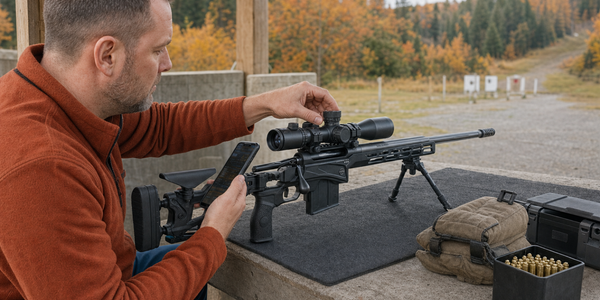
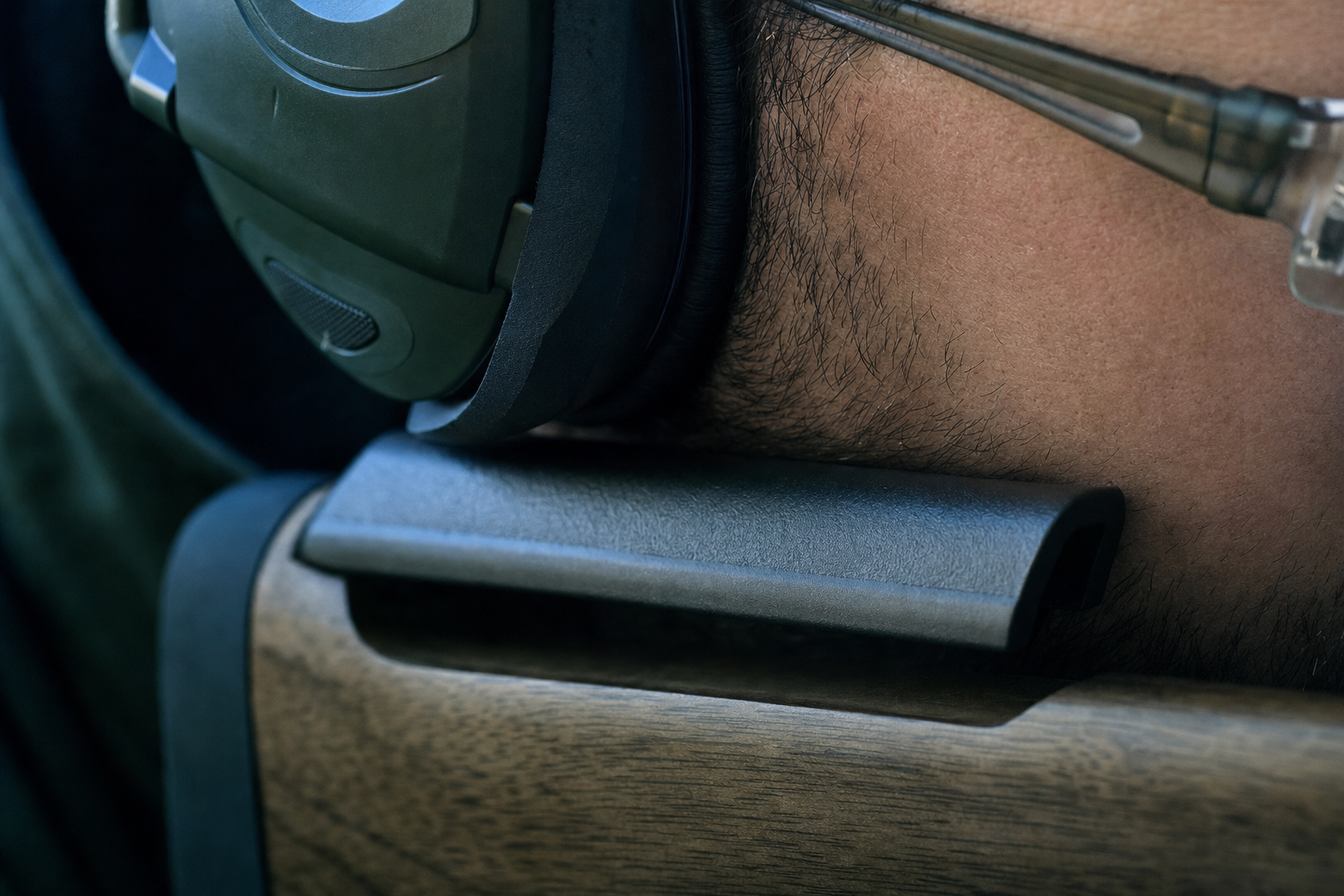
A precision rifle asks for a stable cheek weld. A bulky ear cup can push against the stock comb, lift at the bottom, or persuade a shooter to float their head just enough to make the sight picture less repeatable. The problem is rarely dramatic. That is what makes it annoying. It can look like a minor comfort issue while it quietly changes two useful things at once: position and seal.
Low-profile electronic muffs are worth considering because they can leave more room around the stock while preserving normal conversation and range commands. Walker's current Razor Slim page lists a 23 dB NRR, two microphones, and full-range speakers. Honeywell's Impact Sport sheet lists 22 dB NRR and Canada Class B. 3M lists 25 dB NRR for the Peltor Sport Tactical 500, along with low-profile long-gun cut-outs and communication features.
Those are examples of tradeoffs, not a podium. The better pair is the one that fits your head, works with the glasses you wear, and does not make your normal rifle position negotiate with a plastic ear cup. A slim profile is not a guarantee of a good seal. It is only a reason to check more carefully.
Double protection has a practical Canadian case
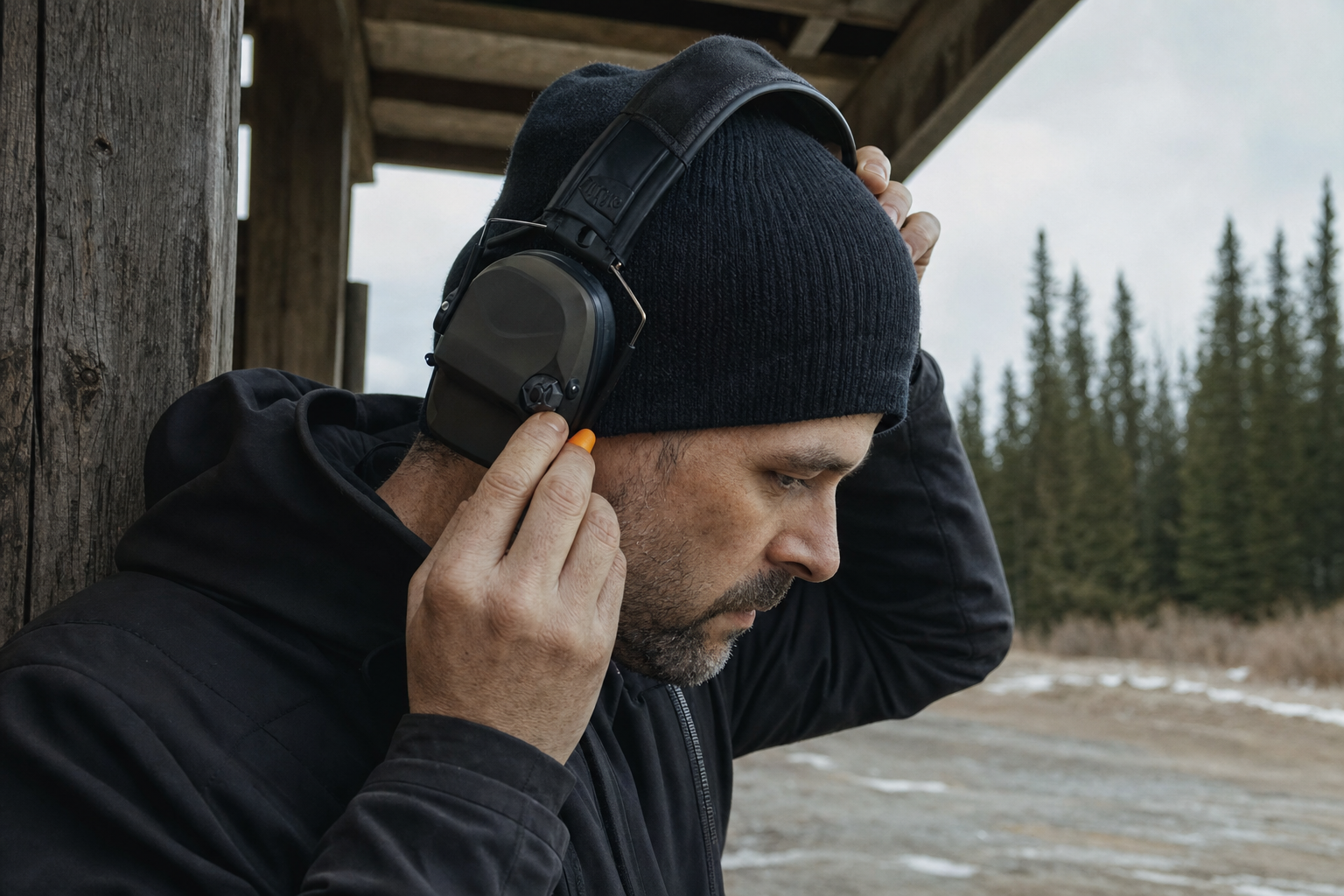
Health Canada's current hearing-health page tells people using firearms to consider double protection: earmuffs over earplugs. That advice is refreshingly plain. It also avoids the false comfort of treating two ratings as a neat subtraction problem.
The useful routine is just as plain. Fit the plugs properly, settle the muffs over them, and then confirm that the cup is still sealed when the rifle reaches your shoulder. Electronic muffs earn their money in the quieter intervals: you can hear the range officer, a nearby shooter, and the ordinary conversation that makes a first season less opaque. They do not turn a loud firing line into a quiet room, and they do not excuse a poor seal.
That distinction matters most around the sort of rifle setup that tempts people to spend money on every visible part. A new optic is exciting. A better stock feels productive. An ear cup that fits is boring enough to disappear from the shopping cart until the first day it does not.
Buy for the fit you can keep
The most honest way to choose is to test the whole relationship before you decide. Bring the glasses you actually wear. Put the muffs on. Build the same cheek weld you use at the bench. Notice whether the cup lifts, whether your jaw is being pushed away from the stock, and whether normal speech still reaches you at a sensible volume.
Do not mistake a premium feature list for a fit check. Bluetooth, a nicer microphone circuit, or a more expensive headband may make sense later. None of them matters if the cup moves when the stock arrives. If the line sounds distant with the electronics on, or the cheek weld breaks the seal, that pair has given you a useful answer.
Canada now has 2,473,661 firearms licence holders in the RCMP's 2025 report. Plenty of them have already learned this the slow way, usually after buying something more glamorous first. A first-season setup does not need to be heroic. It needs a pair of muffs that lets the line speak, a seal that survives the stock, and enough honesty to leave the bigger upgrade for later.
Sources
- Health Canada, Noise and sound: Protect your hearing health, updated January 6, 2026, checked July 12, 2026.
- Canadian Centre for Occupational Health and Safety, Noise - Basic Information, checked July 12, 2026.
- Canadian Centre for Occupational Health and Safety, Hearing Protectors, checked July 12, 2026.
- Royal Canadian Mounted Police, 2025 Commissioner of Firearms Report, checked July 12, 2026.
- Walker's, Razor Slim Electronic Ear Muffs, checked July 12, 2026.
- Honeywell, Impact Sport sound amplification earmuff specification sheet, checked July 12, 2026.
- 3M, Peltor Sport Tactical 500 Electronic Hearing Protector, checked July 12, 2026.
Shortlist the rifle before the checkout page.
If this piece helped you narrow the rifle question, keep the tradeoffs visible before the next tab becomes a shopping cart.
Use the Holdover Rifle Cartridge Shortlist Card to compare use case, distance, recoil, ammunition availability, rifle fit, optics plan, budget, and what you will actually practice.
Safety note: the card is a planning worksheet, not buying advice, legal advice, hunting guidance, load data, or a substitute for current manufacturer, range, provincial, federal, or qualified-instructor guidance.