CamPro put .311 back in the catalogue
CamPro's current 180-grain .311 plated-bullet listing gives Canadian .303 owners a component lead. The public load-data centre leaves the recipe question open.


Handloading. CamPro's current product page lists a .311-inch, 180-grain full-copper-plated spitzer. Its public load-data centre has no .303 British entry.
Those two facts belong together. The first gives Canadian .303 owners a real component to ask about. The second keeps a product listing in its proper place. A bullet page identifies the object. A current published data source carries the recipe.
This article is a document read. Holdover has no bench or range test of CamPro product 12690.
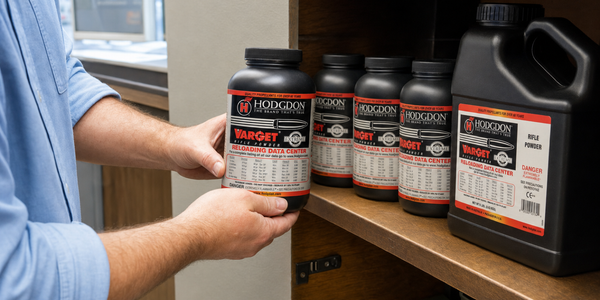
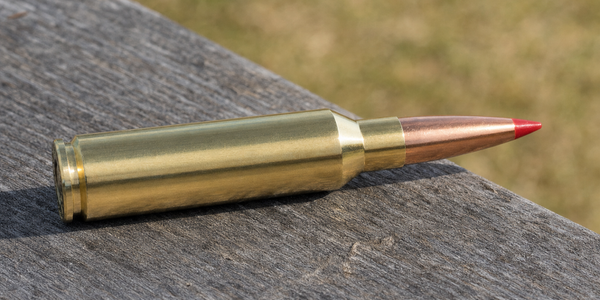
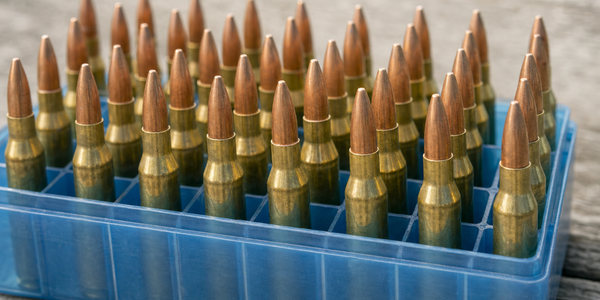
Holdover produced the feature as a fictional Canadian bench inspection using current official CamPro product references. The person, bench, tray, projectiles, and moment do not depict a CamPro facility, retailer, buyer, test, or documented event.
The product page carries three useful facts
CamPro names the projectile .311 180gr FCP SPITZER. The specification fields give its weight as 180.0 grains and its diameter as 0.311 inches. The legend on the same page defines FCP as full copper plated and S as spitzer.
The photographs add the physical detail. It is a long pointed projectile with a plated surface, one narrow cannelure around the shank, and a flat closed base. The short description calls it a high-mass spitzer for big-bore applications. Cartridge names are absent from that description.
The site's official product record dates the entry to February 19, 2026, with a February 24 modification. A Canadian Gun Nutz thread started February 1 and described an anticipated prototype for .303 British, 7.62x54R, 7.65x53mm Argentine, 7.7x58mm Arisaka, and other .311-inch uses. That thread shows the community request and the prototype context. CamPro's page supplies the product facts.
The sequence matters. A specific Canadian-made component moved from an anticipated prototype discussion to a current manufacturer listing during 2026.
The empty data line has one clear meaning
At the July 31 check, CamPro's public load-data records returned zero results for .303. The site's current calibre taxonomy also carried no .303 British entry. That finding has a narrow scope: CamPro's public data centre as it exists today.
It leaves several questions for CamPro or a current authoritative manual. Which cartridges does the manufacturer specify for product 12690? Which published data covers this exact plated construction? Which operating envelope applies? Which component substitutions, if any, are supported in writing?
CamPro's general site says its plated bullets can be used with standard reloading charts for jacketed bullets. That broad statement leaves the handloader responsible for finding current data that covers the cartridge, bullet weight and construction, powder, primer, case, and rifle in front of them. A forum charge belongs to the person who posted it. A manufacturer page belongs to the product it names. A published manual belongs on the bench.
This is the useful correction to the easy version of the story. The current catalogue proves that CamPro lists the projectile. Retail stock, price, performance, and a safe .303 British recipe each need their own evidence.
On the bench, labels have separate jobs
On my own bench, a component label and a data table answer different questions. The label tells me what is in the bag. The table tells me whether that exact class of component belongs in the load under consideration.
Diameter and weight form only part of the identity. A plated projectile, a drawn-jacket projectile, and a cast projectile can share a nominal diameter and weight while carrying different construction and operating guidance. The current CamPro page makes the construction explicit. That is valuable because it gives the handloader the correct words for the next enquiry.
The bag or invoice should stay with the bench notes. Record the product name, lot or package identifier, purchase date, and the exact source used for the data. A future product-page edit then stands out against the dated record in the notes.
That habit costs a minute. It also keeps a .311 bullet from becoming a vague substitution rule.
Five questions for product 12690
A Canadian .303 owner can now ask a dealer or CamPro a much better set of questions:
- Is product 12690 currently in production and available through Canadian dealers?
- Which cartridges does CamPro currently specify for the 180-grain .311 FCP Spitzer?
- Where is the current written .303 British data for this exact construction?
- Which current manufacturer or manual source covers a compatible 180-grain .311 plated projectile?
- Which product and lot identifier should stay with the loading notes?
Answers in writing have lasting value. A retailer's shelf confirms stock on one day. A forum thread preserves community experience. The manufacturer and current manuals carry the specifications and data they publish.
The Canadian part is specific
CamPro describes itself as a proudly Canadian family business that has manufactured fully copper-plated projectiles since 1995. Its current catalogue now includes the exact .311 product that Canadian surplus-rifle owners were discussing at the start of the year.
That adds a domestic enquiry point for a cartridge with deep Canadian history. It also gives the reader a reason to be precise. Supporting a Canadian maker starts with buying the right component for a documented use, from a current source, with a recipe that belongs to the exact job.
The product page gives the bullet a number. The blank data line gives the owner the next question.
Sources
- CamPro, .311 180gr FCP Spitzer
- CamPro, manufacturer home page
- CamPro, official product record
- CamPro, About
- CamPro, Reloading Data Center
- Canadian Gun Nutz, anticipated CamPro 180gr .311 FCP prototype thread
Set up the bench before the first mistake.
If this piece has you thinking about a first reloading bench, slow the buying part down and make the safety/process part visible.
Use the Holdover Reloading Bench Setup Checklist to track manuals, press, dies, scale, calipers, case prep, labels, storage, bench layout, safety routine, and what still needs an experienced second look.
Safety note: the checklist does not provide load data, recommend charge weights, teach reloading, or replace current published manuals, manufacturer instructions, qualified instruction, or applicable law.