Handloads on the road: *150 kilograms*, boxes included
Canada's 150 kg transport exemption counts completed cartridges and their boxes. UN0012 starts the legal check; containment and the other conditions finish it.

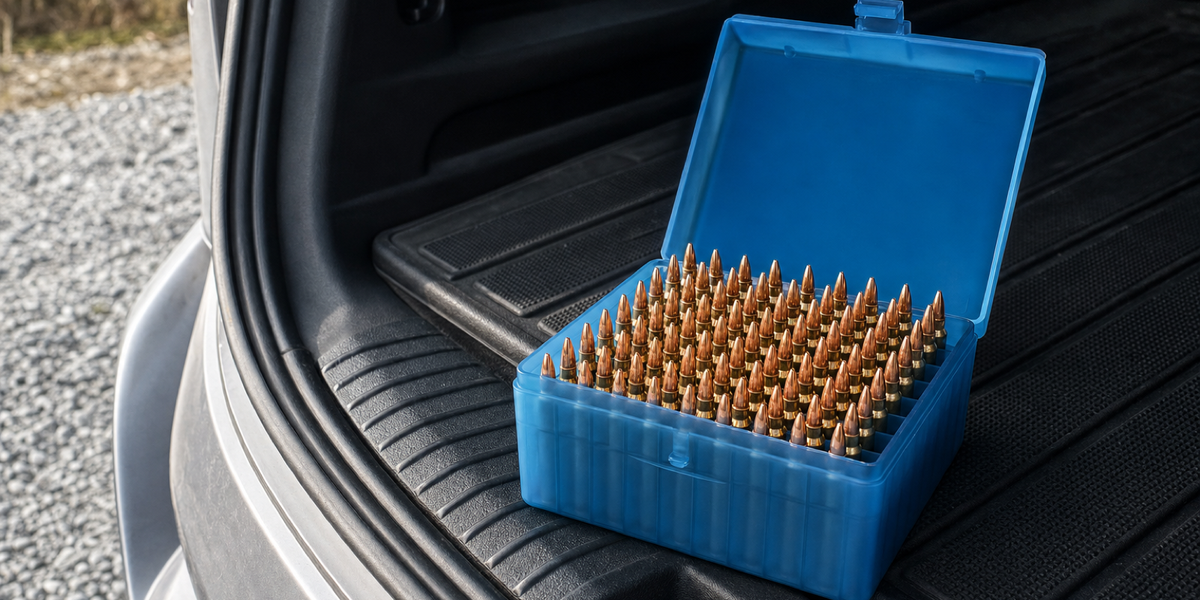
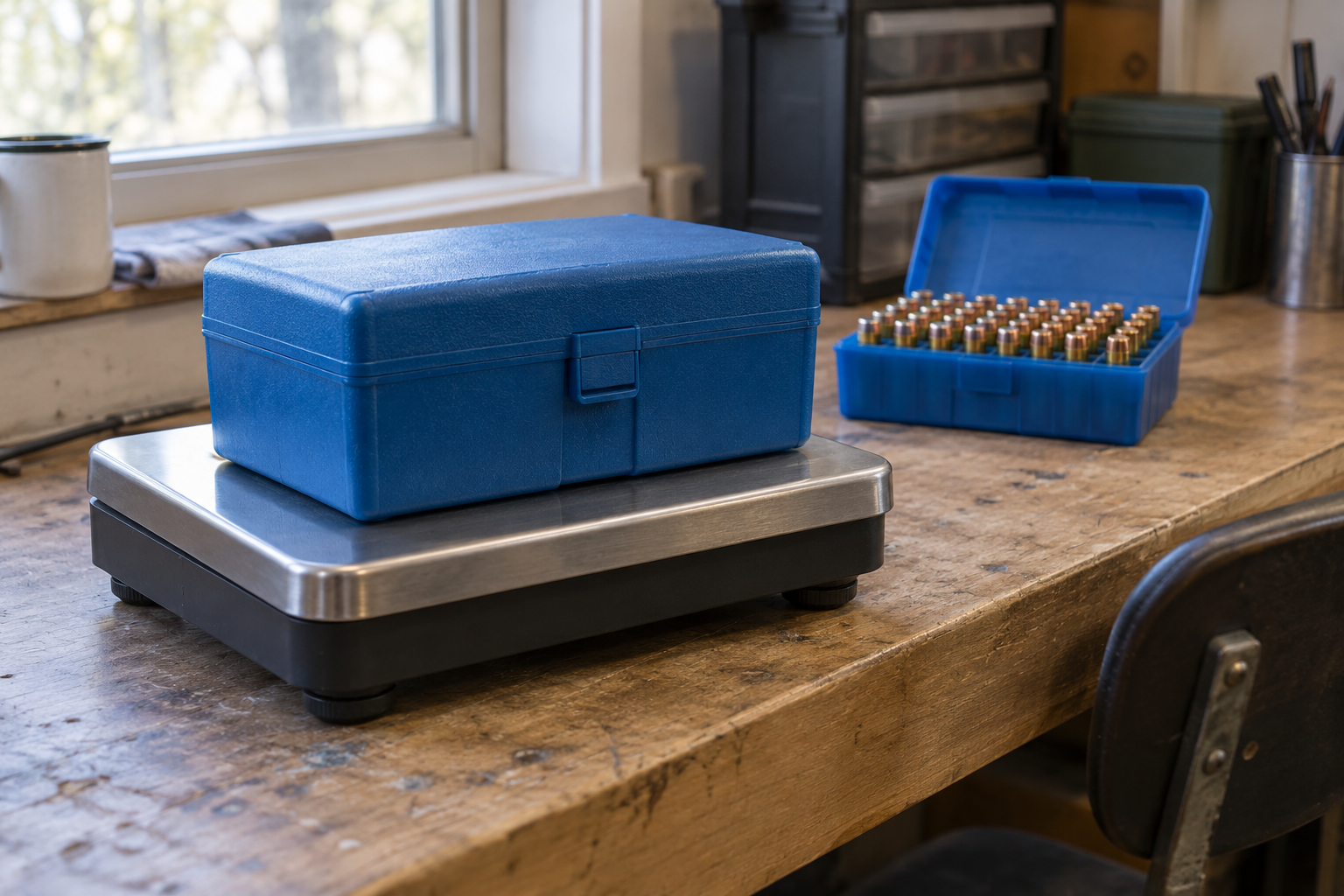
A box of finished handloads has two useful quantities: the rounds inside it and the weight of the whole thing. Canada's 150 kg dangerous-goods exemption uses the second. The brass, projectiles and box count along with the powder.
My bench centres on an RCBS Rebel single-stage press. I am comfortable spending time on small measurements there. The legal arithmetic for the drive to the range deserves some attention too, particularly when an ammunition discussion jumps from a UN number to a confident claim that the paperwork disappears.
For a private road trip within Canada, finished handloads can qualify for substantial exemptions. The useful answer sits across two federal regulations, with different duties and conditions. Reading them together gives owners a firmer answer than a round count passed around at the club.
The classification already exists
Section 305(3) of the Explosives Regulations assigns UN0012 to small arms cartridges manufactured under Part 14, Division 2, for transport purposes. That includes the personal-use handloading covered by that division. The same subsection assigns a different number to black powder cartouches.
UN0012 gives those finished cartridges a place in the transport rules. It does useful work when another provision identifies which explosives qualify for an exemption. The number alone says nothing about the weight of your packed consignment, the other dangerous goods in the vehicle, or the condition of a container.
That scope deserves to stay attached to the claim. The provision concerns cartridges made under that division and their classification for transport. A reader should be able to follow it from the home bench to the relevant transport provision without picking up a broader promise along the way.
What the 150 kg exemption asks
Section 1.15 of the Transportation of Dangerous Goods Regulations provides the exemption. Its Class 1 exclusions have a specified list of exceptions, including UN0012. For the private road-trip example here, several conditions operate together:
- The ammunition must be in suitable small containers designed, constructed, filled, closed, secured and maintained to prevent a dangerous release during normal transport and handling.
- Each container of these non-gas dangerous goods must weigh no more than 30 kg gross.
- All dangerous goods on the vehicle must total no more than 150 kg gross.
- The goods must be in a quantity or concentration available to the general public and carried by a user or purchaser. The section also includes certain retailer deliveries.
- The exclusions in subsection (2) still apply. These include quantities requiring an emergency response assistance plan and goods requiring control or emergency temperatures.
The Transport Canada FAQ explains gross mass as the weight of the container and everything inside. For ammunition, that means the completed cartridges and their packaging. Counting only the propellant would answer a different question.
An ordinary round count cannot establish the result. Cartridge weights differ, containers weigh something, and another item in the load can affect the exemption. Transport Canada's guidance also cautions against combining this exemption with other listed exemptions or a shipment requiring shipping documents. A mixed load needs its own reading.
Which requirements fall away
When the conditions are met, the current section exempts Parts 3 to 6, 8 and 17. Those cover documentation, dangerous-goods marks, means of containment, training, reporting, and site registration requirements.
The containment wording inside section 1.15 remains a condition of using it. A general exemption from Part 5 therefore still comes with an express requirement for suitable containers. The owner gets relief from specified regulatory parts while retaining the conditions written into the exemption itself.
There is a sensible public-safety rationale here. The regulation gives a smaller, eligible consignment a simpler path while still addressing what happens if its container opens or fails during handling. Licensed owners can support that approach and expect the government's explanation to make the path easy to find.
The 150 kg figure names this particular exemption. A heavier consignment needs assessment under the other applicable provisions. Treating the number as a universal legal ceiling would overstate what section 1.15 says, just as treating a light box as automatically exempt would leave out its other conditions.
A second exemption has a different reach
The Explosives Regulations have their own transport provisions. Section 190(1)(c)(i) lists any quantity of UN0012 cartridges among the goods exempt from sections 191 to 203.1. Section 190(2) retains a packaging or containment duty aimed at minimizing the likelihood of ignition during normal transport.
The words “any quantity” belong to that particular exemption. They leave the separate TDG conditions to do their own work. Combining the unlimited wording from one regulation with the relief in another would produce an answer neither provision gives on its own.
Section 187 also defines a carrier to include a person who transports explosives. That definition gives a private owner transporting ammunition a clear starting point. The applicable exemption then determines which of the listed obligations fall away.
An answer an owner can use
This is a domestic road-transport reading for finished ammunition. Flights, border crossings, courier acceptance and a club's own conditions involve additional questions. Holdover's earlier firearm-case article and ammunition-storage article deal with adjacent duties. Each has its own legal starting point.
For the drive, I would want the classification, the packed gross mass and the exemption conditions in the same conversation. That is a reasonable amount of precision to ask of a subject surrounded by confident shorthand. The reusable box earned its place by keeping the ammunition organized. It also gets a place in the arithmetic.
Sources
- Explosives Regulations, Part 14, Division 2, including section 305(3)
- Transportation of Dangerous Goods Regulations, section 1.15
- Transport Canada dangerous-goods FAQ: 150 kg gross mass exemption
- Explosives Regulations, Part 9, sections 187–190
Set up the bench before the first mistake.
If this piece has you thinking about a first reloading bench, slow the buying part down and make the safety/process part visible.
Use the Holdover Reloading Bench Setup Checklist to track manuals, press, dies, scale, calipers, case prep, labels, storage, bench layout, safety routine, and what still needs an experienced second look.
Safety note: the checklist does not provide load data, recommend charge weights, teach reloading, or replace current published manuals, manufacturer instructions, qualified instruction, or applicable law.