CSSA brings factory rifles into its *ghost-gun* argument
CSSA's Supreme Court outline calls prohibited firearms ghost guns and extrapolates from 2019 licence data. The original chart and amnesty conditions deserve a closer read.

Opinion
The Canadian Shooting Sports Association's oral outline for the Supreme Court describes prohibited firearms as "black market ghost guns." That phrase appears in the association's own condensed book, prepared for the firearms-ban appeals scheduled for November 9 and 10. It deserves a careful read from the owners CSSA represents.
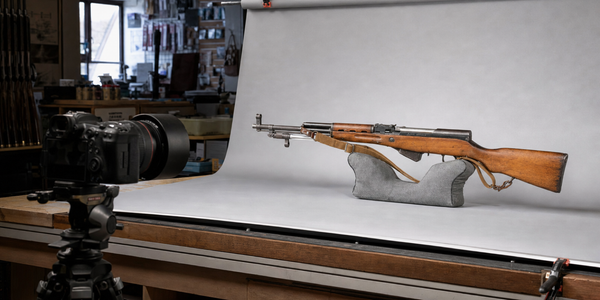
Counsel Edward Burlew argues that Cabinet created a public-safety problem when it prohibited firearms whose owners the government could not identify. His position concerns the consequences of regulation and the limits of Cabinet's authority. I want those limits tested. I also want an argument on owners' behalf to preserve the difference between a factory rifle, a licensing question, and an illicitly manufactured firearm.
A discussion among Canadian owners raised that concern on Saturday evening. Reading the original filing adds something more useful than guessing whether the argument will backfire: its licence arithmetic needs attention too.
The argument worth taking seriously
CSSA's written argument challenges the use of Criminal Code section 117.15. That provision gives Cabinet regulation-making authority and includes a limit concerning hunting or sporting utility, framed in terms of Cabinet's opinion, on prescribing prohibited or restricted firearms. CSSA asks the Court to examine the prohibition against the wider firearms-control scheme.
There is a serious owner consequence underneath that argument. A classification decision changes the legal position of a person who acquired a firearm through the lawful market. Owners then have to understand what they may retain, where they may move it, and which conditions protect them. Government should account for those consequences when it claims a public-safety benefit.
The outline goes further. It links missing ownership information and expiring licences to firearms becoming untraceable, then puts affected firearms alongside smuggled and homemade weapons. That is counsel's submission. The judges have yet to hear these appeals, and the Court's docket supplies the procedural position.
I spend enough time caring about chamberings and mechanical details to find this loose use of a firearm label frustrating. Owners are expected to keep the distinctions straight. Our representatives should give the same care to the words they put in a court filing.
A 2019 renewal chart, carried into 2026
The outline refers to roughly 85,000 PALs expiring annually and extrapolates more than 500,000 expiries from 2020 to 2026. Its cited appendix reproduces a chart from the 2019 Commissioner of Firearms report.
Look at the chart on printed page 30 of the condensed book. It shows 400,490 individual PAL licences that reached expiry in 2019: 315,228 renewed and 85,262 did not renew. The smaller number describes the non-renewal category within that year's expiry group. Calling it the annual expiry count loses the chart's basic distinction.
Extending that one year's figure across six years adds another assumption. The filing does not supply six annual observations, identify unique people across those years, or establish how many held a firearm affected by the May 2020 prohibition. It expressly acknowledges uncertainty about the firearm count.
There are several missing links between a licence-renewal category and a claim about firearms entering criminal circulation. We would need evidence about later licensing, possession, disposal, the firearms involved, and what happened to them. Multiplication supplies none of that evidence.
An association can argue that government lacks information and should explain the consequences of its policy. The numerical support still needs the right label. Readers following this hearing should keep the original 2019 categories beside the extrapolation.
The amnesty keeps conditions attached
The original May 2020 amnesty order required an eligible owner to continue holding a licence during the amnesty period. It also specified storage conditions according to the firearm's previous classification. The current consolidated order retains a continued-licence condition and other limits on who and what it protects.
Those provisions matter when assessing a broad claim that prohibition swept away the control system. The protection depends on the order's conditions. An individual owner's legal position requires those facts; a six-year extrapolation cannot establish it.
There is also an ordinary physical distinction worth keeping. In a 2024 firearms-importation investigation, the RCMP used ghost-gun language for privately manufactured firearms without serial numbers. That example concerns manufacture and identification. CSSA uses the phrase to describe a problem it attributes to legal reclassification and missing ownership information.
A factory serial number alone cannot establish where a firearm is now or who possesses it. Equally, a classification change supplies no evidence that someone removed that number, manufactured a firearm illegally, or diverted one to a criminal. Each claim needs its own facts. The association's language compresses those different questions into one alarming description.
Tomorrow's hearing, today's language

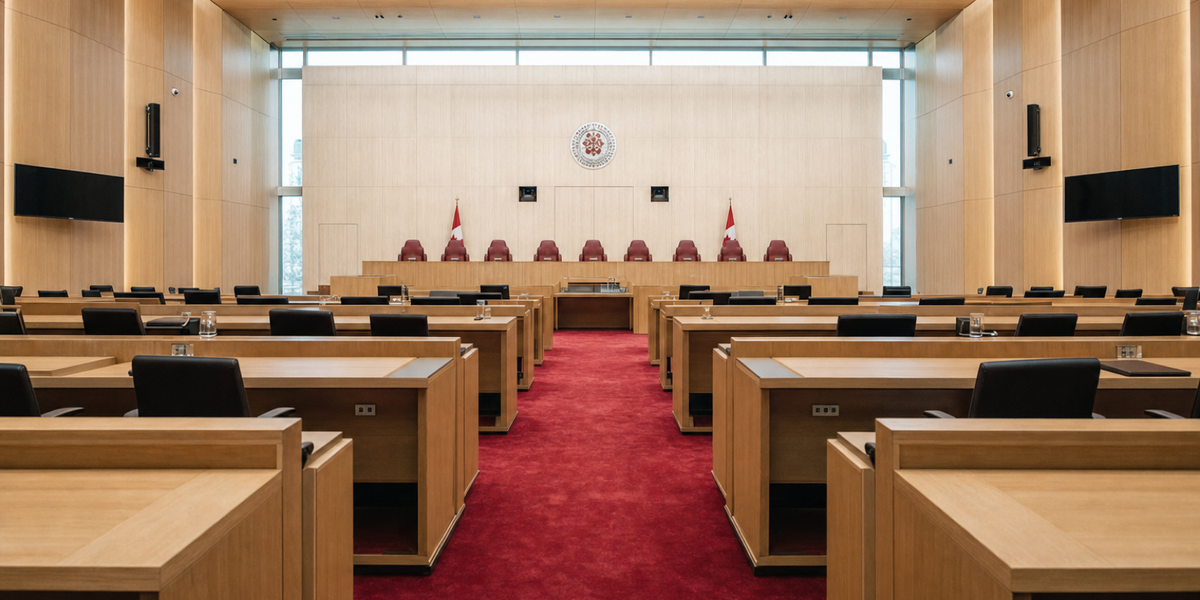
The Supreme Court lists the related appeals for November 9 and 10. Its current hearing venue is the West Memorial Building in Ottawa, while the heritage Supreme Court building undergoes rehabilitation. The physical setting has changed; the practical question for owners remains how the judges will assess Cabinet's authority and the reasons offered for using it.
I would listen for that legal reasoning and for how the parties support their factual premises. Predicting a new registry from an intervener's wording goes beyond the record. So does treating a strongly worded outline as an outcome the Court has already reached.
CSSA can press the consequences of prohibition while speaking precisely about the people affected. Keep the licence categories intact. Explain the missing evidence. Give licensed owners an argument that recognizes the care they already put into owning firearms.
Holdover's free weekly roundup follows Canadian firearms policy and the sources behind it. Follow The Dispatch
Sources
- CSSA condensed book, outline numbered pages 1-2 and reproduced renewal chart printed page 30; checked November 8, 2026.
- CSSA factum, written argument filed in the related appeals.
- 2019 Commissioner of Firearms report, individual licence-renewal chart.
- Criminal Code, section 117.15, regulation-making authority and limits.
- Original May 2020 amnesty and current consolidated order, licensing and other conditions.
- RCMP, two individuals face charges for importing firearms, March 2024.
- Supreme Court case docket, 41859, scheduled hearing and current procedural record.
- Supreme Court, the West Memorial Building, current temporary home and courtroom.