$656 million in military ammunition, *overdue* for a count
An October 29 audit puts $656 million of military ammunition overdue for its annual count at March 31. Ottawa's response deserves a measurable follow-through.

Opinion
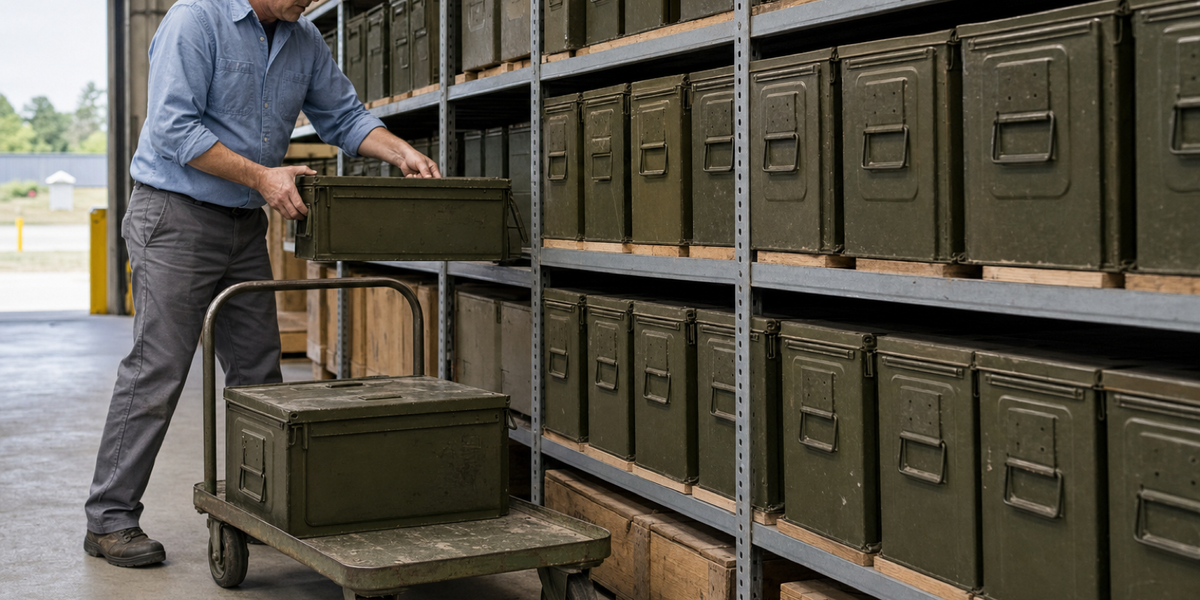
National Defence's annual ammunition count was overdue at 31 per cent of its storage locations on March 31, 2026. The inventory awaiting that check was worth $656 million. Those figures appear in the Auditor General's October 29 report, which gives Ottawa a fairly concrete accounting problem to solve.
The date belongs beside the number. This is a finding about the position at fiscal year end, published seven months later. It tells us that required physical checks were overdue. The report does not establish that $656 million in ammunition disappeared, or give a current total of overdue counts.
Licensed owners have a stake in this. We accept detailed rules governing our own firearms, and retailers carry records that must outlast the transaction by decades. I expect the federal institution managing ammunition to show the same seriousness about whether its records describe what is actually there.
Three measures, three different problems
The full report separates several weaknesses that are easy to roll into one alarming headline.
Paragraph 16 says National Defence's manual requires annual counts of all ammunition stocks. The overdue location share fell from 34 per cent a year earlier to 31 per cent; the associated inventory value moved from $663 million to $656 million. That is the count-completion measure.
Paragraph 13 concerns two ammunition systems, which the department has tried unsuccessfully to integrate since 2012. National Defence identified differences between 11 per cent of their inventory records in March 2026. Paragraph 14 reports a separate average 13 per cent quantity error rate in ammunition samples examined during financial-statement audit work over the previous three fiscal years.
Each figure needs its own denominator. A mismatch between records needs reconciliation. A sampled quantity error calls the accuracy of the recorded amount into question. An overdue annual count leaves a required physical check unfinished. Treating those figures as interchangeable would make the audit harder to understand and easier to dismiss.
The standard on our side of the counter
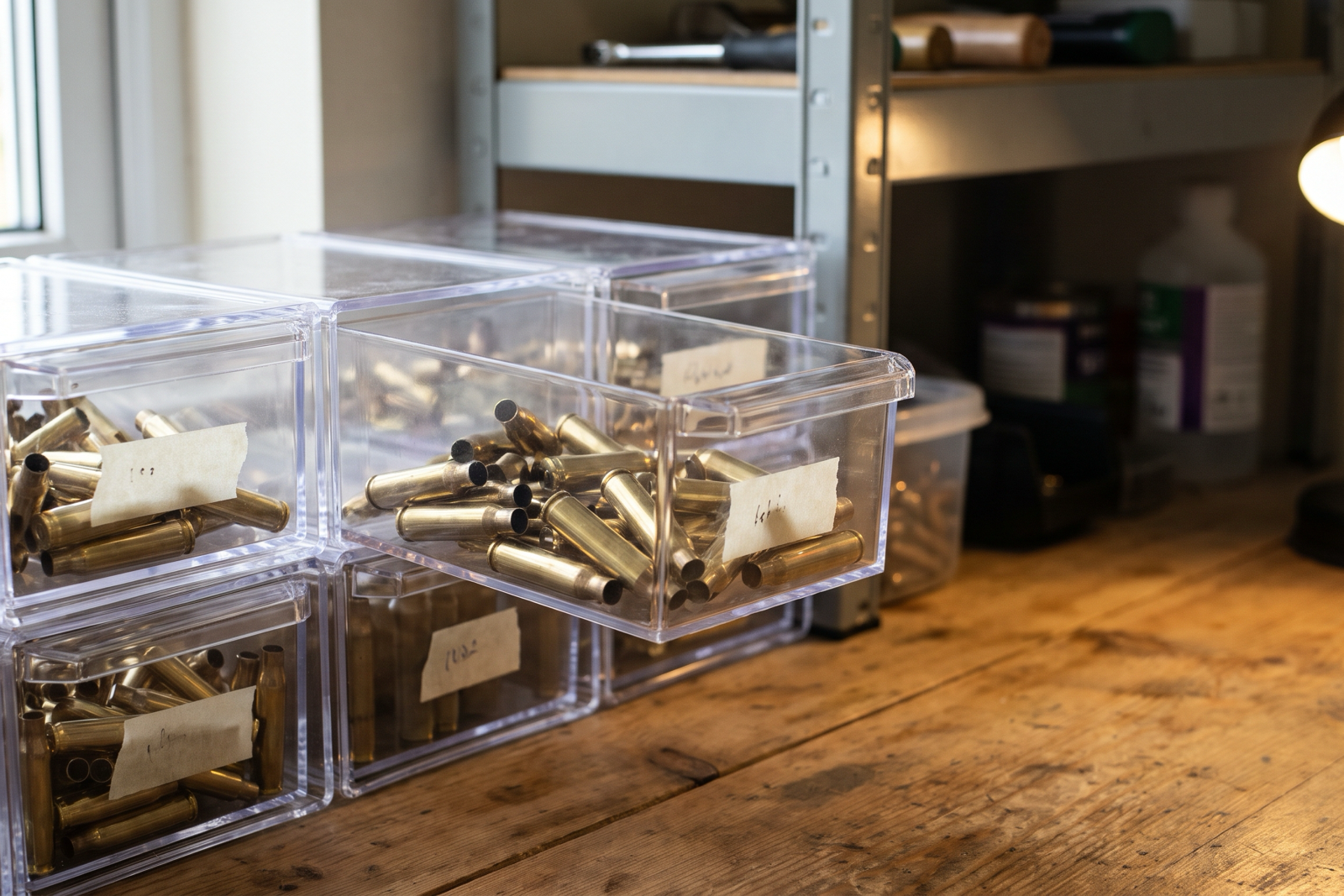
On my bench, brass goes into labelled acrylic drawers by cartridge, trim length and readiness state. The labels let me put a batch down and return to it without trusting my memory. My handwriting has limits. Remembering which apparently identical brass has reached which stage has rather more.
That is voluntary process control in a private workspace. The legal obligations on a firearms business are more specific. Section 58.1 of the Firearms Act requires businesses to retain prescribed information about non-restricted firearm transfers for 20 years, or longer if prescribed. The listed fields include the reference number and its issue date, the buyer's licence number, and the firearm's identifying details.
That provision concerns firearm-transfer records. Private brass organization and military ammunition counts have their own purposes and rules. The fair comparison is the expectation that a record can be checked and trusted, with someone responsible for keeping it that way.
Ottawa has accepted the findings
The government's October 29 response accepts the recommendations. Ministers say work is underway on ammunition data quality, governance, requirements planning, strategic stockpile management and supplier oversight. Those are the government's stated actions; their completion will need evidence of its own.
There is a qualification worth reading in National Defence's response to Recommendation 17. The Auditor General recommends fixing data weaknesses, including annual counts, before joining the two systems. DND agrees and gives July 2027 as its implementation timeline. Its response treats the annual counts as a separate issue that also needs attention and says the systems can be joined independently of those counts.
That leaves an obvious follow-up question for Parliament: when will the overdue physical checks be finished? A July implementation date attached to the broader response gives readers less clarity than a count-completion schedule would.
A larger job deserves a clearer account
The department manages a $2.6-billion ammunition inventory, including far more than the rifle cartridges familiar to most Holdover readers. Small-arms ammunition accounts for 12 per cent of the total value. The report supplies no corresponding breakdown of the overdue $656 million.
Scale is a serious explanation for complexity. Military stock moves through storage, training and operational use, and those movements need reliable records. The independent audit and the published departmental responses also give the public a way to examine the problem. Both deserve credit. A licensed reader can recognize those differences and still expect a count required every year to happen every year.
I want a competent, properly supplied Canadian military. Ammunition accounting serves the people who rely on that supply, as well as the taxpayer paying for it. The pro-ownership position is quite comfortable with a demanding standard of stewardship, provided Ottawa applies that principle to the property in its own care too.
The next useful public account would give the proportion of locations with completed counts, the value still overdue and a dated plan for the remainder. It would explain how discrepancies were resolved and who checked the corrected records. Parliament would then have something concrete to compare with this audit.
A promise to improve the system deserves a fair hearing. The next count, and a public record of its completion, would give that promise some weight.
Receive Holdover's source-checked Canadian firearms reporting in The Dispatch.