After shoreline complaints, Madawaska Valley declines *a by-law discussion*
Madawaska Valley declined a by-law discussion after shoreline shooting complaints. Ontario gives councils a power to examine, with hunting access at stake.

Opinion
Madawaska Valley's November 3 committee agenda contained a two-page problem from Mahon's Landing: residents wanted the township to consider a rule about shooting near their homes. CAO/Clerk Sue Klatt's original report, on pages 17-18, traces the request through municipal staff, the OPP and the Ministry of Natural Resources. She asked council for direction and attached four sample firearm-discharge by-laws.
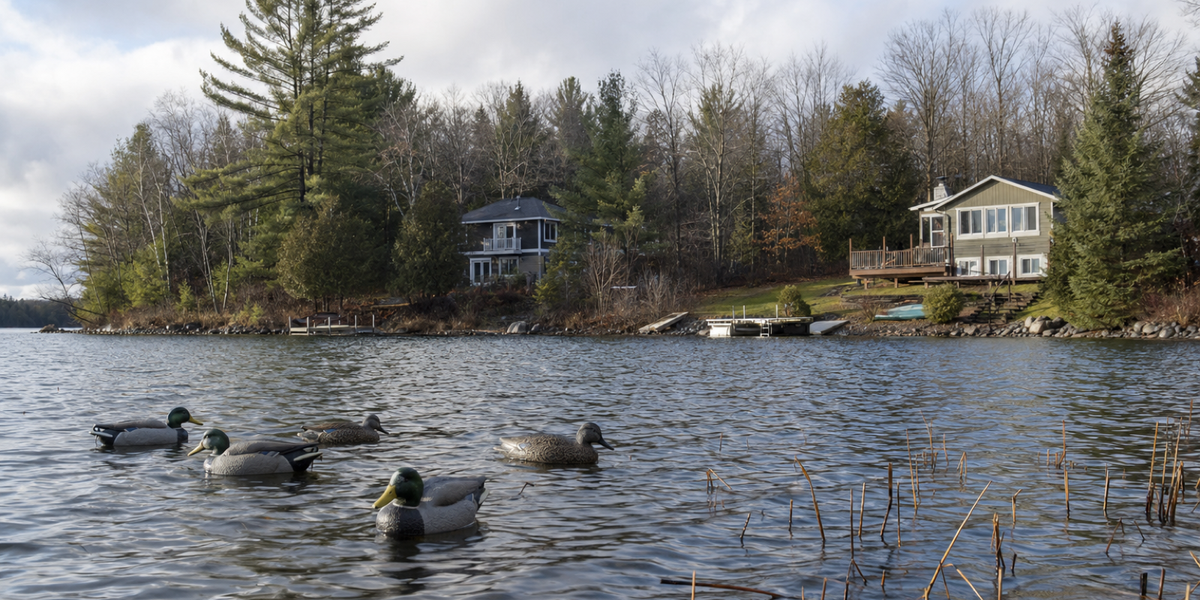
At the Council in Committee meeting, a motion for further discussion was defeated, My Barry's Bay Now reported. Its account describes complaints about duck hunting near shoreline homes and councillors questioning the township's jurisdiction over water. The news account also attributes to council a claim that a distance rule around homes would be unprecedented in Ontario.
The province has already given municipalities a power worth examining. Ontario's own guidance specifically names building-distance limits as one use of it. Hunters have a stake in how a council exercises that power, because a poorly drawn line can close useful water and land to shooting. The conversation deserves a statute book, a local map and hunters in the room.
Section 119 gives councils a choice
Section 119 of the Municipal Act, 2001 permits a local municipality to prohibit or regulate firearm discharge for public safety. Ontario's guidance for municipalities makes the scope plain: councils can close areas, restrict firearm types in particular areas and prohibit discharge within specified distances of buildings.
That is a general statutory power. A proposed Madawaska Valley rule would still need proper drafting and an answer about the particular water it covers. The councillors' water concern deserves that specific work.
A required distance, often called a setback, also operates alongside existing conduct rules. Section 16 of the Fish and Wildlife Conservation Act requires due care and attention and reasonable consideration for people or property when handling or discharging a hunting firearm. Criminal Code section 86 addresses careless firearm use. Those provisions do different work from a local line measured in metres.
The original staff report establishes that concerns were referred to the relevant agencies. Neither that report nor the local news account provides the evidence needed here to judge the legality of a particular shot. For an owner planning a hunt, the useful task is to identify the rules for that place and how they fit together.
100 metres, measured two ways
Scugog and King offer concrete examples of municipal distance rules. Their posted texts also show why borrowing a number from another township can produce a very different answer.
Scugog's By-law 44-06 sets a 100-metre restriction from Residential or Commercial property. Its definition of Residential includes the Shoreline Residential zone. The reference point is a defined kind of property, which can extend well beyond the walls of a house. Other clauses address highways and projectiles crossing into adjacent parcels.
King's By-law 2014-04 sets a 100-metre restriction from a dwelling, with an exception for a dwelling on the property where the lawful discharge occurs. King still lists that by-law and distance in its current set-fine schedule.
The two rules use the same number and different reference points. Each sits inside a larger by-law with other restrictions and exemptions. Reading the full local text matters more than remembering a round number from a forum reply. These examples establish that Ontario municipalities have written distance rules; they provide no universal safe distance or permission to shoot somewhere else.
The water question
A shoreline puts the hardest drafting question in view. A hunter may be on the water while the nearest dwelling sits on land. A useful proposal would explain the municipal boundary, which waters the rule reaches and precisely where measurement begins.
Klatt's report itself describes firearm-discharge by-laws as regulating lands and waters within municipal limits. That description is part of a staff report seeking direction, and any local proposal needs its own legal assessment. The committee's concern about water should become a question put to the township's solicitor, with the answer available to the people who would live under the rule.
Enforcement needs an equally concrete answer. Ontario's municipal guidance says conservation officers enforce provincial hunting laws and municipalities are responsible for their by-laws. The proposal should identify who would receive a complaint and how the local rule would be enforced. Residents and hunters should be able to find that answer without being passed among offices.
Opinion: protect hunting access while writing the rule
As an Ottawa-area firearms owner, I want a local rule I can read before making plans. I also want a council to show what its proposal would close. A shaded area or a broadly defined property category can make a much larger decision than the headline number suggests.
Ontario's guidance acknowledges that discharge restrictions can remove hunting opportunities. It also recognizes hunting's ecological, cultural, economic and social value. That belongs in this discussion alongside the residents' concerns. A council should examine the actual shoreline problem, hear from hunters and explain why its chosen scope is necessary.
A council can make that choice visible during consultation: show a cottage lot, its dwelling and the nearby shoreline, then identify the feature from which a proposed distance would be measured. Any applicable exception belongs beside it. Hunters could examine the actual reach of the proposal, and residents could see exactly what a new rule would cover.
I would favour that narrow, informed discussion. Choosing a distance should follow the local evidence and legal advice, with the measurement point, exceptions and enforcement written plainly. A proposed rule should let an owner work out what remains available for lawful hunting, as well as where a new restriction would apply.
Madawaska Valley had a request and examples before it on November 3. The reported refusal to discuss them leaves those practical questions open. Residents and hunters deserve the chance to hear the answers in the same room.
Follow Canadian ownership rules in the free weekly Dispatch. Read The Dispatch
Sources
- Madawaska Valley: November 3, 2026 Council in Committee agenda, item 13.1.1, report pages 17-18
- My Barry's Bay Now: Madawaska Valley Council defeats motion to consider firearms bylaw, November 3, 2026
- Municipal Act, 2001, section 119
- Ontario: Wild animal control, information for municipalities
- Fish and Wildlife Conservation Act, 1997, section 16
- Criminal Code, section 86
- Scugog: By-law 44-06
- King: By-law 2014-04
- King: Current by-law set-fine schedule