Montreal deserves more than an SKS *shortcut*
If CBC/Radio-Canada is right that the Cote-des-Neiges rifle was an SKS, the SKS belongs in the discussion. It does not become the whole file.


Opinion. Two people who should still be alive are dead, and no serious firearms argument should begin by stepping around that.
SPVM Officer Mohamed Lamine Benredouane was killed on June 22 during a police intervention in Cote-des-Neiges. Civilian bystander Michel Mizrahi was also killed. Another officer was injured. The shooter is dead as well.
That is the first fact. Not the rifle. Not the slogan. Not the press conference. The loss.
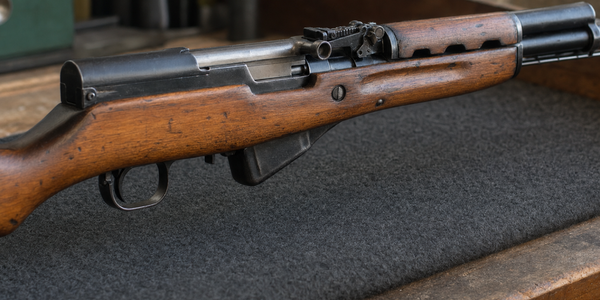
If CBC/Radio-Canada is right that the rifle used by the suspect was a Russian semi-automatic SKS, then the SKS belongs in the discussion. It does not become the whole file.
The SKS belongs in the discussion
This is where responsible firearms owners need to be honest.
The SKS is not sacred. It has military history. It is a semi-automatic centre-fire rifle. It is common in Canada, comparatively affordable, and familiar enough that almost every Canadian gun counter has had some version of the SKS conversation. It has also appeared in enough ugly files that serious people are allowed to ask why it remains outside the current prohibition list.
That is the strongest version of the gun-control argument. It should not be dodged.
The Canadian Press and CityNews reported on June 25 that police had not formally identified the type of firearm used in the Montreal shooting, while images circulating from the scene appeared to show an SKS. The same report described PolySeSouvient's renewed call for an immediate halt to new SKS sales and noted that Ottawa is already reviewing the firearms classification regime, including consultations with Indigenous communities on the SKS.
By June 26, CBC/Radio-Canada video reporting was naming the firearm as an SKS through sources. That matters. It moves the argument from "maybe" to "address it directly," at least for editorial purposes.
But it still does not answer the prevention question.
The missing questions matter
If a government is going to take a commonly owned rifle and turn it into a national prohibition file, the burden is not outrage. The burden is proof.
Was the rifle legally acquired in Canada?
PolySeSouvient's own June 25 statement cites La Presse reporting that the shooter had a PAL. If that is accurate, the harder question is not whether the licensing system existed. It is what that system knew, missed, or could not legally act on before the shooting.
Was there a recent transfer, a private sale, a family firearm, a storage failure, a theft, or an import issue?
Were there warning signs that should have triggered a licence review, prohibition order, police intervention, yellow-flag process, red-flag process, or Chief Firearms Officer action?
Was the rifle modified?
Would a halt on new SKS sales have stopped this particular shooting, or would it only have changed the category in the next press release?
Those are not evasions. Those are the questions that separate public safety from category management.
If a licensed person legally acquired a non-restricted SKS and then crossed every moral and legal line, Canada needs to know how the eligibility system missed the risk. If the firearm was not lawfully possessed, then a new-sales ban is even further from the core failure. Where the answer remains unknown, the policy class should say "unknown" before it says "therefore."
There is a reason serious shooters get impatient here. The owner side I know is already paperwork with a range bag: PAL course, reference checks, safe storage, transport rules, continuous eligibility, portal messages, and the small Canadian ritual of reading government page-modification dates like load labels.
The RCMP's 2024 Commissioner of Firearms Report counted 2,425,627 firearms licence holders in Canada. It also reported 7,049 firearm traces that year, with 4,238 identified as crime guns. The Canadian Firearms Program is not a handshake culture. It is a large administrative and enforcement system, and it already exists.
So when policy jumps straight from a dead officer and a dead civilian to "ban the rifle," responsible owners are right to ask whether the state is solving the file or solving the optics.
A common rifle is not a simple policy
The SKS is uncomfortable for Ottawa because it does not fit neatly into the rhetoric.
It sits in its own awkward lane: an old, plain, semi-automatic surplus rifle that became ordinary in Canada for exactly the reasons policy people find inconvenient: price, reliability, availability, and utility.
CityNews and The Canadian Press noted that the SKS is commonly used in Indigenous communities to hunt for food. That fact belongs in the debate. A classification decision that treats every SKS owner as a line item in a southern press conference will land very differently in communities where utility rifles are everyday tools rather than political theatre.
That is not a veto. It is evidence that the policy is harder than the slogan.
Nor does the rifle's military origin end the argument. Canada is full of firearms with military ancestry, sporting lives, hunting use, collector value, or all four at once. The real question is whether prohibiting this object, here and now, measurably prevents the harm being cited.
After Montreal, that is the standard.
The harder file is prevention
The hard file is not a name on a list.
It is acquisition, eligibility, warning signs, tracing, online radicalization, mental health, violent ideology, police response, and the practical question of who knew what before Monday morning.
Current reporting has described a manifesto and extremist ideological material tied to the suspected shooter. Authorities have also urged people not to share shooting imagery. The public-safety problem is a person, a pathway, a target, a weapon, a warning, and a response window that may already have closed.
That is harder work than another prohibition announcement.
It is also more honest work.
If the SKS is part of the answer, prove it in the file. Show how the rifle was acquired. Show whether the existing licensing system worked or failed. Show whether current law had a tool available. Show whether a new-sales halt would have changed the outcome, rather than merely satisfying the need to do something visible.
Responsible ownership can survive those questions. Serious gun control should be able to survive them too.
What should not survive is the shortcut: find the rifle, widen the category, point at the licensed population, and call the work done.
Montreal deserves better than that.
So do Officer Benredouane, Michel Mizrahi, the injured officer, and every Canadian who wants public safety to mean more than a faster press release.
Sources
- SPVM, "Aujourd'hui un des notres est tombe, mais il ne sera jamais oublie," June 22, 2026: https://spvm.qc.ca/fr/Actualites/Details/16200
- Associated Press, "Gunman kills a Montreal officer at a Hilton hotel before being shot dead, police say," June 22, 2026: https://apnews.com/article/montreal-police-officer-killed-hotel-shooting-1f03c8e854d4758061a46c66cfc21c04
- The Canadian Press / CityNews, "Gun control group repeats call for end to sales of SKS rifles after Montreal shooting," June 25, 2026: https://montreal.citynews.ca/2026/06/25/gun-control-end-sales-sks-rifles-montreal-shooting/
- PolySeSouvient, "Cote-des-Neiges tragedy exposes Canada's deadly SKS loophole," June 25, 2026: https://polysesouvient.ca/Documents_2026/PRSS_26_06_25_Statement_CoteDesNeigesShooting.pdf
- CBC/Radio-Canada video report, "Calls mounting to halt sales of type of gun used in deadly Montreal shooting," June 26, 2026: https://www.youtube.com/watch?v=_2y3AgWYiiA
- RCMP, "Classes of firearms in Canada," date modified June 8, 2026: https://rcmp.ca/en/firearms/classes-firearms/classes-firearms-canada
- RCMP, "2024 Commissioner of Firearms Report": https://rcmp.ca/en/corporate-information/publications-and-manuals/2024-commissioner-firearms-report
- Public Safety Canada, "Firearms": https://www.publicsafety.gc.ca/cnt/cntrng-crm/frrms/index-en.aspx
The amnesty file is still moving.
If this piece sent you back to government pages, do not wait for the next portal, Gazette, or court move to find you by accident.
The Dispatch follows Public Safety, RCMP, Canada Gazette, court, compensation, collection, and amnesty updates so the next change comes with the source that moved.
Safety note: the tracker is a worksheet for source hygiene, not legal advice or a substitute for current official guidance.