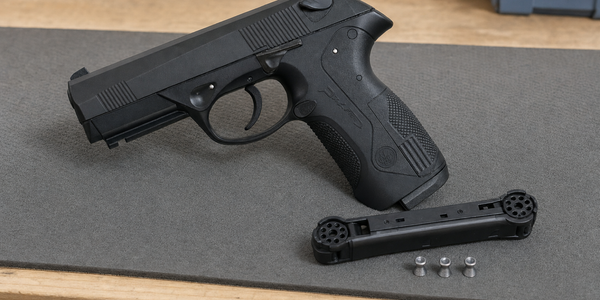
A Chisel stock in the box, *a warning* for the buyer
G4C advertises the Chisel with its folding stock unattached. The RCMP's published configurations put an owner-accountability question behind that warning.

Opinion
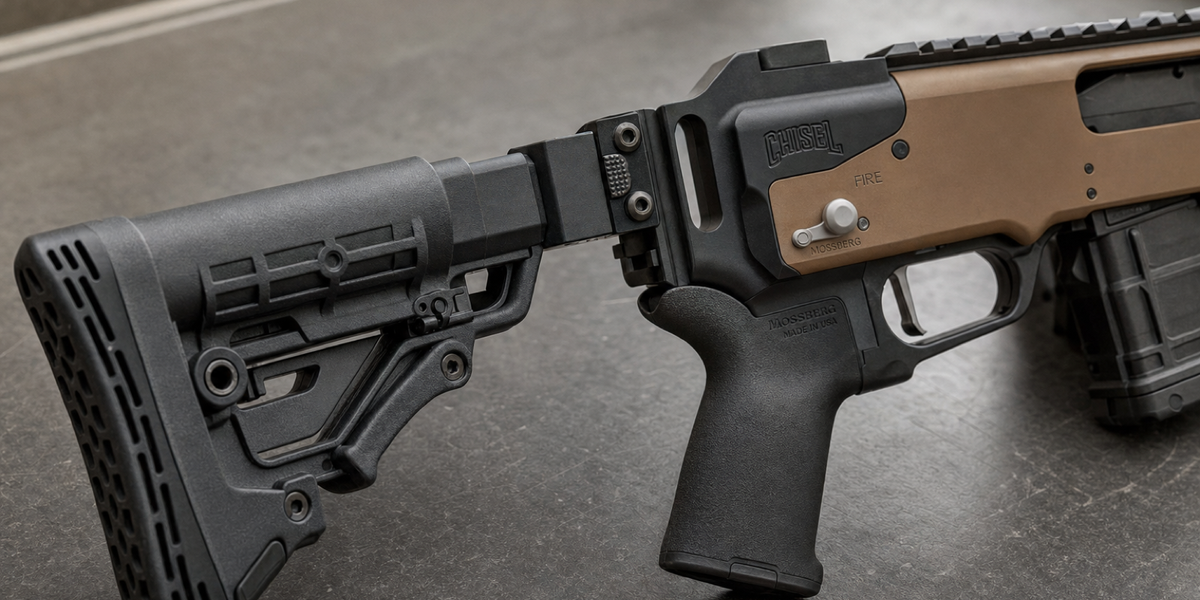
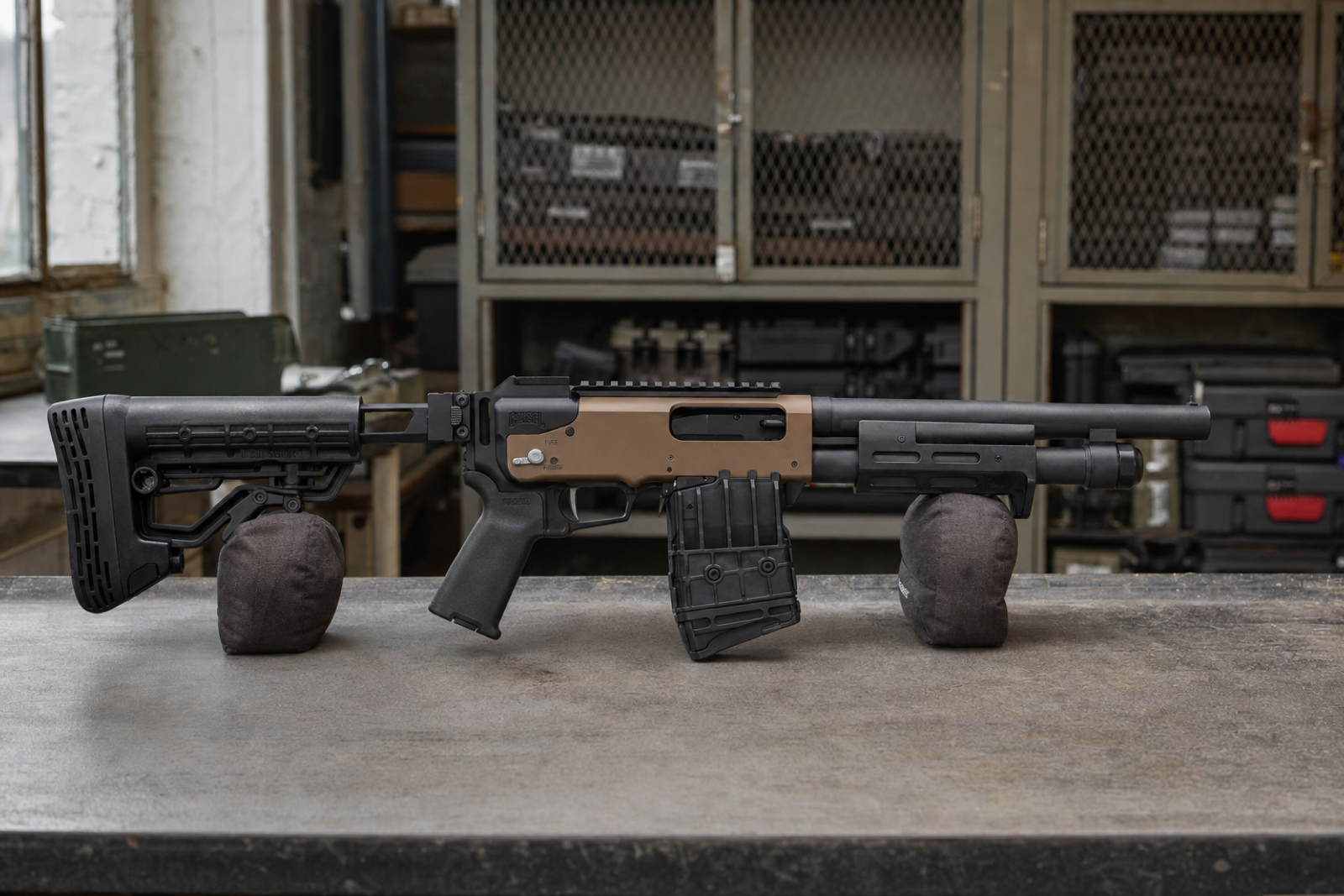
G4C advertises Mossberg's short 590RM Chisel as non-restricted, with its folding stock included and uninstalled. The retailer then warns that installing the supplied stock may change the firearm's classification, depending on its configuration. A Canadian buyer gets the accessory and the legal-category question together.
The listing identifies model 50229, with an 11.5-inch barrel. Its notice is plain: "The folding stock is included with this shotgun but is NOT INSTALLED." The public RCMP Firearms Reference Table also records a distinction between assessed short 590RM configurations. Owners deserve a clear explanation of the public-safety purpose behind it.
The Chisel discussion caught my attention yesterday because that warning reaches beyond the usual question of how a stock fits. For target-shooting ownership of restricted firearms, the RCMP requires proof of practising or competing at an approved club or range. The classification affects the conditions under which someone owns the firearm. It deserves more explanation than a loose part and a warning paragraph.
Two 622 mm configurations
The RCMP's November 2 public FRT export contains the relevant record, FRN 199444, on pages 63562–63565. It identifies the 590RM as a pump-action shotgun. The table includes 10-shot, 292 mm-barrel entries in both non-restricted and restricted categories; the restricted entry cites paragraph (c) of the Criminal Code's restricted-firearm definition.
Its notes assess the 292 mm Class 3 with a pistol grip and no buttstock as non-restricted, outside the handgun definition. The product-code list includes 50229 and the same UPC that G4C advertises.
Then come the dimensions: 775 mm with the stock extended, 622 mm collapsed, and 622 mm without a stock. Those are the FRT's published figures. They put a useful, specific question in front of the reader: what does the classification distinction measure when both compact forms receive the same listed length?
G4C's notice describes its advertised offer. The FRT describes assessed configurations across a broader 590RM record. Reading them together establishes the issue without assigning a particular retail item to a specific sub-record or inventing its factory and import history.
The RCMP describes the FRT as an administrative document. Statute and regulations govern classification. That makes the next source essential.
What the folding rule measures
Section 84(1) of the Criminal Code defines a restricted firearm through several separate routes. Paragraph (c) concerns a firearm designed or adapted to fire when reduced below 660 mm by folding, telescoping or otherwise. The mechanism by which it reaches that length matters to the wording.
Paragraph (b) addresses another combination: a non-prohibited firearm with a barrel shorter than 470 mm that can discharge centre-fire ammunition semi-automatically. The Chisel's pump action belongs in that distinction. A barrel measurement on its own leaves out the rest of paragraph (b)'s requirements.
The statute separately defines handguns and prohibited firearms, including firearms adapted from rifles or shotguns. Each definition has its own conditions. A slogan about "26 inches" loses too much of the actual law to explain every short firearm. The public FRT's express assessment of the stockless Class 3 supplies relevant evidence for this specific discussion.
A folding stock does offer something worth considering. It combines a compact carrying or storage form with shoulder support once extended. Mossberg's own description of its Chisel system makes compactness and the shooting platform part of the product's appeal.
That is a credible case for examining foldability as a design feature. A stockless form offers a different handling arrangement. Equal listed lengths leave those functional differences in place. Any argument for changing the rule should deal with them honestly.
The policy question is how that difference justifies the additional ownership conditions. The public sources reviewed here supply definitions, dimensions and assessed classes. They supply no Chisel-specific comparison of public-safety outcomes. Owners can ask for that reasoning without pretending a matching number settles the question.
Owners deserve an explanation
I can understand an owner looking at the included stock and wondering why the supplied configuration carries this warning. A buyer should be able to understand the legal distinction before the purchase, and the public-safety case for it, without assembling an answer from a shop page and an enormous technical table.
G4C has put the warning where a prospective buyer can see it. My criticism concerns the explanation owners should receive from the institutions responsible for the rule. Parliament enacted the classification criteria. The RCMP applies them through its technical assessments, as its classification guidance explains.
That guidance says assessments can begin with manufacturer or importer information, then change when inspection establishes different facts. In my view, that makes a precise public description of the assessed design essential. Retailers and clubs need something dependable to explain, and owners need to know which physical detail carries the legal consequence.
A useful public explanation would show the assessed stockless and folding configurations, identify the criterion each meets, and explain the risk that warrants the different treatment. It would keep the physical description and the legal reasoning together. Owners should not have to guess whether two entries differ because of the stock mechanism, another design detail or information absent from the public record.
That clarity matters even to someone who has no intention of buying this shotgun. Canadian owners routinely evaluate products by their advertised configuration. When a supplied component prompts a classification warning, lawmakers and the administering institution owe them an explanation they can follow and a policy they can defend on its merits.
The Chisel gives Parliament a concrete example to address. Explain the public-safety purpose of the folding criterion. Make the RCMP's application clear beside the assessed configurations. Owners have every reason to expect both.
Get Holdover's weekly Dispatch for a short roundup of Canadian firearms reporting and analysis.
Sources
- G4C's exact Canadian Chisel listing and stock notice.
- RCMP public FRT download, November 2, 2026, FRN 199444, pages 63562–63565; FRT status and administrative scope.
- Criminal Code, section 84.
- RCMP firearm classes and restricted-ownership purposes; classification process.
- Mossberg's January 2026 Chisel announcement.
- November 12 community discussion that prompted this report.