PAL applications ask about *old peace bonds*
The PAL form asks about past peace bonds without a five-year limit. Current law also adds a separate test for suspected domestic violence or stalking.

Opinion.
A first-time PAL applicant in British Columbia described an old peace bond on r/canadaguns on November 2. The court proceedings involving a former partner were more than ten years old, the applicant said. After disclosing that history, they were told to expect a phone interview with a firearms officer.
The applicant's account supplies a current question. The court file and the officer's assessment remain unseen, and the eventual decision is unknown. Applicants reading replies from people licensed years ago need to account for two legislative changes: one in 2021, another this July.
Today, the form asks about an applicant's history without a five-year cut-off for peace bonds. The statute also contains a separate ineligibility rule based on reasonable suspicion of past domestic violence or stalking. An old court order can bring both provisions into view, depending on the facts.
Where the five years went
The former section 5(2) of the Firearms Act told the chief firearms officer to consider specified events within the previous five years. The version beginning July 7, 2021 removed that wording.
The current section covers convictions and discharges, violent or threatening behaviour, and other relevant history. Paragraph 5(2)(d) deals with certain past or present orders restricting contact with a person or access to a place. It also asks whether the applicant poses or could pose a safety threat or risk. The actual order's terms and the surrounding facts matter.
A ten-year-old entry therefore remains part of the assessment. The current wording gives an applicant no five-year expiry date for that history.
July added a separate bar
The Protecting Victims Act received royal assent on June 18, 2026. Sections 184 and 205 brought the new paragraph 6.1(c) into force on July 18.
Under that paragraph, an individual is ineligible for a licence if a CFO has reasonable grounds to suspect they may have engaged in domestic violence or stalking. The definition in section 70.1(2) includes conduct that need not constitute a criminal offence. A conviction and the underlying conduct are separate questions in the licensing assessment.
Paragraph 6.1(c) contains no express look-back period. It also lacks the separate present-risk wording found in paragraph 5(2)(d). Section 6.1 remains subject to regulations and section 70.3, the statutory conditional-licence provision for sustenance hunting or trapping in prescribed circumstances.
Justice's Charter Statement explains the government's aim: align applicant ineligibility with the grounds already used to revoke an existing licence. An expired peace bond, by itself, tells a reader too little to decide whether this newer test applies to a particular applicant.
What the form still asks
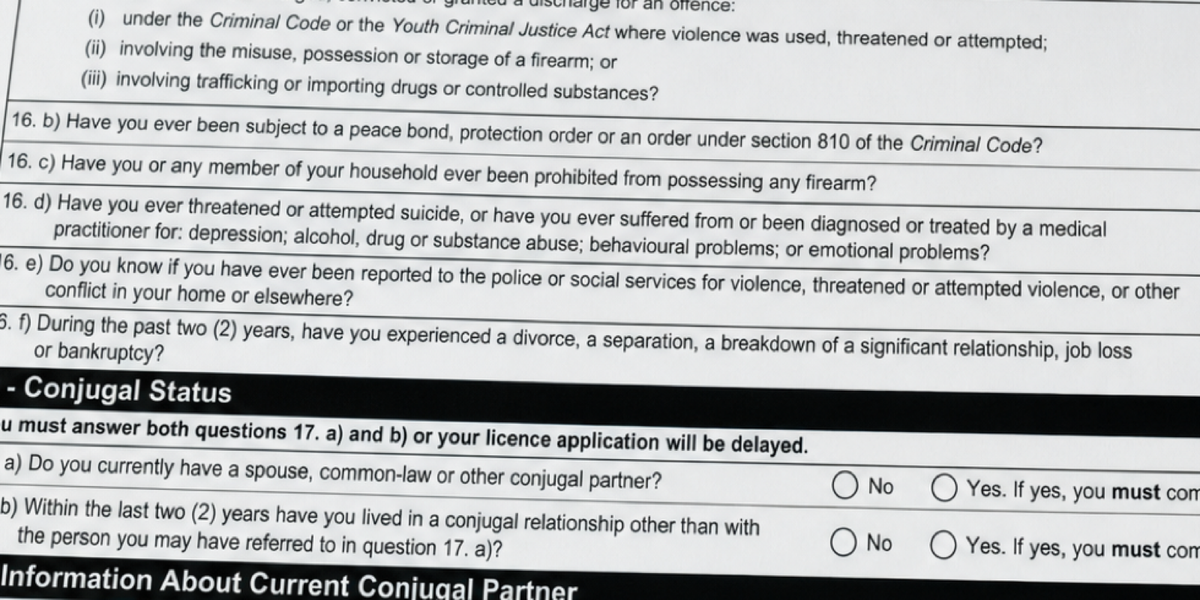
The RCMP's current application, form 5592e dated October 2026, asks in question 16(b) whether the applicant has ever been subject to a peace bond, protection order or section 810 order.
The important time word is "ever". Applicants answering yes must provide details on a separate page. The form says that answer may lead to further examination; it also explains that a yes does not automatically mean refusal.
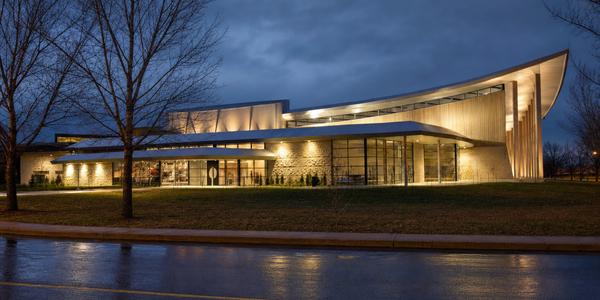
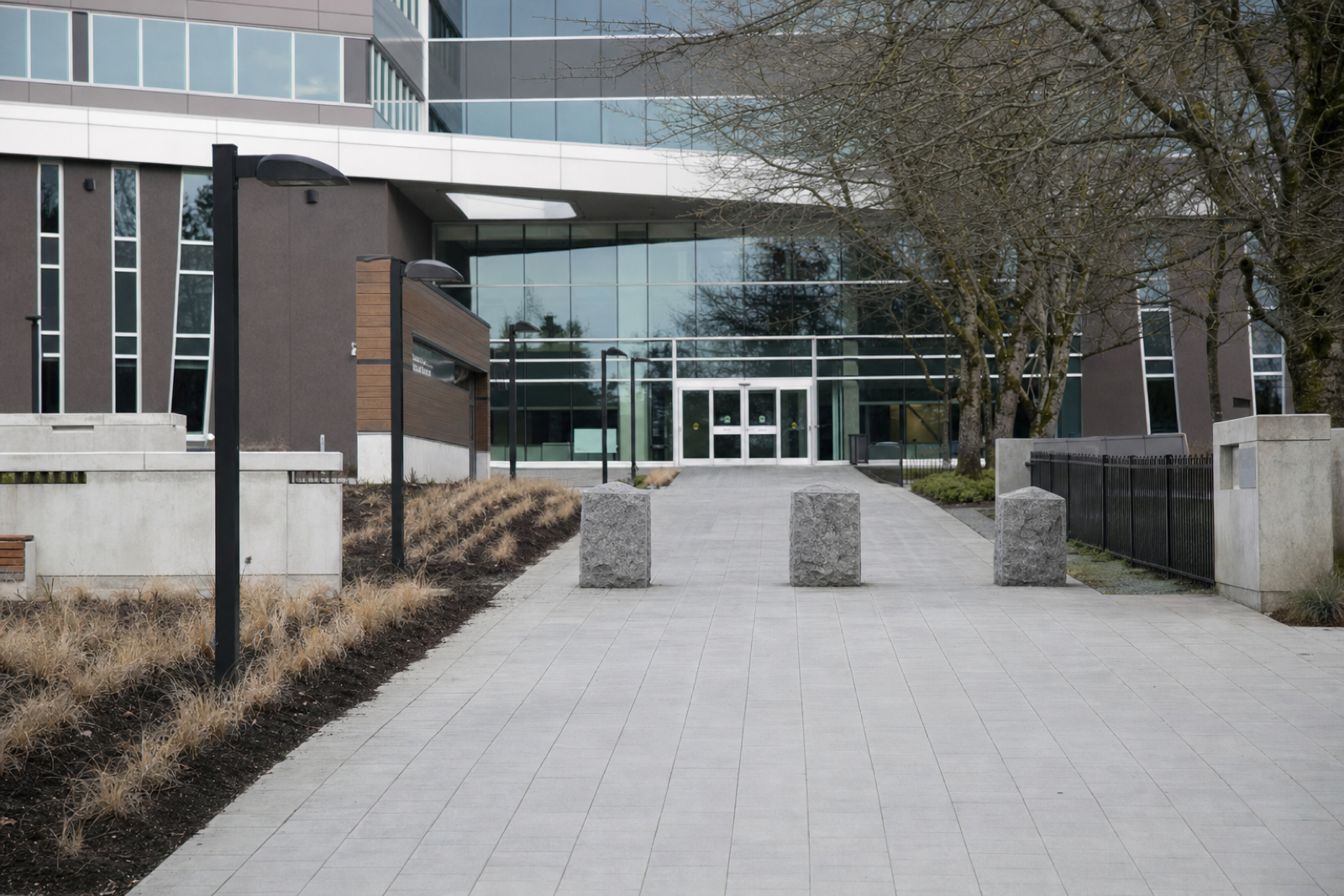
The RCMP lists the BC chief firearms officer's mailing address in Surrey. The pictured E Division headquarters is that listed location; the applicant described a phone interview.
That gives an applicant a useful starting point for understanding a referral. The officer needs to examine the history and the applicable eligibility rules. The form offers no assurance about the result or the time required.
Preparing a file the officer can assess
Section 55 lets a CFO request reasonably relevant further information and investigate. Its interview powers include people who know the applicant, including former spouses or common-law partners.
For an old court matter, I would gather the order, its conditions and end date, and records showing how any charge concluded. A short chronology helps keep dates straight. Ask the officer which records they need, rather than assuming a particular bundle will settle the application.
Answer accurately. If the records expose a mistake in the application, identify and correct it plainly. Section 106 makes knowingly false or misleading statements, and knowing failures to disclose relevant information, an offence.
My own PAL/RPAL course was in summer 2024; my licence arrived in May 2025. Between the course and the application, even the transcripts had to travel through the post. I support serious training, references and background checks. That experience also left me with an appreciation for clear instructions while an application is waiting.
An interview, then a decision
A refusal brings a different process. Section 72 requires reasons disclosing the nature of the information relied on, subject to safety-based limits on disclosure.
Section 74 normally gives an applicant 30 days after receiving the decision notice to refer the matter to a provincial court judge. A judge can allow more time. Under section 75(3), the applicant bears the burden of satisfying the judge that the refusal was unjustified. A phone-interview referral signals further examination; the refusal-notice deadline concerns a later decision.
A firearms lawyer can assess the actual records and the test the CFO relies on. That review depends on the applicant's own records and the current statute.
Age, evidence, and present risk
Screening beyond convictions serves a serious purpose. A licensing system needs to examine credible evidence of domestic violence, including conduct that never produced a conviction. Justice's consistency argument deserves a fair hearing.
I would also like Parliament to make the treatment of old conduct clearer in paragraph 6.1(c). The law could require an explicit assessment of present risk, alongside the evidence about what happened. Applicants should be able to understand how the officer assessed the passage of time and why the evidence supports the decision.
The RCMP should publish how often this paragraph supports refusals and the age of the conduct involved. That would let owners and applicants judge how the newer power works. For now, the practical question is which statutory test applies to the actual record, and what evidence the applicant needs to answer it.
For continuing Canadian licensing coverage, join the free Thursday Dispatch.
Sources
- Current Firearms Act, sections 5, 6.1, 55, 70.1, 70.3, 72, 74, 75 and 106
- Historical section 5, October 17, 2018 to July 6, 2021
- Historical section 5, July 7, 2021 to December 14, 2023
- Protecting Victims Act, sections 184 and 205
- Justice Charter Statement for Bill C-16, licence ineligibility
- RCMP application form 5592e (2026-10)
- November 2 applicant question, r/canadaguns
- RCMP chief firearms officer contact directory
- RCMP E Division general inquiries and headquarters address
Keep the first PAL steps in order.
If this piece has you mapping the licence process, keep the official steps and follow-up notes together.
Use the Holdover PAL/RPAL First-Steps Checklist to keep the official forms, course booking, references, photo, fees, and follow-up notes in one place while you work through the process.