CCFR's hearing ends. Ottawa wants *another year* if the ban falls
CCFR's Supreme Court hearing is over. Ottawa wants another year if the Court grants relief. Owners deserve a real chance to benefit before permanent disposal makes that relief meaningless.

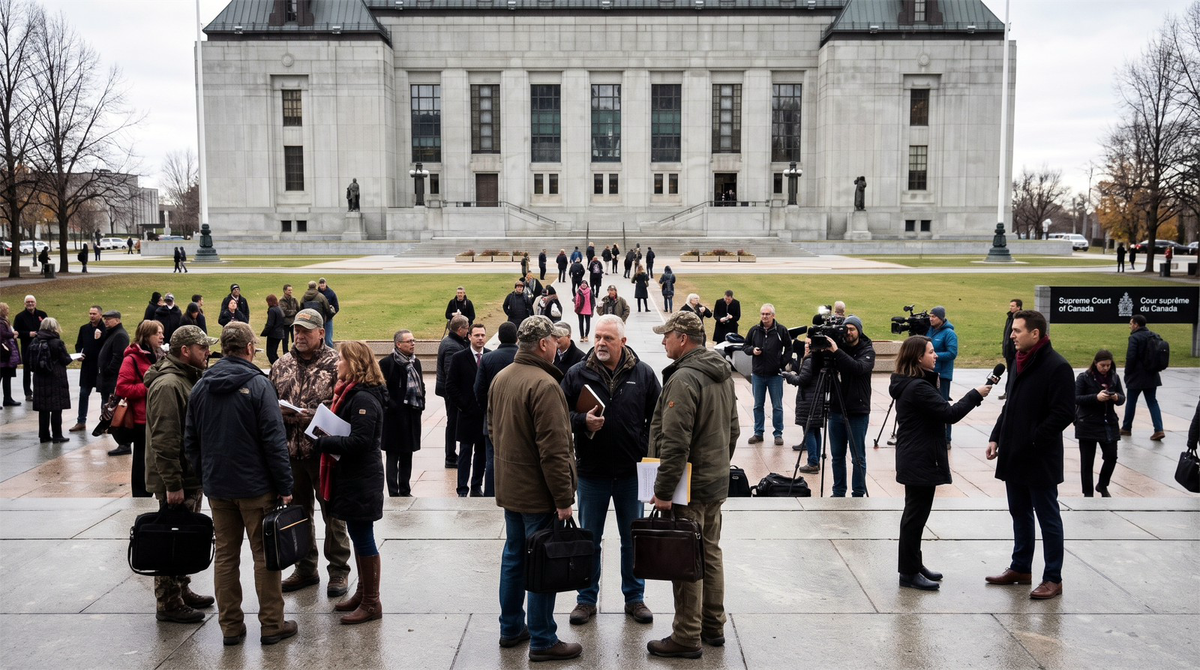
The Supreme Court of Canada finished hearing the firearms-ban appeals on November 10 and reserved judgment. The Canadian Coalition for Firearm Rights (CCFR) and the other appellants have made their case against the 2020 prohibition. Ottawa has asked the Court to dismiss all four appeals. If the judges grant relief, Canada wants another 12 months before that relief takes effect.
That fallback matters to anyone whose lawfully acquired firearm has spent years prohibited. The government is defending its authority to impose the ban while asking for time to respond if the Court finds a legal defect. Meanwhile, its compensation programme continues toward a stated 2026 completion.
A favourable judgment could arrive after an owner has permanently surrendered or deactivated the very firearm at issue. Owners deserve a real chance to benefit from a successful challenge. Ottawa should align its compensation and disposal deadlines with the final judgment and any delay in relief, while owners still have a choice about their property.
What the Court heard
The November 9–10 proceedings brought together the CCFR, Generoux, Doherty and Eichenberg appeals. Their challenges to the May 2020 regulations had already been dismissed by the Federal Court in 2023 and the Federal Court of Appeal in 2025. The Supreme Court has now heard the appeals; its decision remains pending.
CBC's November 10 hearing report says the appellants argued that the lower courts failed to consider whether the prohibited firearms were actually used for hunting or sport shooting. The legal boundary comes from section 117.15(2) of the Criminal Code: cabinet cannot prescribe a firearm as prohibited if, in its opinion, it is reasonable for those uses in Canada.
CCFR's filed argument says that restriction imposes a real limit on cabinet. Its condensed hearing outline also challenges the prohibition of unnamed variants, arguing that owners lack an intelligible standard for knowing which firearms are caught. Those are arguments the judges must decide.
Canada's position gives cabinet broader room to weigh public safety when deciding what is reasonable for hunting or sport. The government argues that the prohibited firearms pose a particular risk in mass shootings and that other firearms remain available for lawful activities.
There is a serious disagreement here about the power Parliament delegated, the limits attached to it, and the clarity required of rules backed by criminal penalties. Canada's confidence in its policy cannot settle those legal questions.
Canada's fallback: twelve more months
The 12-month request appears in paragraph 200 of the Attorney General's main factum. The Epoch Times' November 9 hearing report also records government lawyers asking for that suspension if the regulations are invalidated. The written request is broader: it seeks a suspension of any relief granted in the appeals.
Canada gives a specific reason. Paragraph 199 argues that removing all or part of the regulations would not automatically restore every firearm's earlier classification. Some formerly restricted firearms, it says, would become non-restricted. Ottawa characterizes that consequence as a public-safety problem and wants time for cabinet to decide how to implement the Court's decision.
That deserves a fair account. A court order affecting a regulatory system can require careful implementation. Canada's requested year also has a concrete cost: owners could keep living under restrictions that the Court has found legally defective while government works out its response. The judges will decide whether any delay is justified and what an appropriate order looks like.
CCFR's condensed outline asks for the regulations to be quashed or, alternatively, narrowed to remove the disputed unnamed-variant wording. It specifically invokes delay and fairness to owners against sending the matter back for reconsideration.
Where the two documents meet
The amnesty has its own legal timetable. The June amendment to the 2020, 2024 and 2025 orders ends them 90 days after the last of the four appeals ends by judgment, dismissal or discontinuance. The November hearing's conclusion starts no countdown by itself.
Public Safety's current instructions keep compensation on a separate track. The department says the amnesty extension does not change the programme's expected completion in 2026. Participation is voluntary; its page also tells owners to dispose of or deactivate affected firearms before the amnesty ends or risk criminal liability.
Putting those documents together raises a question government should answer clearly: how will owners be protected if the Court grants relief but postpones its effect? The final order, its scope and any further regulatory changes would determine the answer. Subtracting 90 days from a requested year cannot establish a fixed period of criminal exposure.
The immediate practical position is clear enough. Judgment is pending. The existing restrictions continue. Neither the completed hearing nor Canada's conditional request authorizes anyone to resume ordinary use of a prohibited firearm.
Opinion: preserve the possibility of meaningful relief
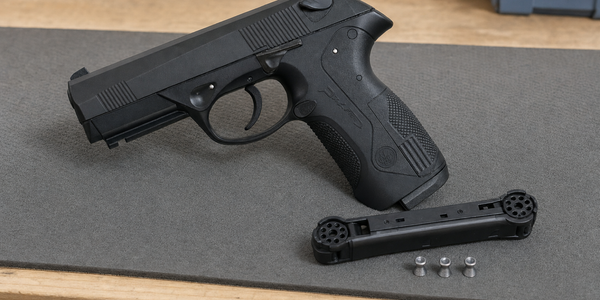
I own a Sterling Arms R9 MK1 that became prohibited after the 2020 regulations. The current appeals concern the 2020 regulations. The broader concern is personal enough: government can take away lawful use, keep owners waiting, and make permanent disposal the route to compensation while the legal challenge continues.
Holdover's position is straightforward: a successful challenge should still leave owners a choice. Public Safety should align compensation, collection and deactivation deadlines with the final judgment and any suspension of relief. It should publish a clear account of those dates and choices when the Court rules, with enough time for owners to act on the outcome. A payment can compensate an owner financially. It cannot reverse destruction.
Ottawa's public-safety case deserves scrutiny alongside the burden placed on licensed owners. If the Court finds the regulations unlawful, the government should have to justify every additional month of that burden. Administrative convenience alone would be a poor answer to people who complied with the rules when they acquired their firearms.
Firearms organizations have a specific commitment to press for while the Court deliberates: preserve owners' opportunity to benefit from the outcome, including access to compensation if disposal remains required. Owners who followed the law when they bought their firearms deserve that much consideration when government changes it.
Get Holdover's weekly Dispatch for the next verified development in the firearms appeals and what it changes for owners.
Sources
- Supreme Court of Canada, file 41859: November 9 and 10 hearing entries; judgment reserved; related appeals and lower-court history. Checked November 12, 2026.
- Supreme Court counsel sheet, four firearms appeals: scheduled participants and two-day proceeding.
- CBC, Catharine Tunney, November 10: hearing report and central dispute.
- Criminal Code, section 117.15: cabinet's regulation-making authority and hunting/sporting restriction.
- Attorney General of Canada, main factum: public-safety position and paragraphs 198–200 on relief, classification and the requested suspension.
- CCFR, main factum and condensed hearing outline: statutory authority, unnamed variants and requested relief; condensed paragraph 13 on fairness and delay.
- The Epoch Times, Jason G. Antonio, November 9: attributed hearing account of Canada's conditional suspension request.
- Canada Gazette, SOR/2026-114: amendments to all three amnesty orders and their court-linked termination formula.
- Public Safety Canada, next steps for individuals: separate compensation timetable and disposal instructions; page dated November 2, checked November 12.
The amnesty file is still moving.
If this piece sent you back to government pages, do not wait for the next portal, Gazette, or court move to find you by accident.
The Dispatch follows Public Safety, RCMP, Canada Gazette, court, compensation, collection, and amnesty updates so the next change comes with the source that moved.
Safety note: the tracker is a worksheet for source hygiene, not legal advice or a substitute for current official guidance.