Lakefield's place in Smith & Wesson's *Savage deal*
Smith & Wesson has acquired Savage. Its factory map includes Lakefield, Ontario, while Canadian owners still need specific answers about future production and support.

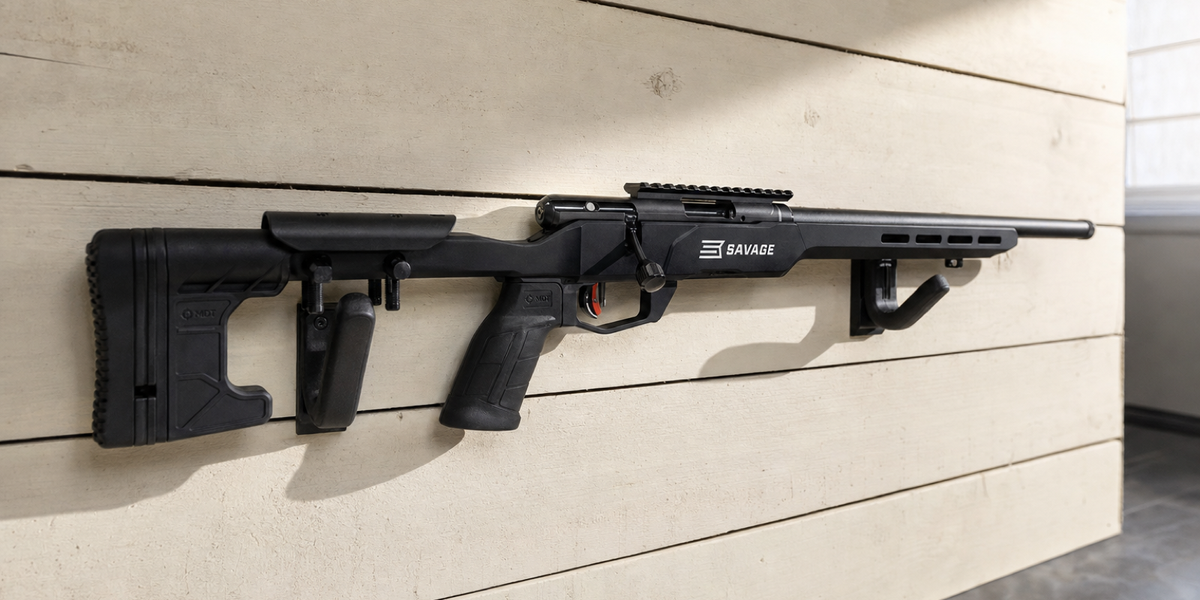
Smith & Wesson completed its acquisition of Savage Arms on October 21. The Canadian part is visible on the buyer's own factory map: Lakefield, Ontario, appears as a manufacturing location in the combined business.
That entry deserves attention. Within hours, a Canadian firearms discussion had turned to whether Lakefield might close, whether quality would improve, and what Canadian owners should expect. Those are understandable questions. The announcement establishes the sale and the operating footprint. The answers about the plant's future need more evidence.
My buying questions tend to get less glamorous once a rifle reaches the bench. Where do parts come from? Where does the rifle go if it needs work? An Ontario service address belongs in that calculation alongside the action, stock, and price. It is the part of this transaction I want explained for Canadian owners.
A completed transaction, in US dollars
The October 21 announcement filed with the SEC values Savage at US$160 million, subject to customary adjustments. Its announced base terms combine approximately nine million Smith & Wesson shares with US$37.5 million in cash. The company says the deal was completed that day.
Savage came from an indirect subsidiary of JDH Capital. According to the announcement, JDH holds 16.7 percent of Smith & Wesson after closing and gains board representation. That gives the seller a continuing financial interest in the combined company.
For the product catalogue, Smith & Wesson describes a straightforward fit: Savage brings hunting and bolt-action rifle strength to a business better known for handguns. Rimfires, competition rifles, and shotguns also form part of the acquired business. The owner behind the products has changed, with a broader range of firearms now under the same corporate parent.
The announcement's dollar figures describe the transaction. They supply no Canadian retail price, parts price, or delivery promise. A buyer considering a rifle still needs the terms for that particular purchase.
Lakefield appears in the new footprint
Slide nine of the official acquisition presentation places Lakefield alongside Savage's Westfield, Massachusetts, location and Smith & Wesson's locations in Tennessee, Massachusetts, and Maine. The deck presents five facilities across the combined business.
This is current evidence from the acquiring company that Lakefield belongs in its operating picture. Savage is headquartered in Westfield. Canadian manufacturing is an established part of the business now owned by Smith & Wesson; the transaction needs to be described with both facts intact.
The presentation lists distribution efficiency, capacity balancing, sourcing leverage, and supply-chain resiliency among the intended benefits. These are management's objectives. The slide gives no Lakefield-specific timetable, staffing commitment, production allocation, or decision to close or expand the plant.
A Canadian reader can take the factory's inclusion seriously while keeping those unanswered questions open. Counting a location on a slide establishes its place in the disclosed footprint. Determining what management intends to do there requires a statement about that location or later operating evidence.
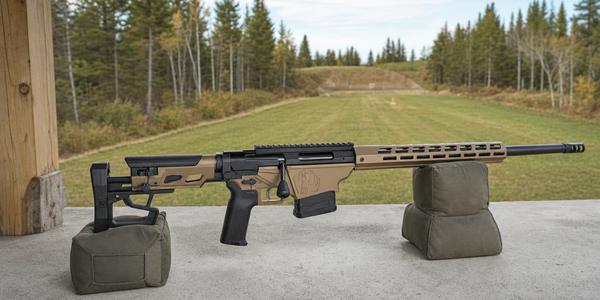
The products make that distinction tangible. Savage's current B Series Precision page includes the B22 Precision in .22 LR, with a machined aluminium MDT chassis and an 18-inch barrel. It is one example of the rifle business being acquired. The catalogue page alone supplies no proof of where an individual B22 was assembled.
Canadian service still points to Lakefield
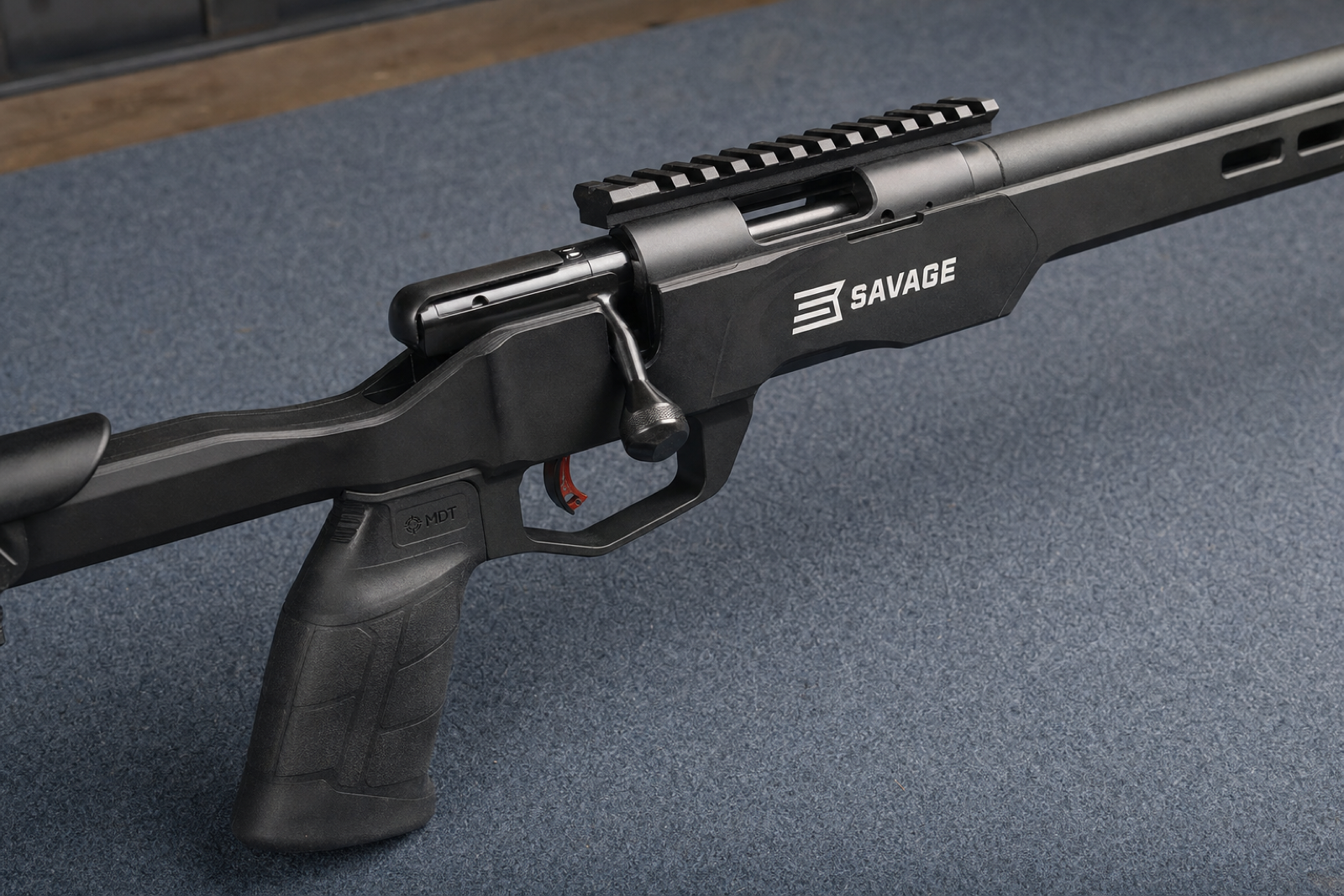
Savage's Canadian warranty-repair FAQ directs Canadian repairs to its Lakefield facility. The page identifies that as its authorized Canadian warranty location. It remained publicly posted when checked on October 22.
The date attached to that guidance matters: it was updated on March 26, 2024. Owners can read the currently posted route, but the older page supplies no new undertaking from Smith & Wesson about the acquisition. Anyone arranging a repair should confirm Savage's current instructions before making shipping arrangements.
For a prospective buyer, I would keep the receipt, exact model information, and written coverage terms together. For an existing owner, the useful follow-up is whether Savage publishes revised Canadian service instructions or coverage. A change of corporate ownership, by itself, tells us little about how a particular service request will be handled.
The next answer should reach Canadian owners
I can see the business case for combining complementary product lines and distribution. A stronger owner-facing result would be easier access to the correct parts, clear support, and reliable supply. Those are reasonable things to ask of a larger manufacturer. They remain expectations until the company provides terms or delivers results that support them.
Lakefield also deserves a specific account of its role. If production is changing, owners and the people making these rifles should hear what is changing and when. If management intends to invest in the operation, a dated commitment would be more useful than another general promise about efficiency.
For now, the completed Savage purchase gives Smith & Wesson a Canadian manufacturing operation on its map. The next useful Canadian announcement should explain the work and support behind that entry.
Sources
- Smith & Wesson acquisition announcement, SEC Exhibit 99.1, October 21, 2026.
- Official issuer release, October 21, 2026.
- Smith & Wesson acquisition presentation, particularly slide nine.
- Savage Canadian warranty-repair FAQ, updated March 26, 2024; checked October 22, 2026.
- Savage B Series Precision catalogue, checked October 22, 2026; product identity only.
- Canadian community discussion, October 21, 2026; reader questions, not evidence of future company decisions.
Keep the range notes worth reading later.
If this piece has you thinking about range time, keep the notes useful enough to read later.
Use the Holdover Range Bench Log Card to record rifle, optic, ammunition, distance, weather, zero, group notes, correction, and next test without turning a range trip into a memory test.
Safety note: the card is a note-taking worksheet, not shooting instruction, load data, legal advice, or a substitute for range rules, official guidance, manufacturer manuals, or qualified instruction.