ACOG reticles go *MRAD*, with clicks still worth checking
Trijicon has announced four MRAD-reticle ACOGs. The current adjustment specifications use separate units, and Canadian new-model availability still needs confirmation.

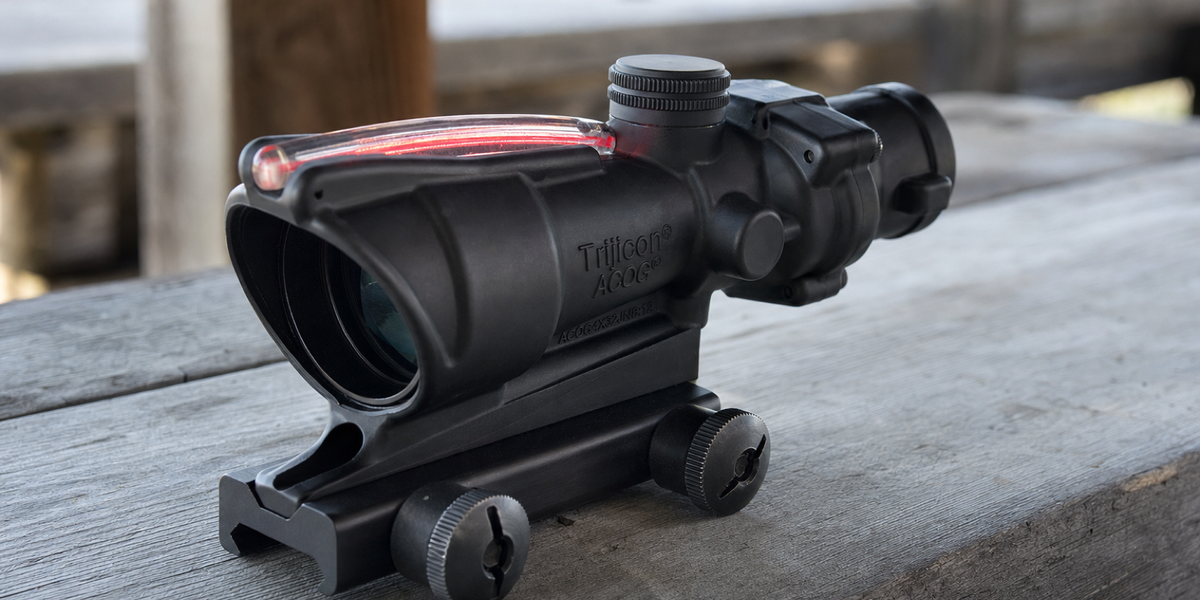
Trijicon has announced MRAD-reticle versions of four ACOGs, giving its compact fixed-power line an angular scale that owners can use with their own rifle and ammunition. The October 14 announcement covers 4x32 and 3.5x35 models, with either fibre-optic/tritium illumination or an LED.
For a Canadian shooter already working in mils, that is an interesting option. The same product pages also reward a slower read: several list their adjustments in clicks per inch at 100 yards. Reticle measurements, adjustment increments, and illumination each deserve their own line on the comparison sheet.
I spend enough time keeping scope settings and handloading notes straight that I appreciate familiar units. I also like the specification sheet to tell me where those units apply. An optic that sends me between mils, inches, and a separate model-number lookup has assigned a little homework before it has left the counter.
Four versions of the same announcement
Trijicon's manufacturer release identifies these four offerings:
- TA31-C-100832: 4x32, with fibre-optic and tritium illumination.
- TA02-C-100833: 4x32, with LED illumination.
- TA11-C-100806: 3.5x35, with fibre-optic and tritium illumination.
- TA110-C-100807: 3.5x35, with LED illumination.
The magnification stays fixed. In the dual-illuminated versions, the fibre collector uses available light and tritium supplies illumination in low light. The LED versions use an AA battery and give the user brightness settings. Those are different ways to illuminate the reticle within the ACOG format.
The announcement adds a choice to the line. It supplies no basis for assuming that existing cartridge-labelled ACOGs have disappeared, or that every optic wearing the ACOG name now contains the new reticle. Those long catalogue numbers do useful work.
An angular scale for your own ammunition
MRAD means milliradian, an angular unit of measurement. It lets a reticle describe an angle independently of the cartridge name on the ammunition box. A shooter still has to establish the relationship between that scale and the actual rifle, ammunition, and conditions.
Trijicon describes the new reticles as a way for users to establish their own elevation and wind holds across different ballistic profiles. That is the worthwhile design change: the owner gets a common measuring scale while retaining responsibility for the figures attached to a particular setup.
For a handloader, that distinction feels familiar. Changing ammunition can change the figures in the notebook while the measuring system stays useful. The manufacturer's description establishes the intended flexibility. Range work would have to establish how well a particular owner can see and use the reticle at 3.5x or 4x.
Our MOA/MIL adjustment explanation covers the broader unit question. Both systems describe angles; either can be used on a Canadian range marked in yards or metres. Consistent language among the optic, notes, and person calling a correction can save needless conversion.
The click value lives on another line
The current TA02-C-100833 manufacturer page lists two clicks per inch at 100 yards. The TA11-C-100806 and TA110-C-100807 pages list three clicks per inch at 100 yards. The TA110 page also expresses total adjustment travel in MOA.
Those are Trijicon's published specifications as checked October 15. They have not been measured here. A buyer expecting decimal-mil clicks from the MRAD label should ask for the exact model's adjustment specification and supporting manual. The current TA31-C-100832 page omits an adjustment value, so borrowing one from another TA31 would add an assumption.
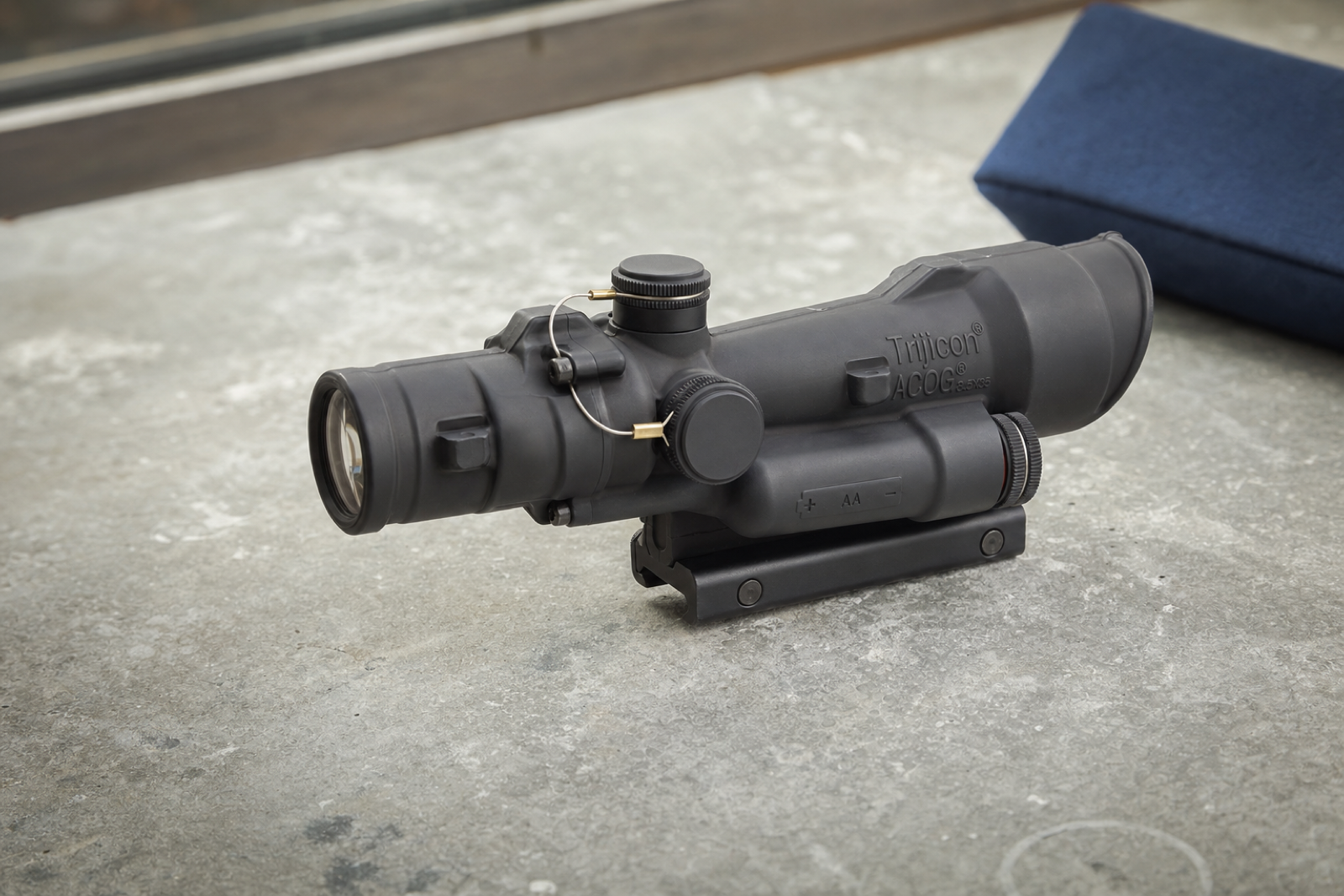
The visible battery housing and capped optical adjustments do different jobs. Power and brightness details describe illumination; the adjustment specification supplies the published click increment. Keeping those entries separate can prevent a longer explanation at the range.
Eye relief remains a separate buying question
The new reticle arrives inside a fixed-power optic with physical dimensions of its own. Trijicon lists 1.5 inches of eye relief for the TA31 and TA02, compared with 2.4 inches for the TA110. That is a material difference in the stated viewing position, worth considering alongside the rifle's available mounting space.
An appealing reticle drawing cannot establish that the optic will suit your normal position behind a particular rifle. Fixed magnification deserves the same consideration. A compact 3.5x or 4x format may fit the job you have in mind, while a shooter who relies on variable magnification still has that requirement to satisfy.
I would keep the format, viewing position, and preferred illumination ahead of the attraction of a new grid. Those are practical fit questions. No hands-on comparison of these new versions is claimed here.
A Canadian model number still needs a Canadian offer
RDSC's Canadian Trijicon catalogue provides familiar retail context for the family, including existing cartridge-labelled versions. This check did not establish Canadian stock, a Canadian price, or an arrival date for the four newly announced MRAD models.
An existing family listing leaves those details open. I would want a Canadian seller to identify the exact SKU, reticle, and adjustment increment together, then confirm delivery and the support route. The announcement makes the new reticle worth examining; a complete model-specific answer would make the buying decision easier.
Sources
- Trijicon manufacturer announcement, The Shooting Wire, October 14, 2026.
- Trijicon TA31-C-100832 current manufacturer page.
- Trijicon TA02-C-100833 current manufacturer page.
- Trijicon TA11-C-100806 current manufacturer page.
- Trijicon TA110-C-100807 current manufacturer page.
- RDSC Canadian Trijicon catalogue.
- Vortex Optics FAQ, angular units.
Shortlist the rifle before the checkout page.
If this piece helped you narrow the rifle question, keep the tradeoffs visible before the next tab becomes a shopping cart.
Use the Holdover Rifle Cartridge Shortlist Card to compare use case, distance, recoil, ammunition availability, rifle fit, optics plan, budget, and what you will actually practice.
Safety note: the card is a planning worksheet, not buying advice, legal advice, hunting guidance, load data, or a substitute for current manufacturer, range, provincial, federal, or qualified-instructor guidance.