A .22 beat the doomscroll
The top current Canadian gun thread was not another panic spiral. It was a happy rimfire setup. That matters for new shooters, range culture, and lawful ownership.


Opinion. The most useful Canadian firearms post I found this morning was a guy being delighted by a .22.
That sounds small. Good. Small is the point.
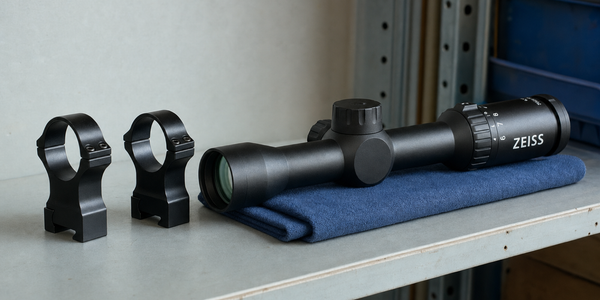
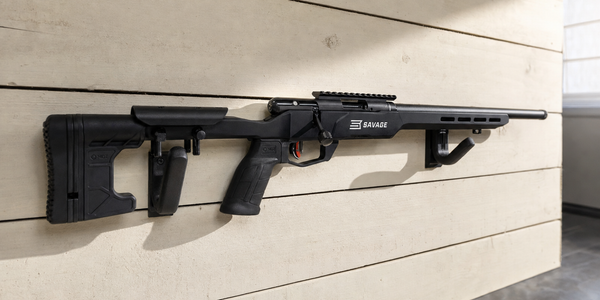
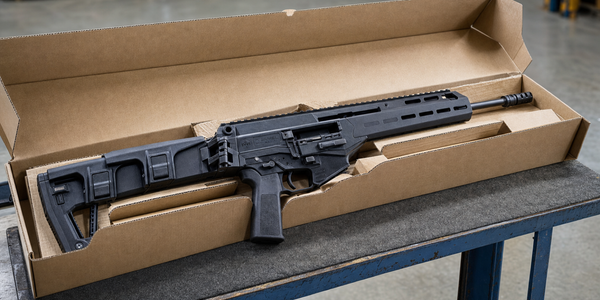
On r/canadaguns, the top past-day post when I checked was titled "TM-22 A12 + Alex's Homebrew." It was not a legal alert or another argument about which ordinary rifle Ottawa might dislike next. It was a shooter happy with a rimfire setup: a T-handle kit, an LPVO, a bolt-hold-open button, and a rifle he described as smooth and accurate.
I am not reviewing his rifle. I am not reviewing the accessory kit. I am reading the room.
The room, for once, was not only doom. It was someone enjoying a lawful setup, other Canadians asking about parts, comparing rimfires, and treating a range toy like it was allowed to be fun.
That is healthier than it looks.
Small wins are not small
Canadian gun culture has spent six years being trained to flinch at the news. Orders in Council, Firearms Reference Table anxiety, buyback pages, amnesty dates, transfer changes, retailer caveats, and endless speculation have made a lot of normal ownership feel temporary.
You can see the effect on new shooters. A person gets a PAL, buys hearing protection, learns storage, finds a range, and then discovers that half the conversation is legal triage. What is still allowed? What changed? Is a retailer description current? Why does everyone sound tired?
Those questions matter. Ignoring the policy file is how people get sloppy.
But if every beginner meets the sport as a panic feed, the sport becomes smaller than the thing we are defending. There has to be room for the other part: the first good group, the optic that finally makes sense, the cheap afternoon with a .22, and the target that proves the shooter learned something.
I own a couple of semi-auto .22s for exactly that reason. They are cheap to feed, easy to enjoy, and brutally honest when your fundamentals get lazy.
That is not beginner stuff in the dismissive sense. It is foundation work with a smaller bill.

The other thread was a target stand
The same scan found another thread doing the same cultural work from a different angle. A Canadian shooter was drawing up plans for a portable target stand, asking for feedback because he had never really built anything like it with wood before. The plan was meant to hold targets, come apart, fit in an SUV, and work on crown-land distances.
That thread drew dozens of comments because shooters understand the problem. You can buy a rifle in ten minutes if the law and the bank account both cooperate. Building a target system that survives weather, staples, uneven ground, and human optimism is somehow harder.
This is the part of firearms culture that rarely appears in political arguments. It is someone asking whether a stand will tip over. It is someone else saying use wider feet, replaceable uprights, cheap lumber, better fasteners, or less faith in plywood.
For a new shooter, that conversation is gold. It teaches that the hobby is not only buying the thing. It is solving the little problems around the thing: targets, muffs, tools, weather, safe handling, transport, and club etiquette.
That is how competence gets built. Not in one grand purchase. In a hundred small corrections.
Joy is part of advocacy
There is a temptation, especially for politically aware gun owners, to treat happy gear posts as unserious while the federal file keeps moving. Public Safety Canada says the individual declaration period for the Assault-Style Firearms Compensation Program has ended, and its current page still points owners toward collection, deactivation, compensation, and an October thirtieth, twenty twenty-six amnesty endpoint.
That is heavy background noise. It should anger lawful owners. It should also clarify something: if Ottawa's message is that ordinary ownership is suspicious, then ordinary ownership has to remain visible.
Not performative. Visible.
A good rimfire range day is visible culture. A target-stand thread is visible culture. A new shooter asking basic questions is visible culture. A small shop making a clever accessory for a domestic market is visible culture.
The RCMP's 2024 Commissioner of Firearms Report counted 2,425,627 individual firearms licences in Canada, including PALs and Minor's Licences. That is not a fringe population. It is a large, screened, rule-bound community that includes the guy who just wants his .22 to run nicely on a Saturday.
When policy flattens that community into a threat profile, the answer cannot only be statistics. It also has to be evidence of life.
The .22 teaches proportion
The rimfire path has one more advantage for newer shooters: it fights the shopping-cart disease.
A new shooter can spend a month online and come away convinced he needs the rifle, the optic, the bag, the bipod, the brake, the rail, the mount, the special ammo, the upgraded trigger, and a second job. Some of that gear may become useful after the shooter has enough rounds downrange to know what problem he is solving.
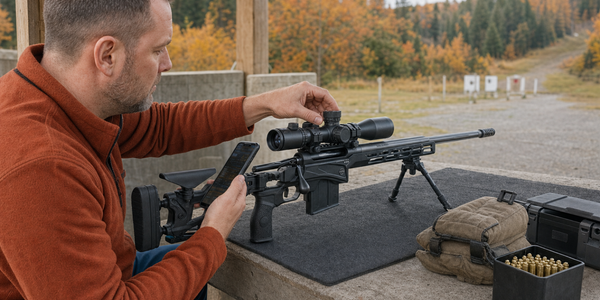
A .22 slows the spiral down. It lets you shoot more. It makes wind visible without making recoil the whole conversation. It lets you learn an LPVO, a simple scope, irons, positional work, trigger control, and the humbling fact that a cheap miss is still a miss.
That is why the happy TM-22 thread landed with me. Not because one model is the answer. The real point is that a shooter found a setup that made him want to shoot more.
That is the best thing gear can do.

Keep the politics, keep the bench
None of this means lowering the pressure on bad law. The OIC bans, shifting classifications, and compensation machinery deserve scrutiny. The FRT should be read carefully. Public safety claims should be forced to show their work.
But the bench still matters.
If you are new, give yourself permission to enjoy the small wins without becoming naive. Read the law. Learn the safety rules. Buy decent hearing and eye protection. Ask boring questions. Build the target stand properly. Shoot the .22 more than the algorithm tells you to.
And when someone posts a happy rimfire build, do not roll your eyes too quickly.
That little post is doing more than showing gear. It is reminding the room what the room is for.

Let the little .22 win
Canadian firearms advocacy needs lawsuits, source work, policy pressure, clubs, businesses, instructors, and people willing to speak clearly in public. It also needs enough joy to keep people from walking away.
A country that cannot tolerate a happy rimfire thread has mistaken the hobby for the problem.
So yes, fight the bad law. Read the source pages. Push back when Ottawa points at licensed owners because licensed owners are easiest to find.
Then go shoot the .22.
Let the little wins pile up. They are how the next shooter learns enough to stay.
Sources
- Reddit / r/canadaguns, "TM-22 A12 + Alex's Homebrew": https://www.reddit.com/r/canadaguns/comments/1tlthya/tm22_a12_alexs_homebrew/
- Reddit / r/canadaguns, "Drawing up plans for a DIY target stand, any suggestions?": https://www.reddit.com/r/canadaguns/comments/1tlekpg/drawing_up_plans_for_a_diy_target_stand_any/
- RCMP, "2024 Commissioner of Firearms Report": https://rcmp.ca/en/corporate-information/publications-and-manuals/2024-commissioner-firearms-report
- Public Safety Canada, "Firearms Buyback Program": https://www.canada.ca/en/public-safety-canada/campaigns/firearms-buyback.html
Keep the range notes worth reading later.
If this piece has you thinking about range time, keep the notes useful enough to read later.
Use the Holdover Range Bench Log Card to record rifle, optic, ammunition, distance, weather, zero, group notes, correction, and next test without turning a range trip into a memory test.
Safety note: the card is a note-taking worksheet, not shooting instruction, load data, legal advice, or a substitute for range rules, official guidance, manufacturer manuals, or qualified instruction.