After *2020.* Canada rewrote the firearms file. The data didn't follow in a straight line.
Six years after the May 2020 prohibition, the Assault-Style Firearms Compensation Program has moved from politics into paperwork. The amnesty clock runs out SCC + 90-day amnesty. What the law changed is clear. What changed in public-safety terms is genuinely mixed.

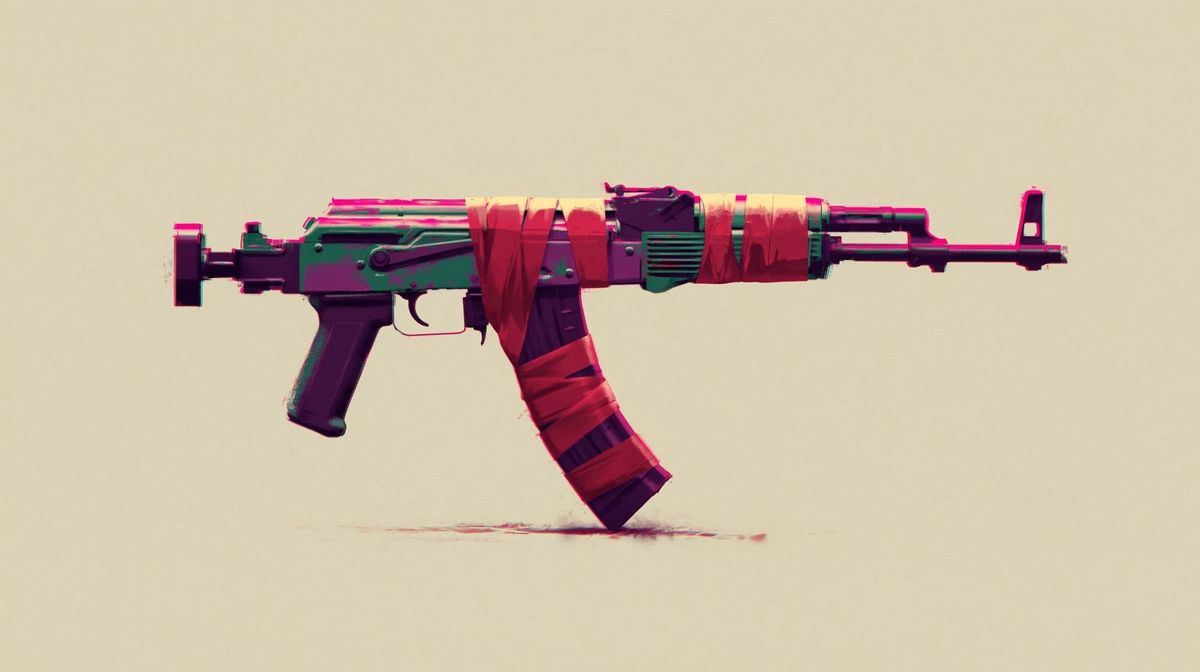
The individual declaration window closed on March 31, 2026. By April 1, Public Safety Canada was reporting more than 67,000 prohibited firearms logged through its portal by 37,869 owners. On April 23, the business phase of the Assault-Style Firearms Compensation Program reopened. A new clock is running. The amnesty protecting affected owners now runs to the SCC appeals + 90-day endpoint, and after that date, continued possession without lawful compliance crosses from policy friction into potential criminal liability.
This is what six years of Canadian firearms policy looks like in 2026. Paperwork, portals, deadlines, and a compensation envelope north of $248 million. It is the point at which a long political project became a logistics problem.
The question worth asking is not whether gun violence went down after 2020. That framing is too tidy, and the data does not support a victory-lap narrative from any direction. The more honest story is that since May 1, 2020, Canada's firearms landscape changed dramatically in law and compliance, while the public-safety picture moved in a much messier, more uneven way. That tension is the piece.
Three tracks, not one policy
"After 2020" was not a single intervention. It was a rolling sequence, and conflating them obscures what each one actually did.
The prohibition track. On May 1, 2020, the federal government prohibited roughly 1,500 makes and models of firearms and their variants by Order in Council, following the Nova Scotia mass shooting. By December 2024, Public Safety said the total had grown to more than 2,000 as variants were identified. On December 5, 2024, Ottawa added 324 more unique makes and models. On March 7, 2025, it added another 179. As of 2026, the government and independent reporting describe the prohibited universe as more than 2,500 makes and models.
The handgun track. A temporary import ban on handguns took effect on August 19, 2022. The national handgun freeze followed on October 21, 2022, suspending most new sales, purchases, and transfers between individuals. Bill C-21 received Royal Assent on December 15, 2023, codifying the freeze, expanding red-flag provisions, increasing certain penalties, and creating a prospective definition that captures centre-fire semi-automatic rifles designed and manufactured on or after December 15, 2023 if originally designed with detachable magazines of six rounds or more. The yellow-flag licence-suspension regime took effect on March 7, 2025.
The compliance track. This is where 2026 lives. The individual declaration period ran from January 19 to March 31, 2026. By April 1, Public Safety was reporting 37,869 owners and more than 67,000 firearms declared. The first business phase, according to the government, had already destroyed more than 12,000 firearms and paid more than $22 million in compensation. The total compensation envelope allocated to the program stands at $248.6 million. The amnesty protecting affected individuals now runs to the SCC appeals + 90-day endpoint.
Those three tracks are worth keeping separate because they do different things, land on different populations, and invite different arguments. A reader who treats the 2020 prohibition, the handgun freeze, C-21, and the 2026 compensation program as interchangeable is not reading the file.
The system it landed on
The legal project after 2020 did not land on a fringe activity. As of December 31, 2024, Canada had 2,425,627 firearms licence holders. Of those, 775,266 held restricted privileges and 38,739 held prohibited privileges. There were 1,269,076 registered restricted or prohibited firearms on the books, and 935 range facilities in operation. That is the scale of the lawful civilian system the policy was rewriting.
The data does not tell a tidy story
If you want a national trendline that says the post-2020 measures solved the problem, Statistics Canada does not give you one. If you want a trendline that says nothing changed, StatsCan does not give you that either.
The rate of firearm-related violent crime in Canada fell 1.7% in 2023, from 37.5 incidents per 100,000 population in 2022 to 36.9 in 2023. That is a real, measured decline from a 14-year peak. It is also still 22% above the 2018 rate and 55% above the 2013 rate. The line moved in the right direction from one year to the next. It did not return to pre-2020 levels, let alone pre-2013 levels.
That is the first part of the complication. Here is the second.
The 2023 national decline was not a national experience. StatsCan found it was largely driven by decreases in Toronto, Calgary, Montréal, and Vancouver. In the provincial urban south, the firearm-related violent crime rate fell 6.5%. Every other broad region saw an increase:
- Provincial rural south: +19%
- Provincial urban north: +13%
- Territories: +9.4%
- Provincial rural north: +6.5%
The geography gets more counterintuitive from there. In 2023, the highest rates of firearm-related violent crime were in the territories (180 per 100,000) and the provincial rural north (165), not in the big southern cities (32.0 in the provincial urban south). Yet 71% of all such incidents still occurred in the provincial urban south, because that is where most Canadians live. Rate and volume point different directions, and policy that treats one as the other will miss.

What kinds of firearms actually show up in crime
The composition data is the part that most often gets lost in public debate.
In 2023, about 49% of firearm-related violent crime involved a handgun. Rifles or shotguns accounted for about 15%. Firearm-like or unknown weapons made up another 31%. Fully automatic firearms and sawed-off shotguns accounted for 4.7%. In the provinces, handguns were most common in urban areas, while rifles, shotguns, and unknown or firearm-like weapons were more common in rural areas.
Homicide data for 2024 tells a similar story. Firearms were used in 36% of homicides. Among firearm-related homicides, handguns accounted for 56% and rifles and shotguns accounted for 34%.
None of this proves the effect of any specific policy. It does, however, show why the government's stated emphasis on handguns and the broader public debate over rifle prohibitions have spent years talking past each other. Handguns dominate the firearm-crime picture in Canadian cities. The prohibited-list politics have often centred attention on semi-automatic rifles. Both conversations are real. They are not the same conversation.
Compliance is the 2026 story
The politics of the Assault-Style Firearms Compensation Program stopped being abstract this spring. Public Safety's individual declaration portal is the vehicle, and the numbers are starting to land.
By April 1, 2026, declarations by province and territory broke down as follows:
- Ontario: 27,487
- British Columbia: 15,600
- Québec: 9,801
- Alberta: 7,334
- Manitoba: 2,442
- Nova Scotia: 1,702
- Saskatchewan: 1,255
- New Brunswick: 1,150
- Newfoundland and Labrador: 484
- Prince Edward Island: 170
- Yukon: 134
- Northwest Territories: 81
- Nunavut: fewer than 10
The business phase reopened on April 23. The government's reported first-phase business totals: more than 12,000 firearms destroyed and more than $22 million paid out. The total envelope sits at $248.6 million. The pilot that preceded the individual program collected and destroyed 25 firearms over six weeks, and Public Safety's own process review flagged lessons about registration clarity, support, and user experience. Those are the words of an agency trying to scale a collection and destruction pipeline under a live amnesty clock.
the former fixed deadline, is the date that now matters. After it, continuing to possess an affected firearm without a compliant pathway (deactivation, export, surrender, or a qualifying exemption) can produce criminal liability. That is not a rhetorical point. It is written on the calendar.
What can honestly be said
The legal change is real, the compliance change is happening in front of us, and the crime-data change is genuinely mixed. None of those three statements should be controversial, and all three are routinely collapsed into a simpler narrative by people on both sides of the file.
What cannot honestly be said is that the post-2020 measures caused the 2023 dip. The available StatsCan data is descriptive and temporal. It does not isolate the effect of the May 2020 prohibition, the October 2022 handgun freeze, or any single provision of C-21 on the firearm-related violent crime rate. The biggest cities drove the 2023 decline. Big cities also happen to be where most handgun crime concentrates. Whether the freeze accelerated that decline, or whether broader municipal policing and social factors did more of the work, is not something that can be read off a national rate.
What also cannot honestly be said is that nothing changed. The legal status of thousands of firearms was reclassified. Most of the civilian handgun market was frozen. A new prospective rifle definition was written into law. An amnesty was stood up, extended, and attached to a compensation program that is now actively destroying firearms and paying claims. The system of lawful ownership itself became more administratively constrained, more politically contested, and more contingent on compliance workflows that did not exist five years ago. Those are facts, not feelings.
The bottom line
After 2020, Canada transformed the legal status of thousands of firearms and froze most of the civilian handgun market. By 2026, that project had moved from politics into paperwork, declarations, compensation, and looming deadlines. The public-safety story still refuses to fit neatly on a bumper sticker.
If the goal was to change the rules, a lot changed. If the goal was to materially and obviously reshape firearm violence across Canada in a few years, the evidence so far is harder to read as a clean success story. Those are two different projects. Treating them as one is how this debate keeps getting worse.
Related Holdover References
Source-led reference pages for the terms and policy context behind this piece.
- Canadian Firearms Classification Timeline
- Canadian Firearms Storage and Transport Source Map
- Canadian Firearms Glossary
- Canadian Firearms OIC Index
- Canadian Firearms Buyback Tracker
- Sources and Verification
Sources · editorial note
- Statistics Canada, Firearm-related violent crime in Canada, 2023 (Juristat)
- Statistics Canada, Homicide in Canada, 2024
- Public Safety Canada, Assault-Style Firearms Compensation Program program pages and progress updates, 2026
- Commissioner of Firearms, 2024 Commissioner of Firearms Report (licence holder and registered firearms counts, year-end 2024)
- An Act to amend certain Acts and to make certain consequential amendments (firearms), SC 2023, c 32 (Bill C-21), Royal Assent December 15, 2023
- Order in Council PC 2020-298 (May 1, 2020 prohibition) and subsequent amending regulations of December 5, 2024 and March 7, 2025
- All interpretation is editorial. Corrections and counter-arguments welcomed at The Dispatch.
Source trail refreshed
This article was refreshed for accessibility and source discovery on 2026-05-20. The opinion has not been rewritten; this block keeps the source trail easier to inspect.
Primary source trail
- Statistics Canada homicide trends in Canada, 2024
- Statistics Canada firearms and violent crime in Canada, 2024
- RCMP 2024 Commissioner of Firearms Report
- Justice Laws Classification Regulations
Keep the source trail in one place.
If this piece sent you back to government pages, keep the official links, page dates, and follow-up notes together.
Use the Holdover Canadian Firearms Policy Source Tracker to record the current Public Safety, RCMP, Canada Gazette, and Justice source pages behind buyback, OIC, classification, compensation, and amnesty claims.
Safety note: the tracker is a worksheet for source hygiene, not legal advice or a substitute for current official guidance.