$480 for a ZEISS V3 with *fixed parallax*
A C$480 Canadian listing puts the compact ZEISS V3 rimfire in view. Its fixed 50-yard parallax and XRR eight-power reference define the useful buying question.

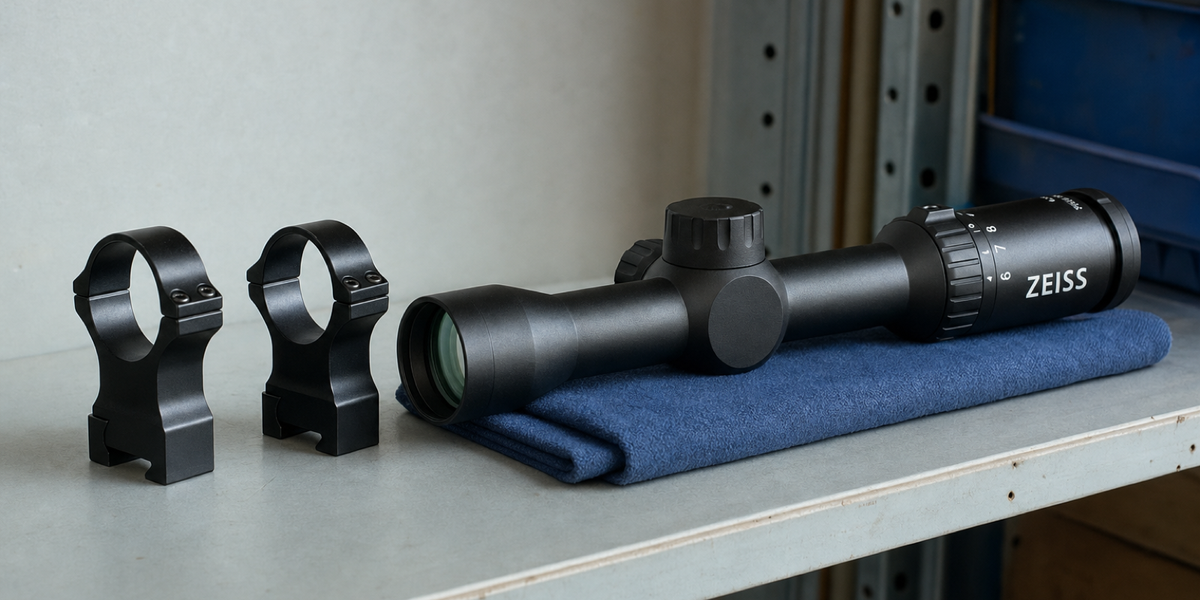
Calgary Shooting Centre promoted a ZEISS rimfire scope on October 22 and lists it at C$480. Alongside that price, the number I would pay attention to is 50 yards.
The V3 2.5-8x35 RF has its parallax fixed there. ZEISS has built a small, light optic around a particular kind of rimfire use, with capped adjustments and a second-focal-plane reticle. That arrangement deserves a look from someone putting together a modest rimfire. A shooter expecting to work through varied distances with an adjustable-parallax precision scope has a different shopping list.
This is a reading of the current Canadian offer and ZEISS's documents. I have not handled or tested this V3, so the glass, adjustment feel, and performance remain open questions.
A small scope with an important suffix
The Calgary listing identifies MPN 522703-9884-000: the RF version with the non-illuminated XRR #84 reticle. Its advertised C$480 price is before tax. The dealer's fresh post establishes a Canadian offer; it gives us no basis to call this the model's first arrival in the country.
That RF suffix earns its place in the name. ZEISS also makes a 2.5-8x35 without the rimfire designation, and the family's specifications spread across several sizes and configurations. Shopping from a cropped product name would be an easy way to compare the wrong things.
ZEISS's RF specifications describe a 1-inch main tube, 35 mm objective, 10.74-inch length, and 12.6-ounce weight. The last two numbers are about 273 mm and 357 g. There is a physical argument here for keeping a rimfire compact, especially when the alternative is adding a large optic because the rifle happens to have room for one.
Rings and the rest of the mounting arrangement still belong in the weight and cost calculation. A small scope can help keep the whole package manageable; the scope's catalogue weight only accounts for the scope.
Fifty yards describes the parallax setting
ZEISS's North American V3 manual, page 8, is clear about the distinction: the RF model has fixed parallax at 50 yards. Other V3 models with fixed parallax use 150 yards. Certain larger configurations have a side adjustment, which should stay out of an RF buyer's expectations.
Parallax describes apparent movement between the reticle and the target when your eye position changes. The manual explains that the target image and reticle can appear on different focal planes inside the scope. Reticle focus is a separate adjustment, matching the appearance of the reticle to your eye.
Fifty yards identifies the RF's parallax calibration; usable distance and image sharpness involve other conditions as well. You accept that fixed arrangement wherever you use the scope. A model with adjustable parallax lets you select a setting for each distance.
For a rimfire used around a familiar distance, that simplicity may be welcome. My interest would depend on the actual targets and distances I expect to shoot. If I were buying an optic for varied-distance precision work, adjustable parallax would carry real weight in the decision. The blue badge would have to share the conversation with the job.
The XRR numbers belong to eight power
The XRR #84 provides angular references in the reticle. ZEISS shows lower references at 2, 4, 8, and 12 MOA, with 2- and 4-MOA references to either side. Its reticle datasheet puts an important condition on those values for the 2.5-8 models: eight-power magnification.
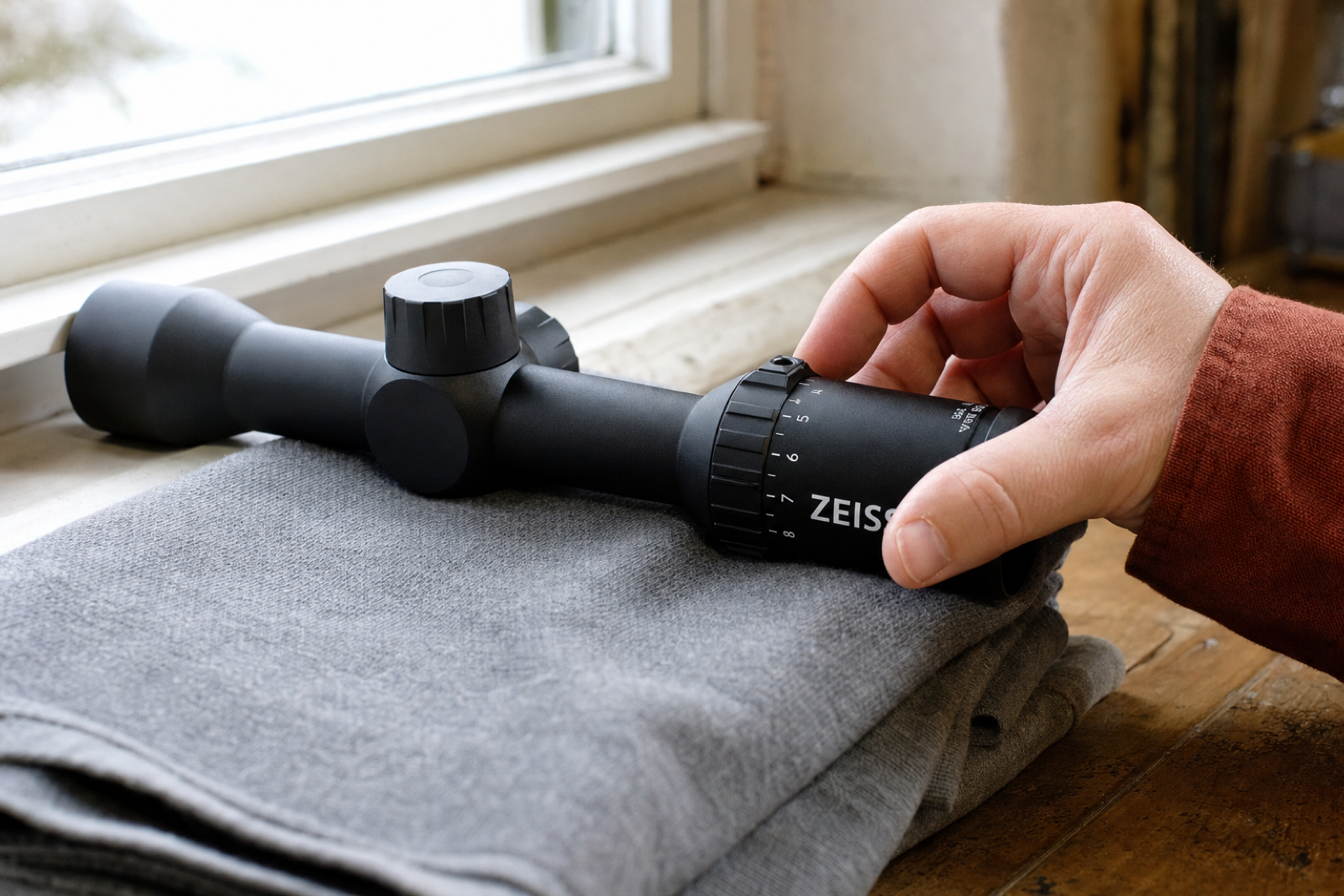
In a second-focal-plane scope, changing magnification changes the target image's size relative to the reticle. The listed angular references therefore depend on the specified magnification. Someone moving from a first-focal-plane precision optic should carry that difference into the buying decision.
Those MOA references also describe angles, with no automatic promise about where a particular .22 LR load lands at a particular distance. The model's maximum magnification and reticle table belong together. A catalogue photograph of the crosshairs alone leaves out that useful piece of information.
The specification that fits your rifle
I have already paid for my own lesson in buying four 40x Discovery scopes. The extra magnification appealed to me more than its practical benefit at the distances I was shooting. That experience makes me interested in a scope's intended use before I get excited about the largest number on its box.
With this V3, the appeal on paper is a compact body, modest magnification, and a straightforward rimfire configuration. The compromise is equally visible in the documents: fixed parallax and magnification-dependent reticle references. Neither the price nor the ZEISS name answers how the actual sight picture will suit your eyes.
Before spending C$480, I would want a look through the exact RF model at distances relevant to my use, a feel for its controls, and a complete price with the appropriate rings. That would tell me considerably more than another argument about whether eight power sounds like enough. A small scope makes sense when it fits the rifle's work.
Sources
- Calgary Shooting Centre's dealer-origin October 22 promotion, timestamp checked October 23, 2026.
- Calgary Shooting Centre, exact ZEISS V3 RF listing and Canadian price, checked October 23, 2026.
- ZEISS V3 manufacturer specifications, checked October 23, 2026.
- ZEISS V3 North American user's guide, especially pages 4-5 and 8.
- ZEISS XRR #84 reticle datasheet, July 2026, pages 1-2.
Keep the useful range notes
The Holdover Range Bench Log Card keeps rifle, optic, ammunition, distance, weather, zero, group notes, and the next test together.