Ban risk is the *hidden* rifle spec
A current Canadian rifle thread shows the new buying reality: accuracy, reliability, and parts support still matter, but so does the policy risk Ottawa added to the spreadsheet.


Update, June 9, 2026. Public Safety Canada has extended the relevant amnesty period. The old the former fixed deadline date referenced below is no longer the operative expiry; the amended expiry is 90 days after the Supreme Court of Canada renders its decision.
Opinion. A Canadian rifle thread is supposed to be about the rifles.
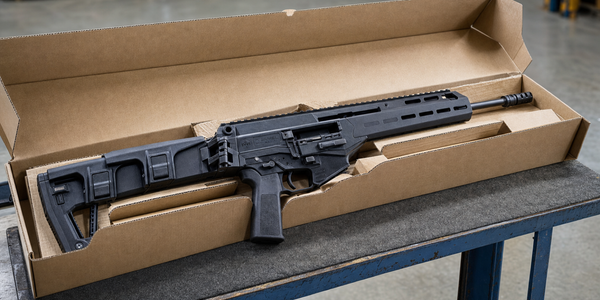
The r/canadaguns discussion asked readers to choose between the Makasi and the Carmel. On paper, the question was ordinary: two non-restricted 5.56 semi-auto options, similar delivery windows, STANAG magazines, piston systems, and a split over parts, reliability, accuracy, and price.
Then the thread did what Canadian gun threads now do. It added the column nobody wants to add.
One of the top replies picked "neither," because the commenter did not have an extra pile of money to gamble on two more possible safe queens while the legal weather stays unstable. Another called the whole category "ban bait." A few still picked their rifle. Others chose both, because Canadian 5.56 options are thin enough that enthusiasm can overpower self-preservation for at least one credit-card cycle.
I have not shot either rifle, and this is not a review. The story is simpler and more frustrating: Canadian shooters now have to treat policy risk as a rifle spec.
The buyer's spreadsheet changed
A normal rifle comparison has a rhythm. What does it cost? Who makes it? Does it feed? What breaks? Can I get magazines? Are the parts proprietary? Does it group well enough for the use? Is the weight honest?
Those are fair questions. They are also market questions. A rifle that is unreliable gets a reputation. A rifle with thin parts support becomes a problem. A rifle that costs too much can sit on the rack until the price comes back to earth.
But "will this still be lawful to use after I buy it?" is a different question.
That question does not come from the rifle. It comes from the state.
Newer PAL holders should understand the distinction. Ban risk and quality risk are different animals. Waiting a year for owner reports is normal caution. Waiting a year to see whether Cabinet, the FRT, or another prohibition list will turn a lawful purchase into a locked object is something else.
That is why the "neither" answer matters. It was a buyer recognizing that the hidden column has become expensive.
Reliability is still the easy question
The better comments in the thread are the ones you would expect from serious buyers. Some liked the Makasi because of AR-component compatibility and easier customization. Some preferred the Carmel because IWI has a stronger reputation and the rifle is seen as more proven. Others worried about polymer, proprietary parts, aftermarket support, accuracy claims, and the cost of being an early adopter.
There is a useful lesson here for newer shooters. Do not let the legal mess flatten all gear judgement into "buy it before it disappears" or "buy nothing because Ottawa might notice." Both instincts are understandable. Neither is disciplined.
Parts support still matters. So does reliability. So does the real cost of feeding the rifle. If the rifle is a range gun, you need ammunition. If it is a training rifle, you need magazines, spares, and a path to maintenance. If it is mostly going to be admired in the safe, at least be honest and call it collecting.
The policy environment does not excuse bad buying. It just makes good buying harder.
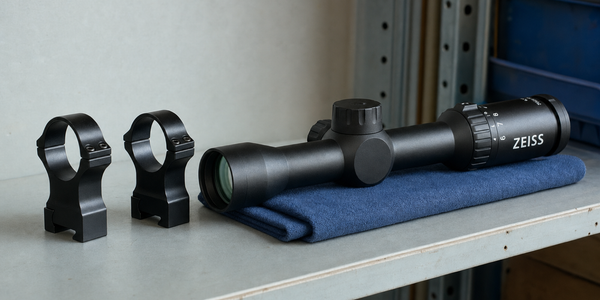
That is the part Ottawa never prices honestly. When a lawful owner hesitates, the cost is the optic left unmounted, the ammunition left on the shelf, the range days never booked, and the domestic retailer or manufacturer watching normal demand turn nervous.
The court file is now part of the market
Public Safety Canada says the federal government has banned more than 2,500 makes and models of what it calls assault-style firearms since May 2020. Its current buyback page also says individual and business owners must dispose of or permanently deactivate affected firearms before the SCC appeals + 90-day amnesty endpoint or risk criminal liability.
The RCMP's March 2025 prohibition page is just as blunt. It says newly prohibited firearms can no longer be legally used, sold, imported, or transferred to another individual, except as the amnesty allows, and that the Firearms Reference Table was updated to reflect the new classifications.
Now add the court file. The Supreme Court of Canada granted leave in the CCFR appeal on March 19, 2026. The Court's docket shows Ontario intervention activity in May 2026, along with Alberta and Saskatchewan. The Toronto Star reported on May 25, 2026, that Ontario had joined the challenge.
Buyers do not need a final judgment to feel uncertainty. They are already feeling it at the counter, on the forums, and in the safe. A rifle-comparison thread turning into a discussion about OIC risk, FRT risk, and political stability is market damage in plain sight.
Supporters of the federal policy would argue that public safety justifies limiting access to firearms they consider unsuitable for civilian use. In their view, some firearms present a risk that ordinary sporting and hunting use cannot justify.
Holdover's answer is not that regulation is illegitimate. Canada already regulates ownership heavily through licensing, screening, storage, transport, classification, business licensing, import rules, and range controls. The better question is whether this style of prohibition lands on the population causing the problem, and whether lawful owners get rules they can rely on.
On that test, the last six years have been poor.
Do not confuse caution with defeat
There is a lazy version of this argument that says "buy nothing." I do not buy that.
If you want a rifle, can afford it, understand the legal status today, and accept the risk, that is your decision. Lawful ownership is still lawful ownership. Canadian shooters do not owe the market a retreat because federal policy has made normal decisions uglier.
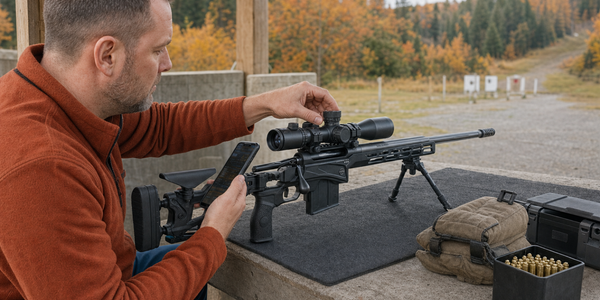
But newer shooters should not confuse enthusiasm with prudence. The best first question is still use. What are you actually going to do with the rifle? How often will you shoot it? What does ammunition cost? Can you get parts? Are you buying a tool, a project, a symbol, or a very expensive way to refresh a retailer's order-status page?
Those questions are adult.
The frustrating part is that one of them should not need to exist. A PAL holder who follows the rules should be able to compare rifles on rifle terms: accuracy, reliability, handling, support, cost, and fit for purpose.
The hidden spec sits in the spreadsheet anyway.
The best rifle in the thread is not automatically the most proven, the most modular, or the one with the better brand name. For a Canadian owner in 2026, the best rifle is the one they can lawfully buy, afford to shoot, maintain with confidence, and keep using without becoming a test case for policy churn.
That should not be a premium feature.
Related Holdover Tools
Useful calculators and references from the same corner of the Holdover bench.
- Holdover tools
- Ban-Risk Index
- The Common Ten
- Canadian Firearms Buyback Tracker
- Canadian Firearms Classification Timeline
Sources
- Reddit / r/canadaguns, "Makasi, Carmel, Both, or Neither?": https://www.reddit.com/r/canadaguns/comments/1tnpj7i/makasi_carmel_both_or_neither/
- Supreme Court of Canada, case file 41859, "Canadian Coalition for Firearm Rights, et al. v. Attorney General of Canada": https://www.scc-csc.ca/cases-dossiers/search-recherche/41859/
- Public Safety Canada, "Firearms Buyback Program": https://www.canada.ca/en/public-safety-canada/campaigns/firearms-buyback.html
- Royal Canadian Mounted Police, "What you need to know about the Government of Canada's March 7, 2025, prohibition of certain unique makes and models of firearms": https://rcmp.ca/en/firearms/what-you-need-know-about-government-canadas-march-7-2025-prohibition-certain-unique-makes-and-models
- Toronto Star, Mark Ramzy, "Ford government joins Supreme Court challenge of 'assault-style' firearms ban": https://www.thestar.com/politics/federal/ford-government-joins-supreme-court-challenge-of-assault-style-firearms-ban/article_6fd7ecac-29fb-4920-b7ce-7281950fff7a.html
Keep the score changes close.
If this piece put Ban-Risk on your radar, get the update note when the index changes.
The Dispatch is the low-noise path for Ban-Risk score changes, source updates, amnesty timeline changes, and the Canadian firearms policy notes that move the file.