Buying a borescope starts with the *phone*
An Android buyer asks about Teslong. Current model documents show why the exact camera, phone connection, app and probe deserve a check before ordering.

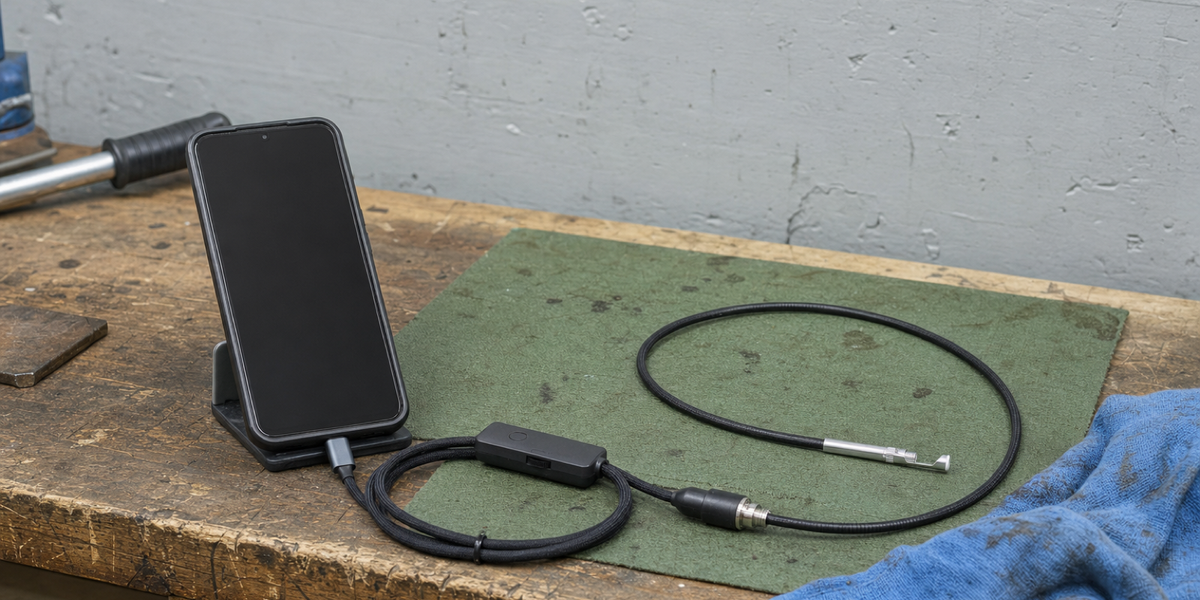
A Canadian shooter wants a basic borescope and already has the screen: an Android phone. In Monday's r/canadaguns question, they asked whether a Teslong from Amazon would do the job. They wanted something for the gunroom toolkit, without buying a separate display.
That sounds like a sensible place to keep the cost down. The replies included satisfied owners, a preference for a rigid probe, and the familiar warning that seeing every mark inside a barrel can become its own hobby. But the question left out the exact listing and phone model. Those two details would decide where I started.
I have had the smaller, entirely mechanical version of this problem. While sorting out a 6 mm cleaning setup, I had a Hoppes rod marked "17 to 20". The label and the attachment fit needed checking. A drawer full of cleaning equipment still leaves room for the wrong connection. Add a phone and an app, and there is another set of small print to read.
The letters after NTG100 matter
Teslong's current NTG100-C page describes a 45-inch flexible probe with a USB-C connection. Its model-specific specifications list Android 4.4 and later, iPhone 15 and newer, and Windows support. The package includes the USB-C adapter cable and side-view mirrors. These are the manufacturer's stated capabilities; I have not tested this kit.
The same page still carries generic FAQ wording that points iPhone users toward Wi-Fi or a separate screen. The current C-model specifications and its linked manual are more specific. A blanket answer about what "a Teslong" connects to can therefore send someone through an older set of instructions.
For comparison, the NTG100H is a 26-inch rigid version. Its labelled specification lists Android, Windows and Apple OSX. That last entry refers to a Mac operating system. A buyer reading it as an iPhone promise would be making an expensive assumption about a short line of text.
I would want the complete model number from the listing, then the manual for that model. A recommendation from someone with a different probe or adapter can still be useful, provided both people know they are discussing different kits.
Android needs a working USB path
The NTG100-C manual calls for Android OTG support. That is the phone's ability to act as the host for a connected USB device. It names Smart Endoscope and distinguishes the USB-C rifle-borescope connection from the Micro-USB route. The manual also identifies the direct USB-C route for iPhone 15 and later; it excludes Lightning-equipped devices.
Those details belong in the buying decision. The owner needs a supported phone, the correct included cable, and the appropriate app. A connector fitting into the charging port answers only one part of that question.
Before ordering, I would give the seller the handset model and ask them to confirm the complete kit. Then I would check the current manufacturer instructions for the app. That takes a little longer than counting favourable reviews, but it gives the seller a question they can answer precisely.
A separate display remains a reasonable choice for someone who wants a self-contained tool. The person asking this question has already said they are content to use Android. I would try to make that simpler purchase work before paying for another screen to charge and store.
Probe shape and close focus
The rigid-versus-flexible replies deserve their own comparison. The current C and H examples differ in both probe form and length. Someone choosing between them should picture the equipment on their own bench, including where the phone will sit and how the probe will be stored.
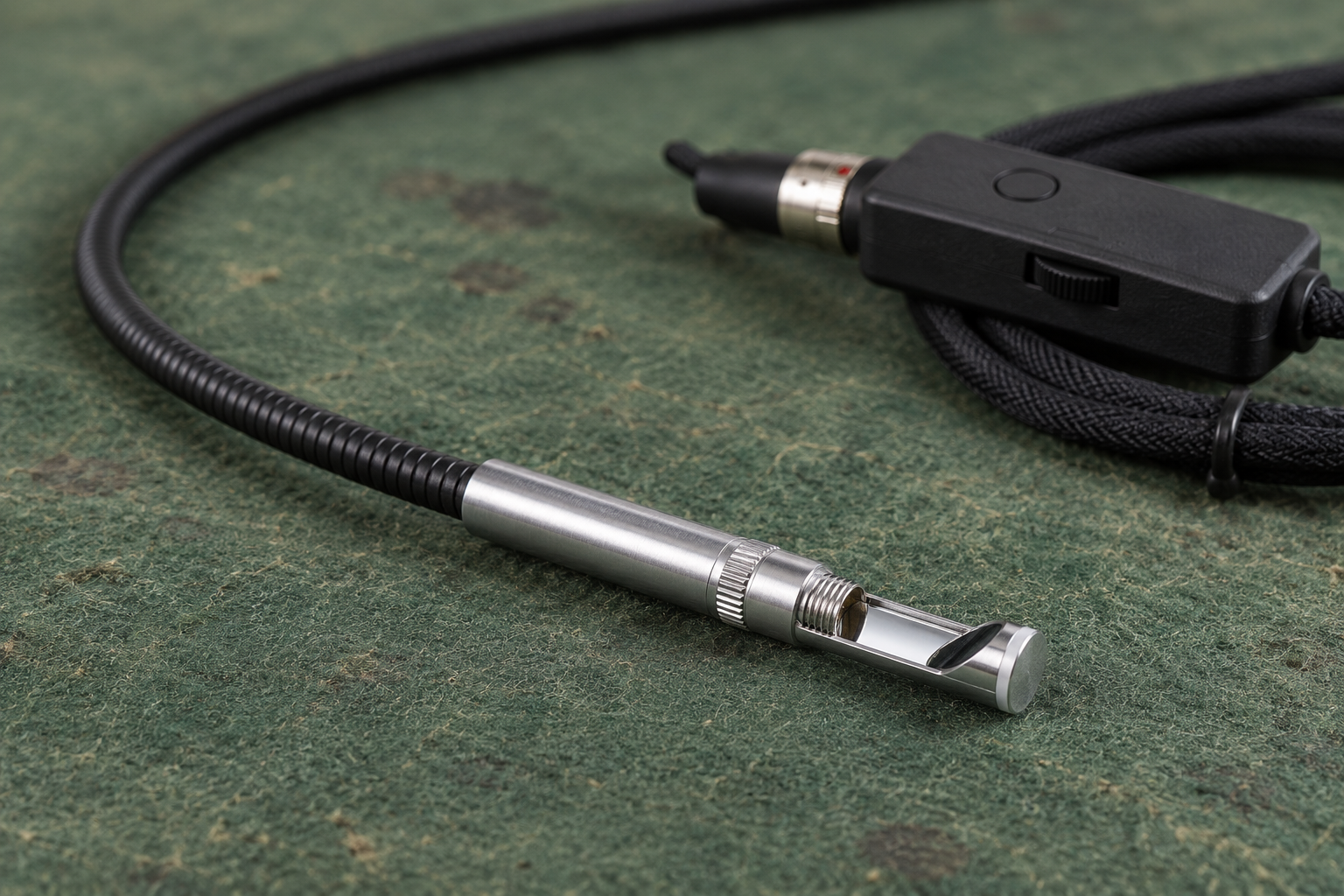
The camera also has to focus at the distance inside a bore. In its explanation of probe designs, Teslong says its single-lens probes with side-view mirrors suit close surface inspection. It warns that the side camera on its general dual-lens probes can sit too close to a barrel wall to focus. That is a useful reason to read the intended application, even when another inspection camera advertises appealing specifications.
Mirror fit deserves the same attention. Teslong's mirror guidance describes different sizes and warns that extra movement in a larger bore can affect focus. It also separates the accessory families. I would confirm the intended calibre and the mirrors in the actual package rather than add accessories on the strength of a similar product photo.
A useful view, with limits
The comments about obsessing over tiny marks made me smile. An inspection camera gives an owner more to look at. Deciding what that view means takes another kind of evidence.
Krieger's warranty policy explicitly allows for an accuracy problem even when a barrel has no visible material defect. That is one reason I would keep inspection pictures and shooting results as separate records. A phone image can help explain a concern to the manufacturer; I would leave a barrel verdict open until the relevant evidence supports it.
There is also a specific tool-care limit worth knowing before putting a camera beside cleaning supplies. Teslong says its probes are not rated for solvents or corrosive environments. A water-resistance label should not be read as permission to expose the probe to whatever is on the cleaning bench.
For this Canadian buyer, I would start with the exact camera kit and handset, confirm the connection in writing, and check the seller's return terms. That gives the first evening with the new tool a useful purpose: establishing that the camera works with the phone they already own.
Sources
- Current Canadian buyer question, September 7, 2026. Community experience and preferences are attributed, not independent tests.
- Teslong NTG100-C specifications and model-specific manual.
- Teslong NTG100H specifications.
- Teslong support: close-focus probe designs, mirror sizes, and water and solvent exposure.
- Krieger warranty claim policy. Sources checked September 8, 2026. This is buying commentary based on published documentation, with no hands-on Teslong test or current seller-price claim.
Shortlist the rifle before the checkout page.
If this piece helped you narrow the rifle question, keep the tradeoffs visible before the next tab becomes a shopping cart.
Use the Holdover Rifle Cartridge Shortlist Card to compare use case, distance, recoil, ammunition availability, rifle fit, optics plan, budget, and what you will actually practice.
Safety note: the card is a planning worksheet, not buying advice, legal advice, hunting guidance, load data, or a substitute for current manufacturer, range, provincial, federal, or qualified-instructor guidance.