Canada's gun-store map starts with *392 pins*
A new community-built map makes 392 Canadian firearms retailers searchable, with verification rules, corrections, and a privacy-conscious location search.

Gear. At 4:10 Sunday morning, a new Canadian map held 392 places where a licensed owner could walk through a real door and reach a firearms counter.
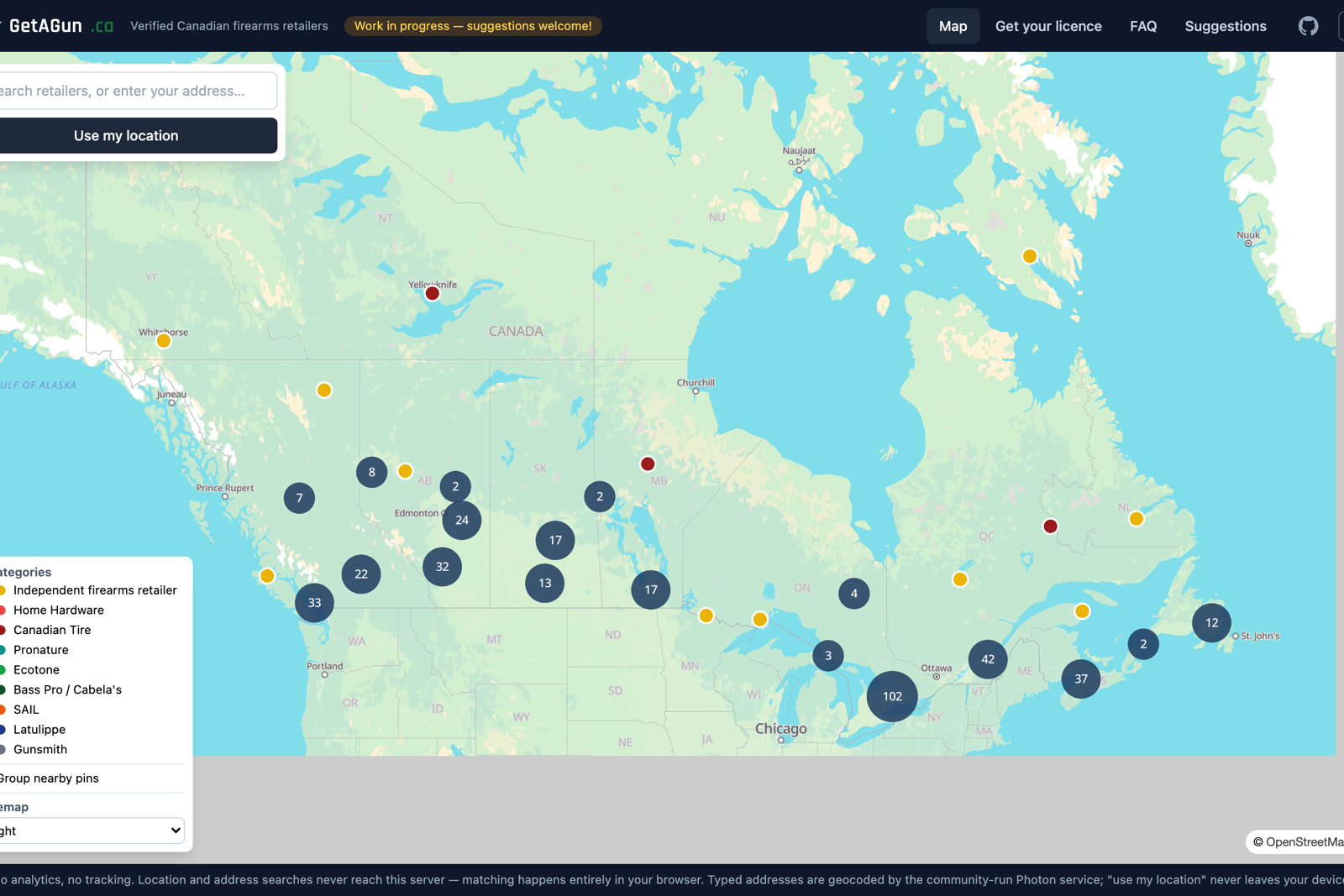
GetAGun.ca launched on r/canadaguns Saturday night as a work in progress. Its creator is turning an older Google Earth dataset into a current, searchable map of personally verified in-person retailers. The first live snapshot included 315 independent shops, 46 Canadian Tire stores, 16 Bass Pro or Cabela's locations, 12 SAIL stores, and three Latulippe locations.
The map is immediately useful. The work behind it matters just as much.
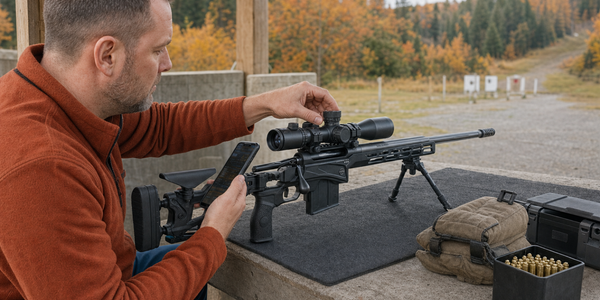
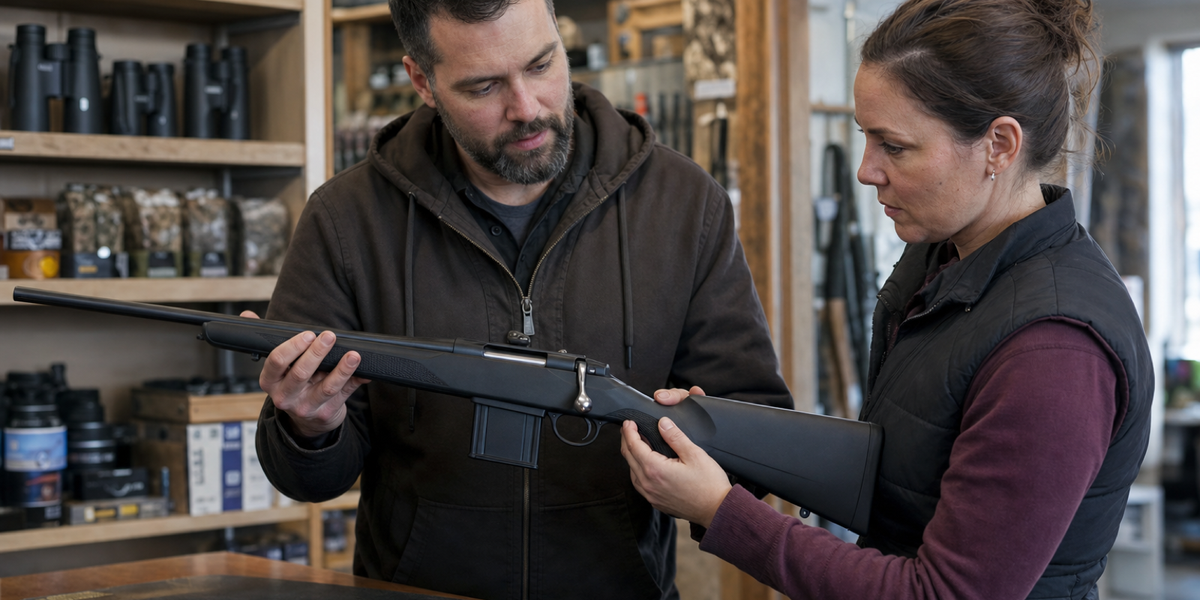
Holdover produced the feature as a fictional Canadian gun-counter scene. The people, shop, and rifle are representative. Official manufacturer references define generic bolt-action geometry only. The image does not depict GetAGun.ca, a listed retailer, a named person, or an exact rifle model.
The count has boundaries
The 392 figure is a live directory count. Treating it as a national census would overstate the work.
GetAGun.ca's FAQ says a shop earns a pin through recent evidence that it stocks firearms or through a verification phone call. The current map generally excludes online-only and appointment-only businesses. A retailer that does not want to appear may decline inclusion. Gunsmiths are planned for a later phase.
The launch post adds another important qualifier. Nearly all independent retailers have been mapped, according to the creator, with roughly two dozen candidates still awaiting verification. Canadian Tire coverage remains in progress. Stores can close, change categories, stop selling firearms, or keep a web page alive long after the counter has disappeared.
Those limits make the map more credible. The creator has defined the thing being counted: a physical retail setting where firearms are currently sold and where inclusion can be checked.
Ontario held 111 pins in the selected snapshot. British Columbia had 66, Alberta 62, Quebec 40, Saskatchewan 32, Nova Scotia 22, Manitoba 20, and New Brunswick 17. The map also reached Newfoundland and Labrador, Prince Edward Island, Yukon, Northwest Territories, and Nunavut.
The totals reveal distribution inside the directory. They cannot measure every firearms business, every owner, or the quality of access in a province. A pin in a northern community and 102 clustered around southern Ontario represent very different travel realities.
A correction queue belongs on the map
The launch discussion began maintaining the tool within hours.
One Quebec user pointed out that the licensing guide should mention the Loi 9 course for restricted-firearm transfers in Quebec. The creator added the note. Another user reported that Greater Napanee Gunworks had closed. A third found that the suggestions form would not submit; the creator traced that to a Turnstile configuration and fixed it.
That is what a healthy directory looks like in public. A map pin is a claim about a real place. The claim needs a source, a date, a correction path, and someone willing to remove the pin when the door closes.
The public suggestion form accepts new retailers, updates to existing listings, and general feedback. The site says every submission is personally verified before the map changes. Its public source repository makes the software inspectable too.
This maintenance layer separates the map from a copied address list. A static list begins getting older the moment it is exported. A directory with a review queue has a chance to remain useful.
A physical counter answers a different question
I have bought enough rifles and gear through Canadian shops, both online and across local counters, to know the difference. A product page can tell me that a rifle exists. The counter can tell me whether the stock fits, whether the bolt reach is comfortable, whether the optic sits where my eye expects, and whether the staff can solve a problem after the sale.
That distinction matters most for a newer owner. The first sensible purchase is rarely found by sorting a national inventory feed from lowest price to highest. Fit, balance, controls, ammunition availability, warranty support, transfer requirements, and the quality of the answer behind the counter all affect the decision.
Independent stores also carry local knowledge that no national filter can replace. They know which nearby clubs are accepting members, which ammunition actually returns to the shelf, which gunsmith is taking work, and which popular answer from a forum will produce a long silence when repeated in front of a Chief Firearms Officer.
The map makes those counters easier to find. It does not guarantee current hours, current inventory, good advice, or a successful drive. Open the retailer site and call before leaving, especially when distance turns one stale listing into half a day.
The privacy claim is specific
Firearms owners should be careful with location tools. GetAGun.ca addresses that concern with a narrower design claim than the usual "we care about privacy" paragraph.
The site says it runs no analytics and no tracking. Nearest-retailer matching happens in the browser. Choosing Use my location keeps the coordinates on the device, according to the site's footer. Typing an address follows a different path: the address is sent to the community-run Photon geocoding service, while the GetAGun server does not receive it.
The public repository identifies the main pieces behind that design: React, MapLibre, a local map-tile package, Cloudflare Workers, and a D1 database. That visibility gives technically inclined owners something concrete to inspect. A complete security audit sits beyond this reporting review. Readers can choose a city or retailer-name search instead of supplying a home address.
Specific privacy language is useful because it creates something that can be checked later. If the implementation changes, the disclosure should change with it.
The physical market is visible
A map of lawful retailers makes a quiet point about Canadian firearms ownership. The market exists through ordinary doors in big cities, smaller towns, northern communities, chain stores, and hundreds of independent shops. It runs on licensed customers, verification, regulated inventory, local staff, and businesses that need enough trade to keep the lights on.
GetAGun.ca gives that physical network a usable public shape. Its present value comes from 392 pins. Its lasting value will depend on the next verification, the next correction, and the discipline to keep a work-in-progress label where readers can see it.
The map supplies the pin. A current phone call still finishes the route.
Sources
- GetAGun.ca, Canadian Firearms Retailer Map, checked July 27, 2026.
- GetAGun.ca, Frequently asked questions, checked July 27, 2026.
- GetAGun.ca, public retailer API, captured at 04:10 EDT on July 27, 2026.
- GetAGun.ca, public source repository, checked July 27, 2026.
- r/canadaguns, GetAGun.ca: WIP comprehensive map of Canadian in-person firearms retailers, posted July 26, 2026.
Start with the licence, then find the counter.
If this map has you planning a first in-person visit, start with the Canadian PAL pathway and keep the legal sequence straight.
The guide puts the course, application, screening, wait, storage, transport, and first range steps in one place for newer Canadian owners.
Safety note: the pathway is a planning guide, not legal advice or a substitute for current RCMP, CFO, instructor, retailer, range, or manufacturer guidance.