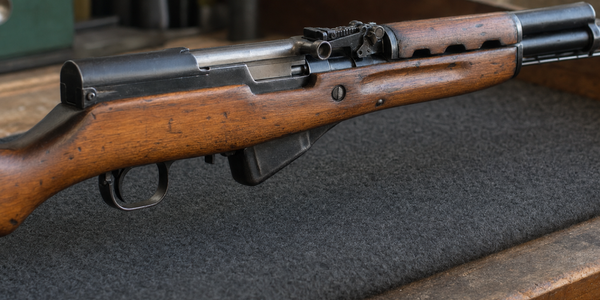
Who may shoot an *amnesty rifle* this fall?
A Lake of Bays police release raises a practical ownership question. The extended firearms amnesty still protects a narrow set of people, uses, and trips.

Opinion
An October 13 Huntsville OPP release raises a question for anyone waiting out a firearms prohibition: what may you actually do with a rifle covered by an amnesty?
According to the release reproduced by Doppler, officers responded on September 5 to reported shooting at a sand and gravel pit near OFSC Trail 76 in Lake of Bays. Police described rifles, handguns, and a skeet thrower near a family cabin. They reported two firearms charges against a 45-year-old Brampton man and identified a rifle they said had been prohibited since 2024.
The release leaves the rifle's model, precise prohibition provision, and its owner's amnesty eligibility unknown. It also leaves open whether that rifle was fired. Those gaps prevent a conclusion about the charges. They still leave a useful ownership question to answer from the orders themselves.
Who the order covers
The December 2024 amnesty order provides a concrete example. Its main owner category covers a person who owned or possessed a specified firearm when the order took effect and held a firearms licence. They must continue to hold the licence while possessing it. A firearm previously classed as restricted also brings registration conditions. Other listed categories have their own requirements.
Under Criminal Code section 117.14, the exemption concerns conduct provided for in the order, during the amnesty, for a purpose the order describes. The reader needs both the right person and the right purpose. Simply seeing a rifle mentioned alongside the word amnesty settles neither.
The narrow hunting use
For an eligible owner whose specified firearm had been non-restricted immediately before the December 2024 order took effect, the order permits hunting under a right recognized by section 35 of the Constitution Act, 1982, or to sustain the person or their family, until they can obtain another firearm for that use.
The 2020 and March 2025 orders carry the same narrow hunting formulation. Ordinary recreational target practice and club matches sit outside their listed purposes. A recreational range day remains excluded even when an owner has more time before the amnesty ends.
Read that as an ordinary-owner distinction. The 2020 order separately addresses Bank of Canada security employees' duty use. The hunting provisions also come with limited safety-repair and transport routes. Reducing three orders and several categories of people to one slogan loses conditions that matter.

Transport has its own conditions
For the December 2024 order's main eligible owner categories, the purposes include keeping the firearm under the applicable storage rules, deactivating it, delivering it to police for destruction or other disposal, and lawful export. There are conditional carrier-shipping and government destruction routes, plus a route for a non-owner to return a firearm to its owner.
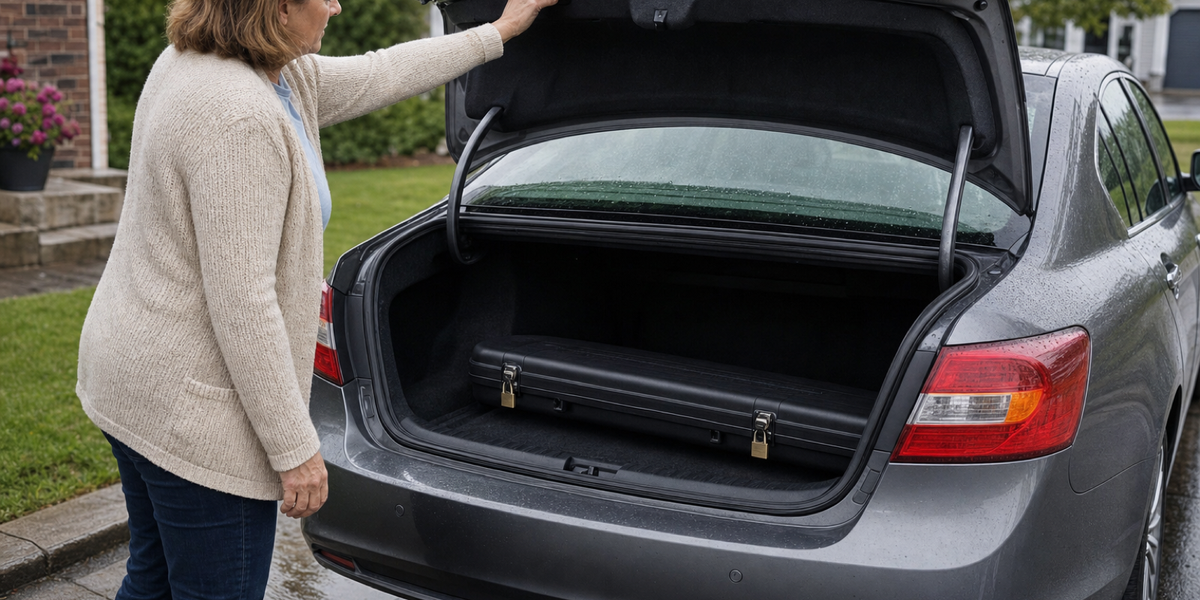
Vehicle transport for the listed disposal, deactivation, return, and export purposes must follow a reasonably direct route. The firearm must be unloaded, with no ammunition in the vehicle. It must be in the trunk or, if the vehicle has no trunk, out of sight from outside the vehicle. The vehicle must never be left unattended during transport.
Storage with another person has a specific basis: storage by that person must be a condition of the owner's licence, and the storing person needs the licence that would have allowed possession under the firearm's previous classification. The transport provision requires the owner to notify their provincial chief firearms officer first. A casual arrangement with a licensed friend cannot be assumed to meet those terms.
The eligible hunting use has a separate transport provision referring to section 10 of the Individuals Regulations, and its safety-repair route has its own scope. Check the paragraph for the actual activity. Our carrier-acceptance article deals with the additional practical problem of finding a carrier that accepts the shipment.
A deadline tied to the court
The OPP-attributed release says the rifle remains subject to an amnesty until October 30, 2026. That wording also appears in Muskoka411's reproduction. Both examined versions still carried it at this article's source check.
Cabinet registered SOR/2026-114 on June 5. It replaced the fixed endpoints in the 2020, 2024, and 2025 orders. Each now ends on the 90th day after the last of four linked Supreme Court appeals concludes by judgment, dismissal, or discontinuance.
The Court's docket lists hearings on November 9 and 10. A hearing date supplies no judgment date. Owners therefore have a court-linked endpoint to follow, while the purposes governing their conduct remain in force.
Owners deserve a usable answer
There is a coherent case for a narrow transitional amnesty. Cabinet prohibited the firearms; the order gives eligible people room to comply through specified acts. Allowing unrestricted recreational use would undermine that design. The hunting language also accounts for constitutional rights and sustenance needs.
I disagree with leaving compliant owners in that arrangement for years. The May 2020 prohibition is now more than six years old. Keeping a licence current and retaining a firearm under the rules still buys an ordinary owner a very short list of things they may do with it. More waiting does little for someone who bought the rifle to shoot.
I have already written about my own Sterling Arms R9 MK1 and the classification uncertainty around it. That experience makes me impatient with explanations requiring owners to assemble the answer from several documents. It gives me a reason to read carefully, too. The particular rifle, person, and purpose still have to fit the particular order.
Owners deserve a current date and a plain account of the conditions attached to their own firearm. Start with its actual prohibition provision, then the applicable amnesty's eligibility and purpose paragraphs. For continuing Canadian ownership and policy reporting, The Dispatch follows the file. Until the court-linked period ends, every proposed outing still needs a purpose the order covers.
Sources
- Huntsville OPP release reproduced by Doppler Online, October 13, 2026; fresh read October 16. Allegations and wording only; own OPP posting unavailable through its public news search.
- Muskoka411 reproduction of the Lake of Bays release, October 13, 2026; fresh read October 16.
- Justice Laws, Order Declaring an Amnesty Period (2024), SOR/2024-249, sections 1-2; current to September 30, 2026, last amended June 5.
- Justice Laws, Order Declaring an Amnesty Period (2020), SOR/2020-97, section 2; current text read October 16.
- Justice Laws, Order Declaring an Amnesty Period (2025), SOR/2025-87, section 2; current text read October 16.
- Justice Laws, Criminal Code, section 117.14.
- Canada Gazette, SOR/2026-114, registered June 5, 2026.
- Supreme Court of Canada, appeal 41859 docket, linked with 41858, 41860, and 41861; fresh dockets read October 16.
- Holdover, Moving a prohibited rifle starts with a carrier that will accept it, and I own an R9. I want an answer..
The amnesty file is still moving.
If this piece sent you back to government pages, do not wait for the next portal, Gazette, or court move to find you by accident.
The Dispatch follows Public Safety, RCMP, Canada Gazette, court, compensation, collection, and amnesty updates so the next change comes with the source that moved.
Safety note: the tracker is a worksheet for source hygiene, not legal advice or a substitute for current official guidance.