Crown land needs a *firing line*
A fresh Canadian crown-land thread is a reminder that public-land shooting needs visible discipline before it needs another political argument.

Opinion. A public shooting spot can go bad long before anyone touches a trigger.
Use the current r/canadaguns thread about a bad Crown-land experience as a signal, not as a court record. It is one newer shooter's account of a day at a popular public shooting spot: people walking downrange without a clear line call, a larger group taking over the space, shots starting without much warning, and allegations about prohibited firearms and magazine capacity.
Some details may be wrong. That is the internet's oldest calibre.
The useful part is the feeling left behind. A newer shooter went out expecting ordinary range courtesy and left wondering whether the bad version was normal. Canadian shooters should care about that.
The line is the first piece of gear
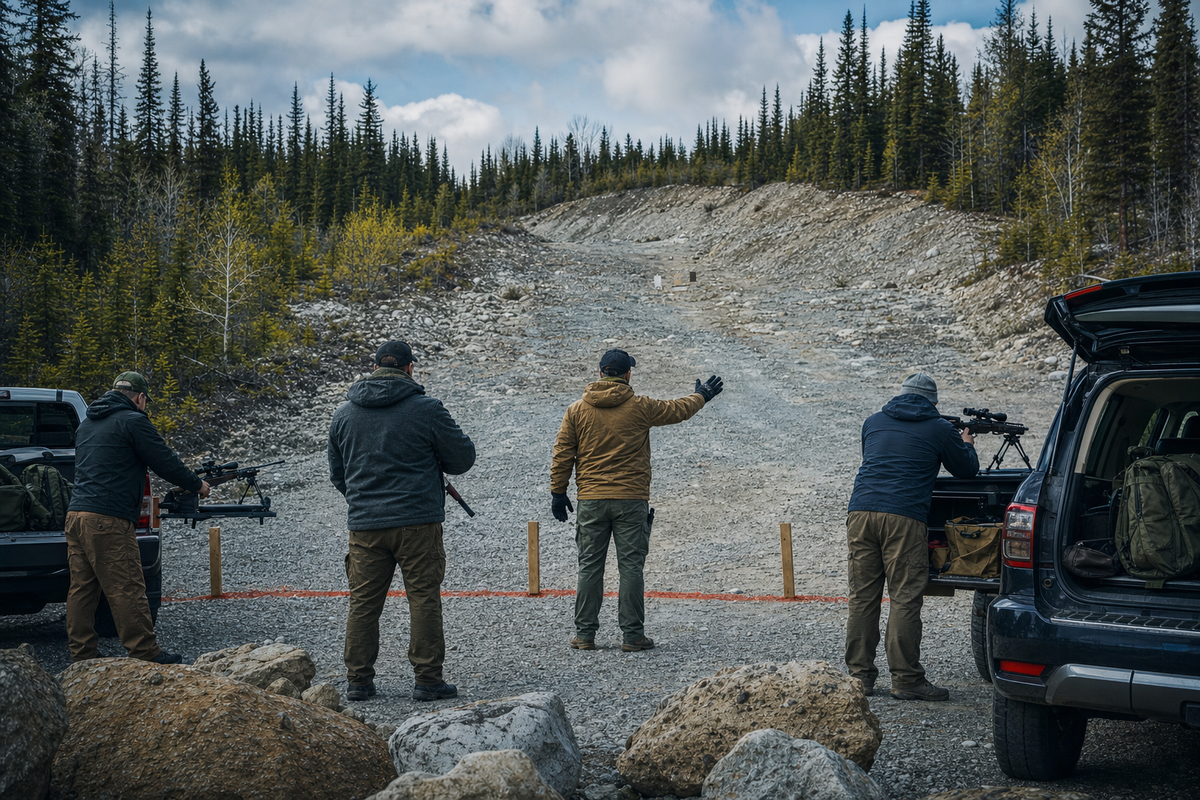
On Crown land, the first thing you build is not the target stand. It is the line.
I shoot mostly at formal ranges, and the whole environment is built around that invisible agreement. Someone is hot. Someone is cold. People wait. People call. Nobody treats the walk to the target as interpretive dance with firearms nearby. It can feel fussy until you see the alternative, which is a collection of strangers trying to guess each other's intentions beside loaded guns.
Every informal public-land spot does not need a clipboard, a whistle, and a retired sergeant major with opinions about cones. The basics still have to be obvious to everyone present.
Who is shooting? Who is not? Who is downrange? Who just arrived? Who is leaving? Is the line cold? Is the line hot? Has the new person heard that, or are they supposed to absorb it through forest humidity?
If those questions are unclear, the place is already failing.
The point is to keep Crown-land shooting recognizably adult.
Public land is not a permission slip
Crown land is not one national shooting range with better scenery.
Ontario's Crown Land Use Policy Atlas exists because land use is area-specific. Alberta's provincial Crown-land recreation guide treats firearm discharge as a public-land activity in context. British Columbia's Closed Areas Regulation lists no-shooting areas, specified Crown-land restrictions, road allowances, and local closures. Different provinces, different maps, different restrictions.
That is before the federal layer even enters the picture.
Public Safety Canada's individual firearms list says the affected firearms were classified as prohibited under the Criminal Code in May 2020, December 2024, or March 2025, and that list includes the GSG-16. The RCMP's magazine-capacity guidance is its own small museum of Canadian complexity: centre-fire semi-automatic rifle magazines are generally limited to five cartridges, while rim-fire long-gun and dual-use magazine rules depend on design and intended firearm use. The RCMP's Firearms Reference Table page was last updated June 1, 2026, and still reminds readers that the FRT is not a legal instrument.
None of that is a substitute for current legal advice. It is the shape of the problem.
A person shooting casually on public land is still carrying the Canadian file with them: federal classification, provincial land use, local access, transport, storage, target setup, backstop, garbage, noise, neighbours, judgement, and the burden of not becoming the example someone else uses badly.
That is heavy. It is also the deal.
The bad headline is easy
This is where the advocacy argument gets uncomfortable.
Licensed owners are right to be angry about the last six years of federal firearms policy. Too much of it has treated the regulated population as the convenient target while violent crime, illegal supply, repeat offenders, and border leakage get the softer end of the political script. Holdover's position on that has not changed.
But the public case for ownership gets weaker when sloppy public behaviour makes the other side's job easy.
That does not mean licensed owners should accept bad laws as good laws. It means we should not hand the country the worst possible photograph and then complain that the caption was unfair.
The poster said they were against the bans, but still saw the alleged conduct as irresponsible. That is the right split. You can oppose the classification regime and still recognize that questionable gear, unclear communication, and no visible line discipline are an own goal with ear protection.
If the report was wrong about the exact firearm or magazine details, the lesson survives. A group can be technically lawful and still ruin the culture. A group can have the right guns, the right magazines, the right spot, and the wrong attitude.
Public trust is not only lost through crime statistics and legislation. Sometimes it is lost because a new shooter looked around and decided the adults had left.
The public case starts small
The strongest version of the other side's argument is simple: firearms in uncontrolled public spaces make people nervous, and one careless group can create risk for everyone nearby.
That argument deserves an answer better than "mind your business."
The better answer is visible discipline: a clear, boring, practical culture that any reasonable observer can understand in thirty seconds.
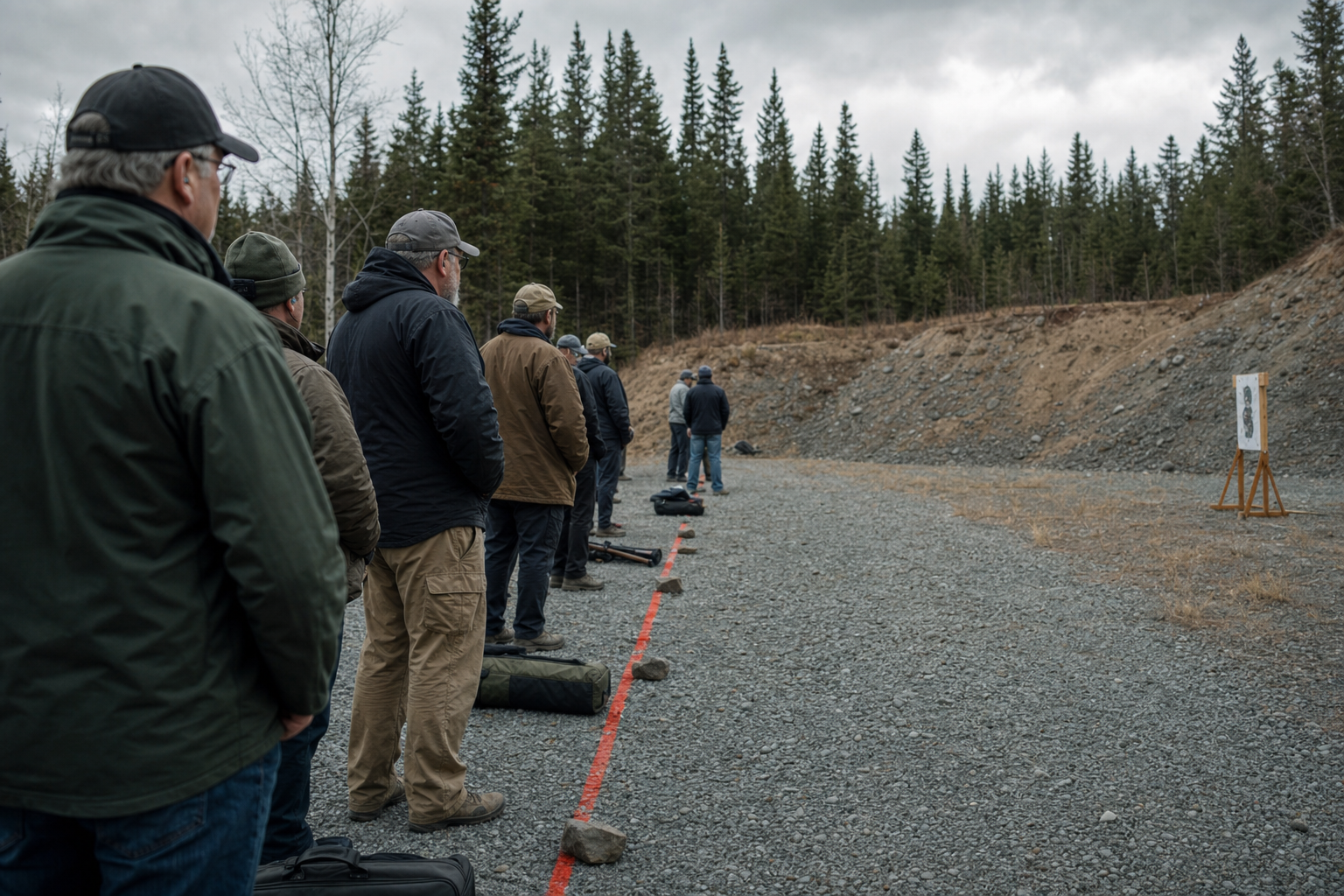
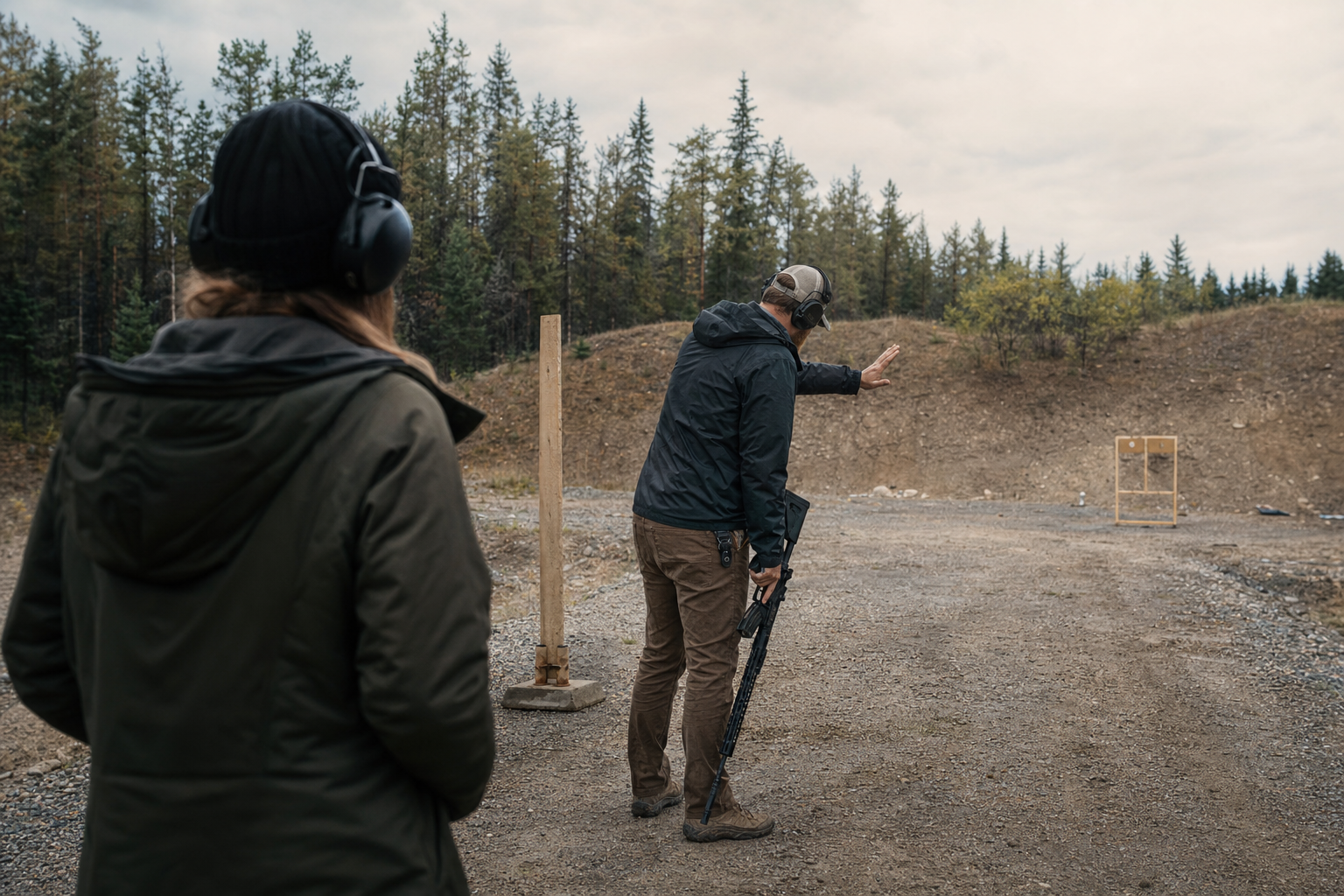
Cars stay back. People talk before setting up. The line is obvious. Someone says when it is cold. Someone says when it is hot. New arrivals are not left guessing. Targets are placed against a real backstop. Nobody handles firearms while people are downrange. The place is cleaner when the group leaves than when it arrived.
That is not a legal theory. It is the minimum public argument.
A new PAL holder should not need to decode an informal hierarchy of loud confidence. They should be able to see the line, ask a question, and know whether the people around them are serious.
If the answer is no, leaving is not weakness. It is judgement.
Build the line first
There is a temptation in Canadian firearms culture to treat every current problem as a policy problem first. Often it is. The OICs, FRT confusion, buyback machinery, and amnesty deadlines have done real damage to lawful owners and to the market that supports them.
But not every useful answer starts in Ottawa.
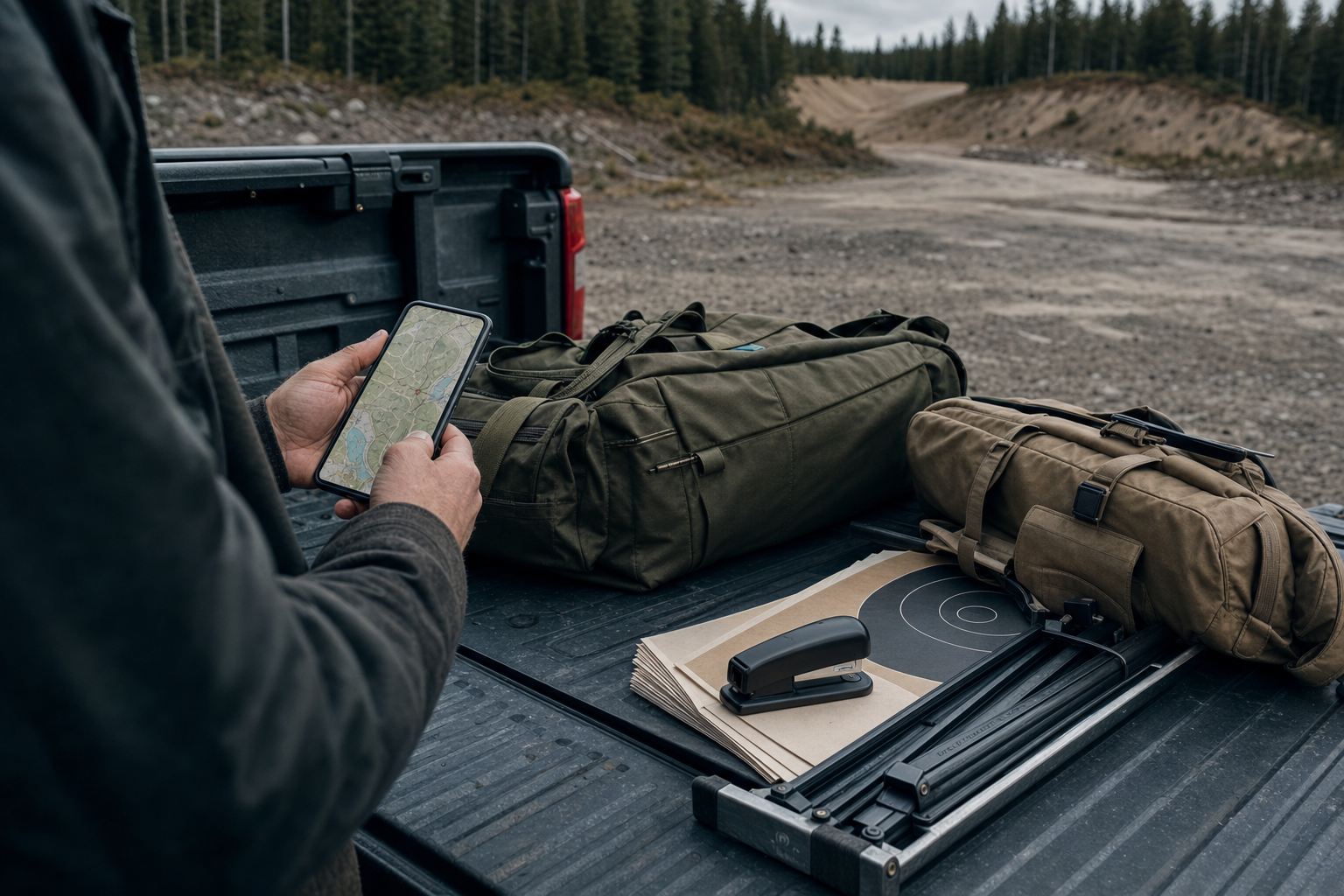
Some start on gravel beside a tailgate, before the first target goes up.
If you are new and something feels wrong at a public spot, trust that signal. If you are experienced and you arrive with a group, make the line obvious before you make noise. If someone else is already there, talk to them like they exist. If people are downrange, the gun stays alone. If the place needs cleaning, clean it. If the rules for that land are unclear, check before the trip instead of litigating them from the hood of a truck.
None of this gives Ottawa a pass. It gives our own side less to explain.
Responsible ownership is not a slogan. It is a thousand small acts that make the bigger argument credible.
Build the line first. The argument gets easier after that.
Sources
- r/canadaguns, Bad experience on Crown Land, accessed June 12, 2026.
- Public Safety Canada, List of firearms: for individuals, accessed June 12, 2026.
- Royal Canadian Mounted Police, Maximum permitted magazine capacity, accessed June 12, 2026.
- Royal Canadian Mounted Police, Firearms Reference Table, accessed June 12, 2026.
- Ontario, Crown Land Use Policy Atlas, accessed June 12, 2026.
- Alberta, Guide to Outdoor Recreation on Provincial Crown Land, accessed June 12, 2026.
- B.C. Laws, Closed Areas Regulation, accessed June 12, 2026.
Keep the range notes worth reading later.
If this piece has you thinking about range time, keep the notes useful enough to read later.
Use the Holdover Range Bench Log Card to record rifle, optic, ammunition, distance, weather, zero, group notes, correction, and next test without turning a range trip into a memory test.
Safety note: the card is a note-taking worksheet, not shooting instruction, load data, legal advice, or a substitute for range rules, official guidance, manufacturer manuals, or qualified instruction.