Discovery ED-ELR 5-40x56 FFP *scope review*
The Discovery ED-ELR 5-40x56 is a tempting Canadian 40x bargain. Four mounted scopes later, the lesson was simple: magnification is not the same thing as seeing.

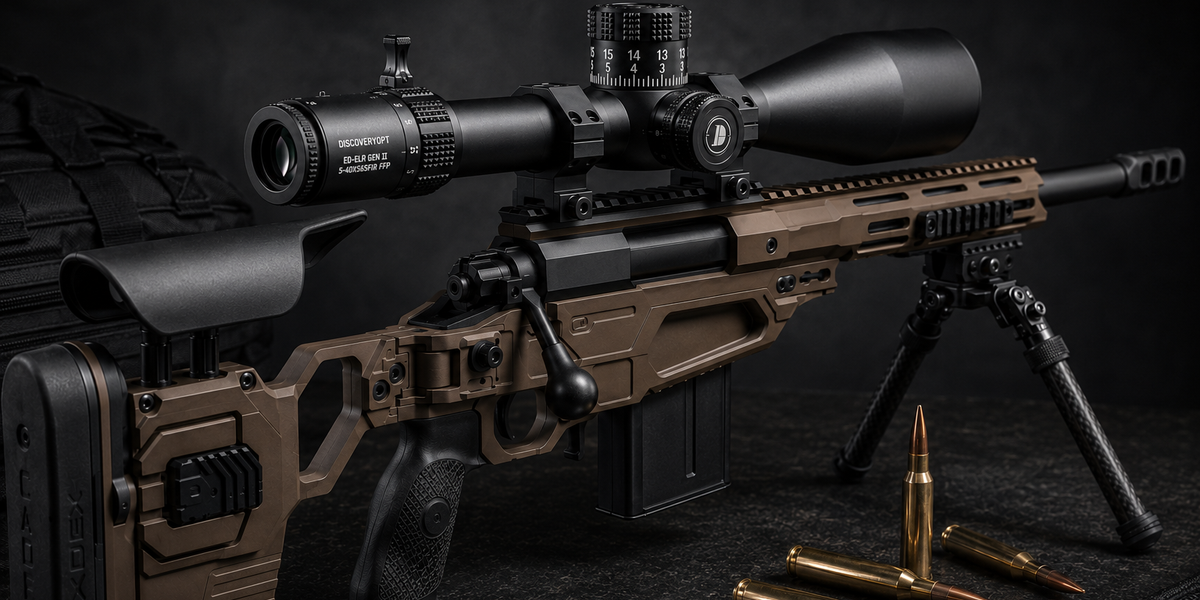
I bought four Discovery scopes for the wrong reason.
The Discovery ED-ELR 5-40x56 FFP is a lot of scope for the money, and that is exactly how I talked myself into buying four of them.
The someone else was the mysterious Jeff character who has a way of appearing in these stories shortly before my wallet starts behaving like it has its own PAL. He had one of the Discoveries at Stittsville Shooting Ranges, showed me a photo, and seemed impressed. I looked through it briefly. I do not think I fired a shot with it. I bought four.
Holdover Score
Owner review · Optic · MRAD · 300-400 rounds per scope · Equal weighting
A serious package value and mechanically credible 40x scope, but not one I would keep on premium precision rifles once the glass comparison is obvious.
Criteria are scored 1-10 as whole numbers. Overall score is the equal-weighted average, rounded to one decimal. Four examples were purchased by me from Cdn Precision and mounted on Cadex precision rifles.
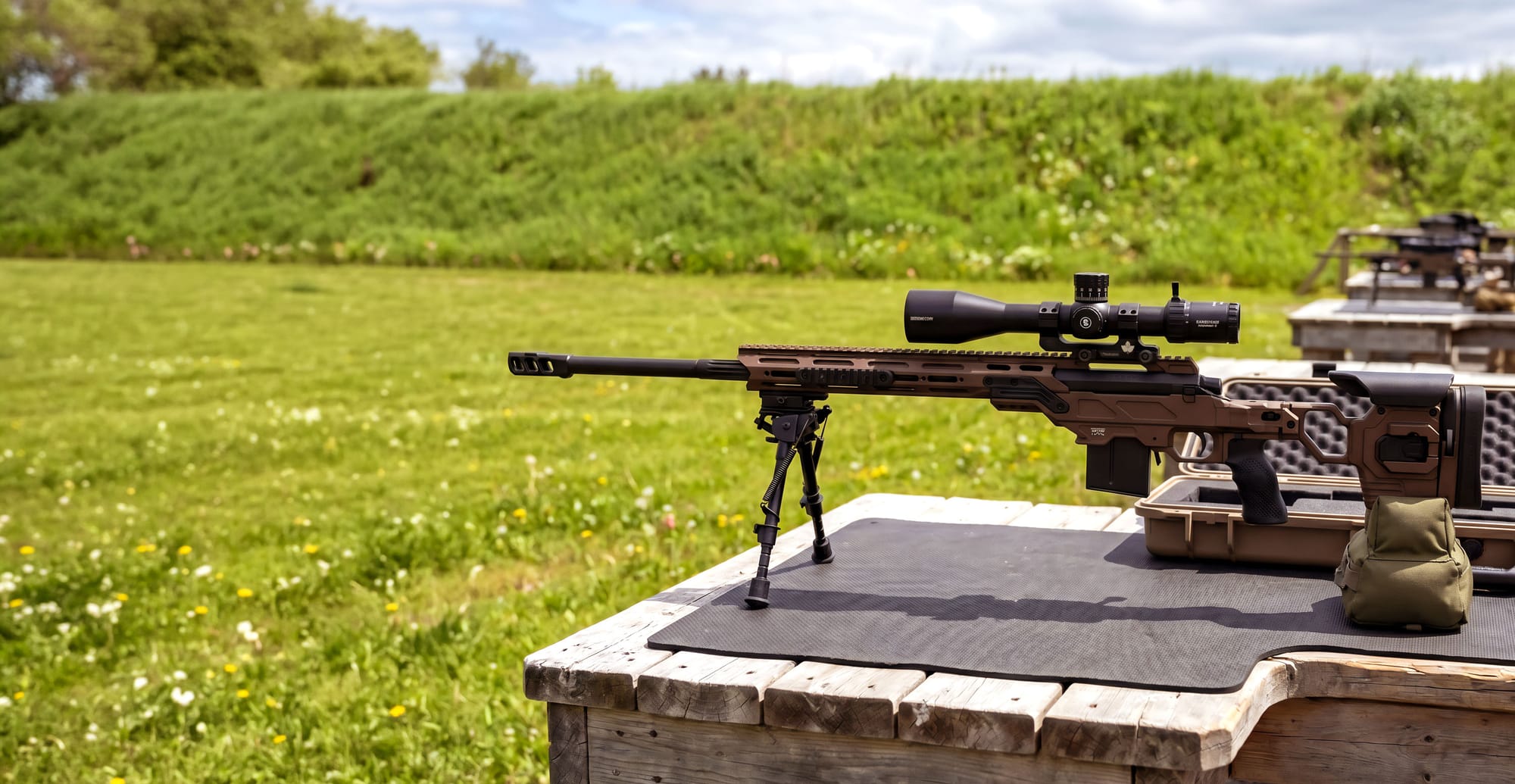
Why I bought four
Most of my Cadex rifles were wearing Vortex Strike Eagles with 25x top-end magnification. I was moving more from the 100-yard range to 200 and 300 yards, and the idea of 15 extra points of magnification had its hooks in me.
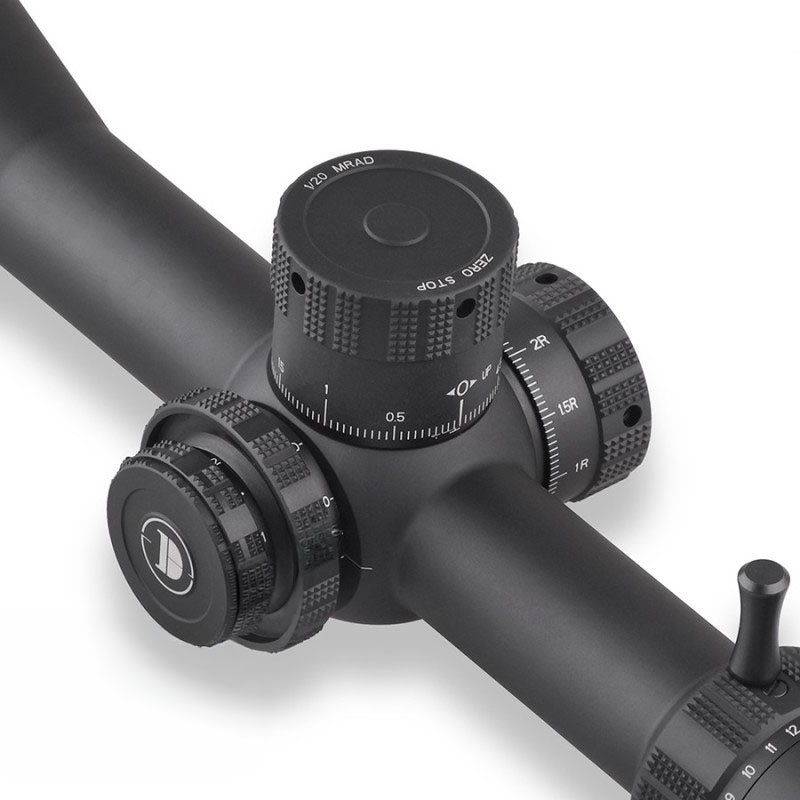
The Discovery ED-ELR is a tempting spec sheet. DiscoveryOpt lists it as a 5-40x56 first focal plane scope with a 35 mm tube, red illumination, zero-stop turrets, 25 MRAD or 86 MOA of elevation travel depending on variant, 18 MRAD or 62 MOA of windage, and a listed weight of 45.1 oz. It is not small. On a Cadex rifle, that is part of the charm.
I put the four scopes on the rifles I was using most: my Cadex Seven S.T.A.R.S. Covert in .308, my Cadex .300 PRC, my Cadex .300 Win Mag, and my Cadex .338 Lapua. They looked fantastic. That matters less than performance, obviously, but I will not pretend it did not help.
If these had been $5,000 Leupolds, I would not have bought four. I am capable of restraint when the invoice uses enough digits. At roughly $500 to $600 Canadian each, the Discovery felt like a lower-risk way to put 40x magnification across the rifles I was shooting most often. Alex at Cdn Precision was helpful through the buying process; I have no complaint about the retailer or the service.
The 40x part was not the problem
The first surprise was how small the jump from 25x to 40x felt. On paper, that sounds enormous. In my shooting context, it felt much more marginal. I was expecting a new world at 200 or 300 yards. I got a slightly larger version of the same world.
The bigger lesson was simpler: magnification only helps if the image is good enough to deserve being magnified.
With all four Discovery scopes, glass quality was the limiting factor. Everything looked a little soft. On bright, sunny days, distortion became more noticeable. Even with parallax and focus set well, the image never cleaned up the way I wanted. This was not one bad unit. The same basic character followed all four around.
When I moved back to the Vortex scopes, the relief was immediate. The clearer picture, crisper image, and lower distortion mattered more than the advertised jump from 25x to 40x. The Vortex Razor comparison was not remotely fair, but it was useful. Even the Strike Eagle felt meaningfully better to my eye.
What it is good at
The Discovery ED-ELR 5-40x56 has a real use case. If you are coming from a lower-magnification optic, especially something around 20x or less, and want to experiment without premium money, I can see the appeal. If you are mostly shooting at 100 yards, maybe stretching to 200, and are not especially picky about glass, it may feel like a huge upgrade.
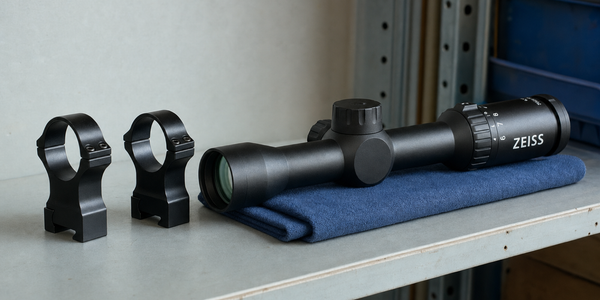
It also looks and feels like a serious scope. The size, weight, and styling suit a precision rifle. The controls are not toy-like. The package is better than it has any right to be: Cdn Precision's current listing includes 35 mm rings, scope caps, sunshades, a leveling kit, and a cleaning pen. The rings matched the scope, felt solid, and gave me no reason to complain. Discovery deserves credit for trying that hard at this price.
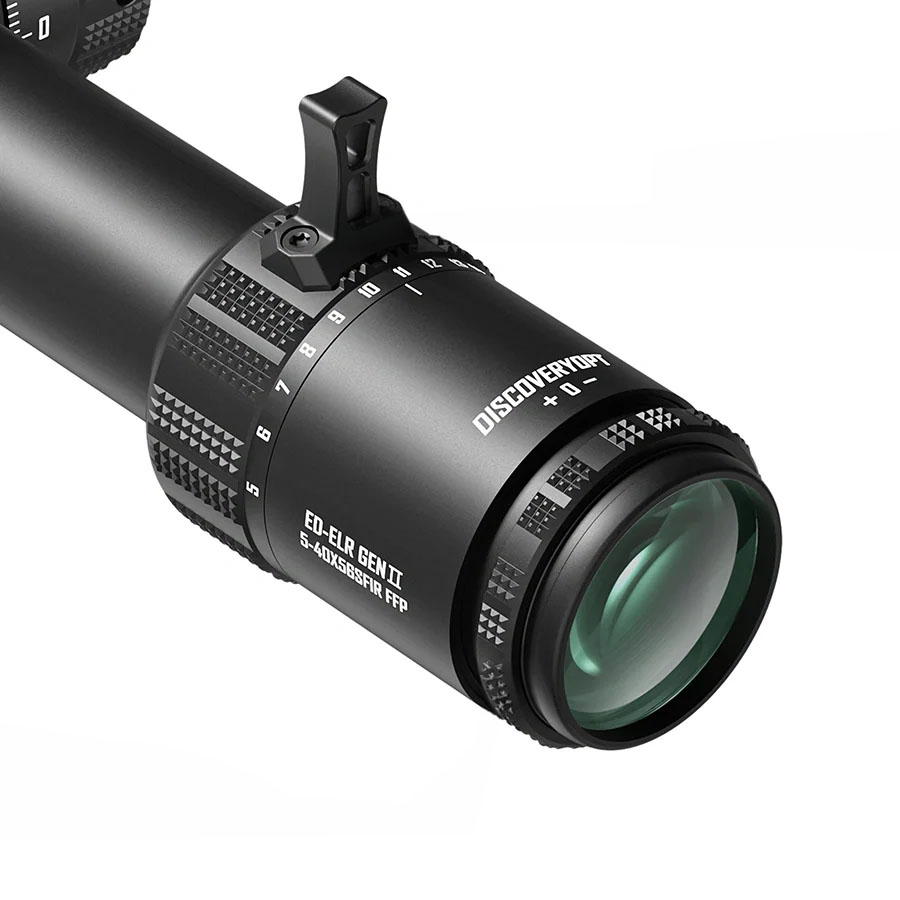
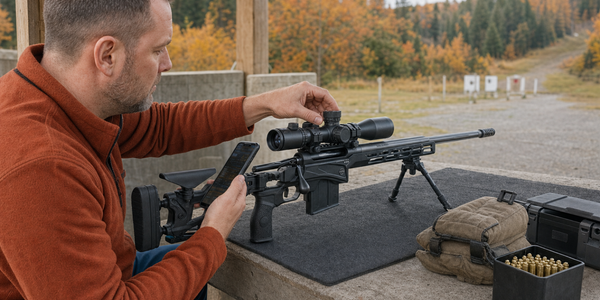
Mechanically, I trust the scopes more than the glass score suggests. Each one saw roughly 300-400 rounds across a range of Cadex rifles, including some heavier cartridges, and I had no trouble with them keeping zero. The only mechanical annoyance was that the small turret set screws loosened over time. That did not move the zero, but the turret caps themselves got loose. It is easy to remedy with an Allen key, but it belongs in the review.
I also like it as a spare. One of my higher-end Vortex Razors is likely going back for warranty work because it is no longer keeping zero. The Razor's picture is beautiful, but beautiful glass is less charming when the point of impact starts treating consistency as optional. A Discovery can serve while something better is away for repair. That is a respectable role. It is just not the role I bought four of them to fill.
What it is bad at
The Discovery is bad at pretending to be a premium optic.
That sounds obvious, but it matters because the headline number encourages the mistake. A 40x scope invites comparison with serious long-range optics, and the rifles I mounted mine on make the comparison harsher. A Cadex in .300 PRC or .338 Lapua needs glass that lets the rifle work without turning the image into the weak link.
For me, that is where the Discovery fell down. The image quality was too soft to justify staying on premium precision rifles. The extra magnification could not carry the softer view. I also bought mine in MRAD because that was what was available at the time, while I had mostly been working in MOA. That was not a deal-breaker, but it probably added a little friction to an already suboptimal experience.
I gave one scope to one of the range officers at Stittsville Shooting Ranges as a thank you for all the tips he has given me over the past year. The others will likely stay in the office as backups, stopgaps, or emergency glass.
Who should buy it
If you want a modestly priced 40x optic in Canada, and you understand what you are giving up, the Discovery ED-ELR 5-40x56 is hard to dismiss. For someone who is not chasing premium image quality, and simply wants more magnification without four-figure glass, it may be the sensible answer.
It was not the answer for me.
My mistake was not buying a budget scope. Budget gear can be excellent when the job is honest. My mistake was thinking the top number on the magnification ring would matter more than the quality of the image behind it.
The Discovery can stay on the bench as a spare. That is not an insult. It is just not the same thing as staying on the rifle.
Sources
- DiscoveryOpt product page, checked June 8, 2026: https://discoveryopt.com/products/ed-elr-gen2-5-40x56
- Cdn Precision MRAD product listing, checked June 8, 2026: https://www.cdnprecision.com/product-page/discovery-ed-elr-5-40x56-ffp-canada-only
- Cdn Precision MOA product listing, checked June 8, 2026: https://www.cdnprecision.com/product-page/discovery-ed-elr-5-40x56-ffp-moa-canada-only
- Cdn Precision shop listing, checked June 8, 2026: https://www.cdnprecision.com/shop
- DiscoveryOpt manufacturer/promotional review, checked June 8, 2026: https://discoveryopt.com/blogs/ed/discoveryopt-ed-elr-gen-ii-5-40x56-review-field-tested-for-elr-pro-prs-long-range-shooting
Keep the range notes worth reading later.
If this piece has you thinking about range time, keep the notes useful enough to read later.
Use the Holdover Range Bench Log Card to record rifle, optic, ammunition, distance, weather, zero, group notes, correction, and next test without turning a range trip into a memory test.
Safety note: the card is a note-taking worksheet, not shooting instruction, load data, legal advice, or a substitute for range rules, official guidance, manufacturer manuals, or qualified instruction.