Don't *walk* into the detachment
Opinion. The RCMP had to warn Canadians not to walk banned rifles into a detachment. A federal buyback six years in the making still has no clear compliance path that does not risk criminal charges for vetted owners trying to follow it.


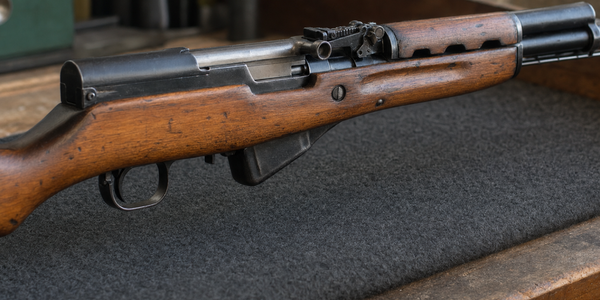
Opinion. An RCMP detachment in the Upper Fraser Valley had to put out a public warning this month telling Canadians not to walk into the building with their banned rifles. Doing so is itself a criminal offence. The federal program asking those rifles be surrendered for compensation has, at no point in its six-year rollout, published a clear instruction on how to hand them over without committing one. That is the shape the Assault-Style Firearms Compensation Program has taken in the field. The vetted licence-holders trying to comply are the ones being told, by the police, to stop.
The issue is not complicated. A prohibited firearm, once classified under Order in Council, cannot be transported except under a specific authorization. You cannot legally drive yours to the nearest detachment and leave it at the desk. You cannot walk it across a parking lot. The mere act of arriving with it, unsecured and outside the terms of an authorization to transport, is what the Criminal Code treats as illegal possession of a prohibited firearm. The same offence the government has been telling you the amnesty was meant to shield you from. The Chilliwack detachment clarified this in a public statement on April 13, a department doing its best to prevent otherwise law-abiding owners from being charged under a federal program that has been running since May 2020.
What actually went wrong
No one at Public Safety Canada sat down and decided to criminalize the people trying to comply. That would require a level of coordination the program has otherwise never shown. The operational picture is simpler and worse. The collection stage was announced. The individual declaration period closed on April 13. The mechanism by which a vetted Canadian was meant to physically move their now-prohibited firearm from their safe to a federal collection point was never publicly documented in a single authoritative document. Some owners assumed, reasonably, that the local RCMP would be it. The local RCMP, also reasonably, said no.
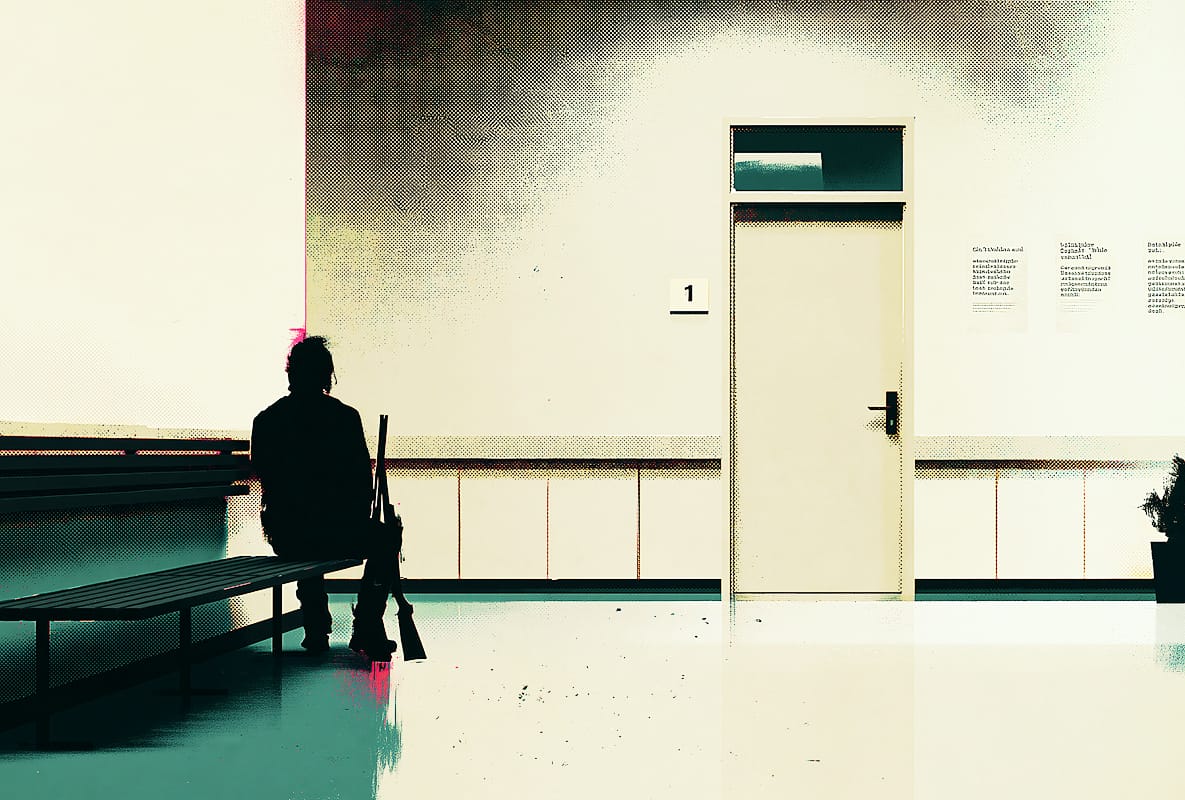
The detachment is not a drop-off point. It never was. Public Safety Canada's current guidance is that owners registered in the program will receive collection instructions through the online portal. Actual collection, when it happens, is meant to run through mobile units, scheduled RCMP visits, or local police in jurisdictions that agreed to participate. Seven provinces and one territory have declined to participate. Alberta and Saskatchewan have passed legislation that makes it harder. Where that leaves a licenced owner in, say, northern Ontario who declared their rifle in March and has heard nothing since, the program has not said.
The demographic being warned
Worth sitting with who the RCMP is actually warning here. Not someone trying to circumvent the law. The profile of a person who shows up at a detachment with a banned rifle is, almost definitionally, a PAL holder who filed a declaration, waited, saw a deadline pass, and decided to just take the thing in. That is a person attempting, in the most direct way they can, to do what the government asked. Their reward, per this month's RCMP advisory, is a reminder that they may have committed an indictable offence by trying.
This is the demographic the program is built around. The RCMP's 2024 Commissioner of Firearms Report places roughly 2.4 million individuals in Canada as PAL or RPAL holders. These are Canadians who passed the CFSC or CFSC-Restricted course, cleared a background check, submitted to continuous eligibility screening under the Canadian Firearms Program, and agreed to a tightly defined transport and storage regime. The Statistics Canada Juristat on firearms and violent crime shows, year after year, that licenced owners are measurably less likely to be involved in firearms offences than adult Canadians as a whole. They are not the population driving violent gun crime in Canadian cities. They are the population being told to spend a weekend reading a federal portal to avoid being charged for doing the government a favour.
What the rollout says about the program
If a law-enforcement agency in the chain of custody has to warn the public not to walk into its buildings, the policy's operational competence is the story, not a footnote to it. Public Safety Canada had six years between the May 2020 Order in Council and the April 2026 declaration deadline to publish a plain, province-by-province walkthrough of how an owner physically, legally, and safely transfers a prohibited firearm to the federal collector. That document does not meaningfully exist. What exists is a portal, a form, a pricing model, and a set of regional collection plans that change depending on which premier is speaking that month.

On the numbers themselves, the program has now confirmed fewer than half the firearms it budgeted to compensate. Sixty-seven thousand declared against an estimated one hundred and thirty-six thousand. That gap is not mass defiance. It is a licenced population looking at a program that cannot tell them where to bring the rifle, what the final cost per unit will land at, or whether the Supreme Court case the Canadian Coalition for Firearm Rights won leave to argue in March will make the whole exercise moot before the mobile unit arrives. Three unknowns is too many unknowns for the kind of person who builds a range bag on a spreadsheet.
The boring advice, which is the right advice
If you declared a firearm in the program, keep it stored under the same conditions you have always used for that class of firearm, which at the time of classification was non-restricted for most of the list. Safe or trigger-locked, unloaded, ammunition separately secured. Wait for scheduled collection instructions through the Public Safety portal. Do not transport the firearm for any reason except under a valid authorization or as directed in writing by Public Safety Canada. If you have questions, the Public Safety portal and the RCMP Canadian Firearms Program are the correct channels. Your local detachment is not.
The broader point is harder to make boring. A federal program is six years in. Law enforcement is now issuing public warnings against the program's own implicit compliance pathway. Administrative overhead is projected in the billions, to recover firearms from the one demographic already measured to be less dangerous than average. The people paying for all of it, twice, are the people being told to stay home.
Related Holdover References
Source-led reference pages for the terms and policy context behind this piece.
- Canadian Firearms Classification Timeline
- Canadian Firearms Storage and Transport Source Map
- Canadian Firearms Glossary
- Canadian Firearms OIC Index
- Canadian Firearms Buyback Tracker
- Sources and Verification
Sources
- RCMP Upper Fraser Valley detachment public advisory, April 13, 2026 (reported by Global News, CTV News, and the Houston Today / Caledonia Courier chain)
- Public Safety Canada, Assault-Style Firearms Compensation Program, program pages and April 2026 progress updates
- CBC News, "Liberals planned to buy back 136,000 banned guns. Fewer than half that many were declared," April 2026
- The Canadian Press, "Gun buyback tally of over 67,000 firearms falls well short of federal estimate," April 2026
- Supreme Court of Canada, leave to appeal granted in CCFR v Canada et al., March 19, 2026
- RCMP Canadian Firearms Program, 2024 Commissioner of Firearms Report
- Statistics Canada, Firearms and violent crime in Canada, 2023 (Juristat, 85-002-X)
- This piece is labelled Opinion. The factual claims are sourced; the interpretation is editorial. Corrections and counter-arguments welcomed at The Dispatch.
Source trail refreshed
This article was refreshed for accessibility and source discovery on 2026-05-20. The opinion has not been rewritten; this block keeps the source trail easier to inspect.
Primary source trail
- Public Safety Canada Assault-Style Firearms Compensation Program
- RCMP authorization to transport
- RCMP storing, transporting and displaying firearms
- RCMP 2024 Commissioner of Firearms Report
- Statistics Canada firearms and violent crime in Canada, 2024
Keep the source trail in one place.
If this piece sent you back to government pages, keep the official links, page dates, and follow-up notes together.
Use the Holdover Canadian Firearms Policy Source Tracker to record the current Public Safety, RCMP, Canada Gazette, and Justice source pages behind buyback, OIC, classification, compensation, and amnesty claims.
Safety note: the tracker is a worksheet for source hygiene, not legal advice or a substitute for current official guidance.