Five ATV retrieval trips and a *missing firearm clause*
Newfoundland’s hunting guide repeats a firearm restriction from repealed ATV rules. The current regulation keeps the five-trip limit and omits that clause.

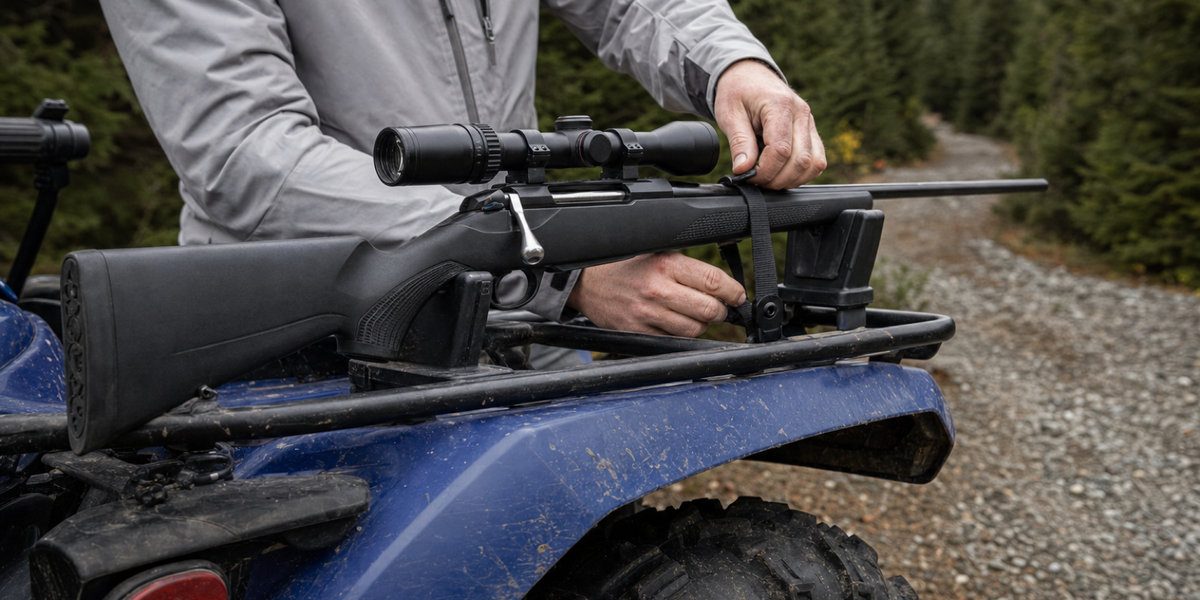
Newfoundland and Labrador’s current hunting guide tells hunters to keep firearms off certain ATV trips to retrieve big game. Follow that instruction back through the regulations and a problem appears: the explicit firearm clause is in a regulation repealed in 2022. The replacement keeps the retrieval provisions and leaves that clause out.
That difference deserves a clear explanation from the province. A hunter planning where the rifle will go should be able to find the current provision behind the government’s instruction.
The reason for checking now is an October 7 Royal Newfoundland Constabulary release. Police say they found an unoccupied off-road vehicle on a public trail near Pinchgut Lake on October 6, with a firearm improperly stored and in plain view. They arrested the 41-year-old owner for careless storage, seized the firearm and said further charges were anticipated.
The release leaves important details open, including the firearm’s type, loaded condition and the precise charge provision. It does not establish that the owner was hunting or retrieving an animal. The guide discrepancy explains none of those missing facts, and no court finding is established by the release.
What this season’s guide tells hunters
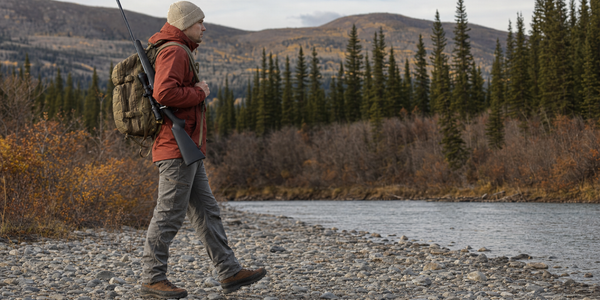
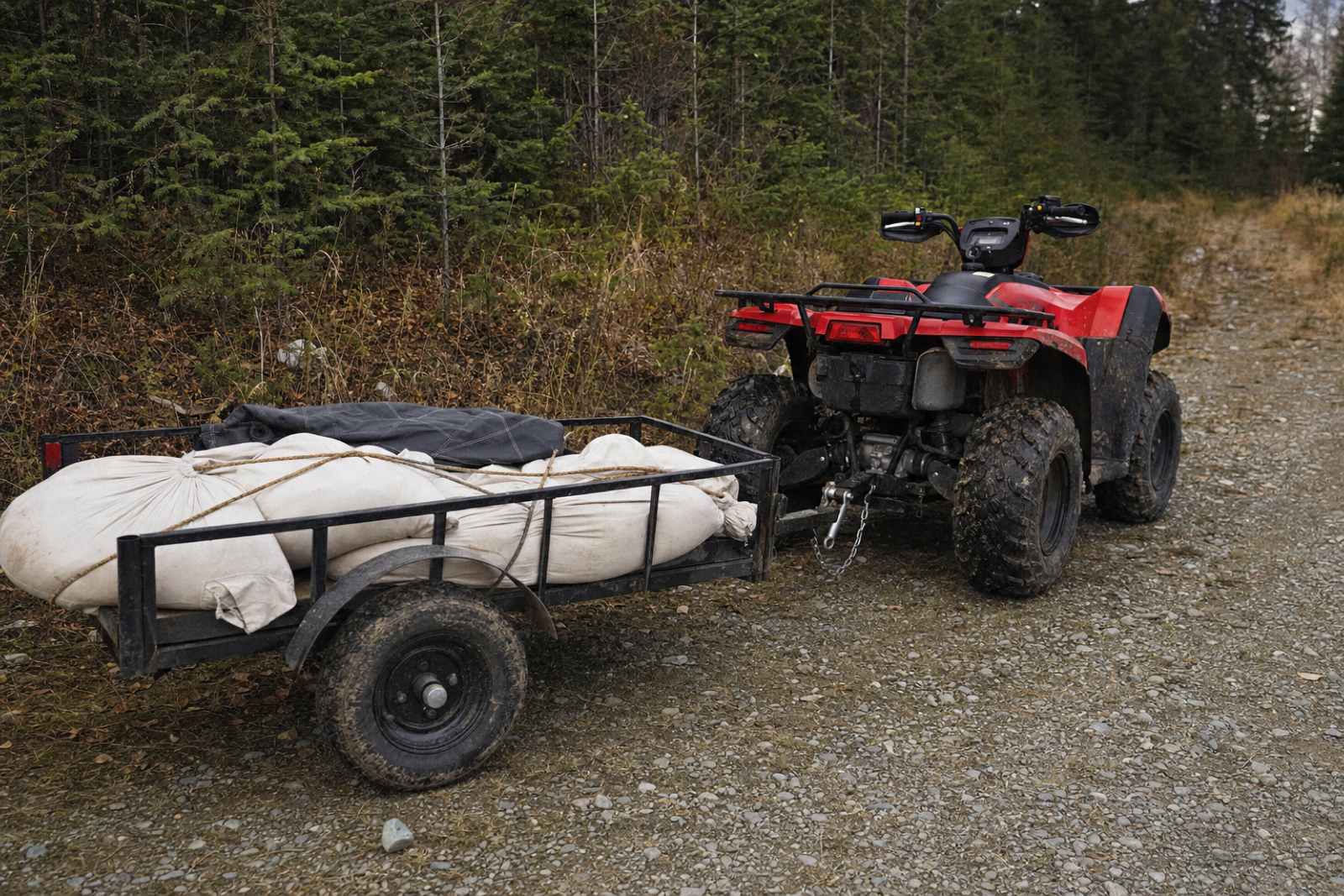
The 2026–27 regulation summary describes using an ATV to retrieve moose, caribou or bear killed under a valid big-game licence. It then says a person must not carry, transport or possess a firearm while using the machine for those purposes.
The guide also warns at the outset that it is an abbreviated summary, is incomplete and is not a legal document. That caveat makes checking the underlying regulation sensible. It still leaves an owner with a direct government instruction to account for while planning a trip.
A firearm left elsewhere creates another decision: who supervises it, where it goes and which storage or transport conditions apply there. The answer affects the plan before the first retrieval trip begins.
The clause in the old regulation
The former Motorized Snow Vehicles and All-Terrain Vehicles Regulations, CNLR 1163/96, contain the express firearm prohibition in subsection 5.1(7). The page remains available on the legislature’s website, making it easy to find the familiar language without noticing that another regulation replaced it.
The Off-Road Vehicles Regulations, NLR 30/22, settle that part of the history. Section 18 repeals CNLR 1163/96, and section 19 sets May 19, 2022 as the commencement date.
Section 5 of the replacement permits qualifying retrieval of an animal killed under a valid big-game licence outside approved operating areas. It limits retrieval to five trips in total across all vehicles involved, requires part of the animal on the return and requires an approved area to be used where reasonably possible. Five machines therefore do not create five separate allowances.
The posted section contains no corresponding firearm prohibition. Holdover also checked the published Gazette issues following the consolidation’s July 7, 2026 currency date, through the latest posted October issues, and found no amendment restoring it.
That establishes a difference between the guide and the replacement text. Holdover has obtained no departmental explanation for it. The reason for the instruction, and any other current authority supporting it, remain questions for the province.
The firearm obligations continue
The document comparison does not resolve whether a particular firearm may lawfully be carried on a particular trip. Federal firearm rules, provincial wildlife provisions, licence conditions and restrictions on the location still matter.
For ordinary non-restricted cartridge rifles, section 10 of the federal transportation regulations requires the firearm to be unloaded. Once the vehicle is unattended, further conditions apply. A lockable trunk or similar compartment must be used and locked. Where that option is absent, the firearm must be concealed and the vehicle, or the part containing it, securely locked.
“Unattended” turns on direct and immediate supervision by an adult or firearms licensee. The regulation supplies no convenient distance that automatically makes a parked quad attended. Its remote-wilderness provision has specific conditions, including a location test; a public trail cannot simply be assumed to qualify.
Newfoundland’s Wild Life Regulations, subsection 107(19), separately prohibit possessing a loaded firearm in or on a vehicle and discharging one from it. And Criminal Code section 86 addresses careless firearm conduct as well as regulatory contraventions.
Our earlier look at section 10 and rifle cases covers the broader transport question. Neither that article nor this source comparison certifies a particular rack box or vehicle setup.
The answer owners should be able to get
I own a Benelli Lupo BE.S.T. in .30-06 Springfield. If I were planning to take it on an ATV hunt in Newfoundland, I would want the province to identify the current provision behind its retrieval instruction before I worked out where the rifle would wait.
That is a practical request. An owner can follow a clear rule, arrange secure storage and change a route or trip plan around it. Reconciling an abbreviated guide with a repealed clause adds uncertainty at the exact point the guide should help.
The useful next answer from the province would identify the authority it relies on and explain how the current guide and replacement regulation fit together. If the summary needs correction, correcting it would give hunters a dependable starting point. Until that explanation is available, the missing clause remains a question to settle before the trip, alongside the firearm duties that continue to apply.
The amnesty file is still moving.
If this piece sent you back to government pages, do not wait for the next portal, Gazette, or court move to find you by accident.
The Dispatch follows Public Safety, RCMP, Canada Gazette, court, compensation, collection, and amnesty updates so the next change comes with the source that moved.
Safety note: the tracker is a worksheet for source hygiene, not legal advice or a substitute for current official guidance.