The firearms bylaw Haines Junction staff call *redundant*
Haines Junction staff want to repeal a decades-old bylaw banning discharge within a kilometre of the village landfill, and advise against a village-wide replacement. Their reasoning is the audit every council should run.

Opinion
Haines Junction staff put the village's landfill firearms bylaw in unglamorous company on the November 12 council agenda: a spent COVID-19 business grant and an arena roller-blading policy. They recommend clearing out all three. Sharing a cleanup item with roller-blading is about the most dignified exit a gun rule can get.
The useful part is the written reasoning. Chief Administrative Officer David Fairbank's report to council argues that territorial protections make the local firearms restriction redundant. Staff also considered a village-wide replacement and advised against it. That is a worthwhile example for councils reviewing their own rules, even while Haines Junction's vote remains unverified.
For a licensed owner, removing an unnecessary local restriction could mean one fewer boundary to check. Council should explain the protections that remain around this particular site before it makes that change.
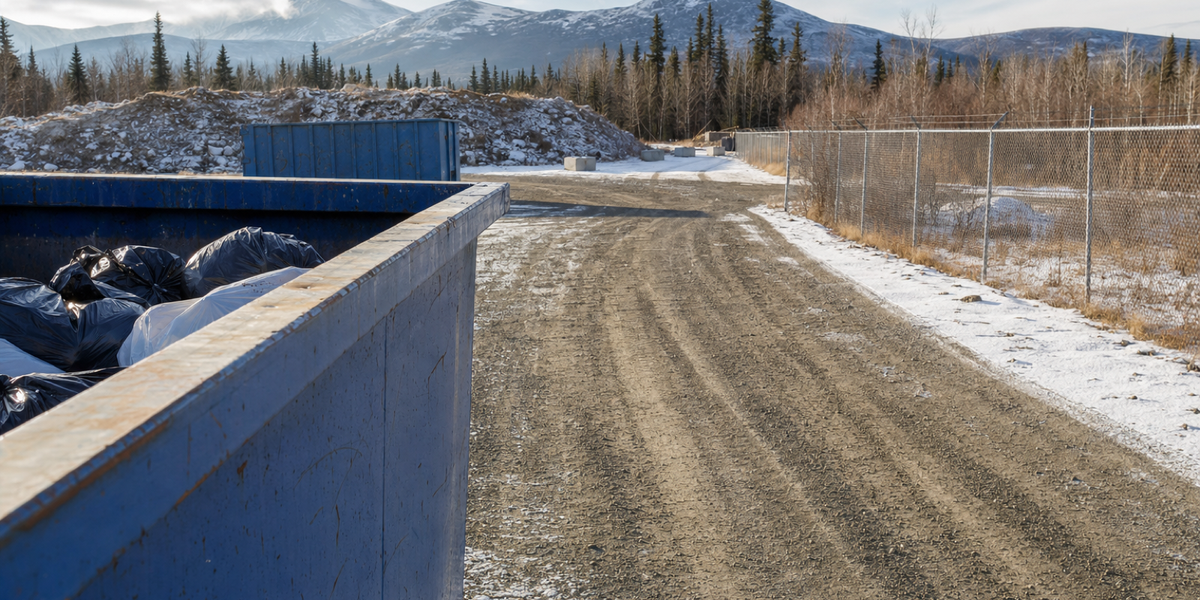
A kilometre around the landfill
Bylaw #40A-91 prohibits firearm discharge at the solid waste disposal site and in the surrounding one-kilometre area shown on its Schedule A map. It exempts government employees authorized to discharge firearms as a condition of their employment. The stated penalty reaches $500, six months' imprisonment, or both.
The instrument also refers to an older animal-control bylaw and territorial Executive Council Member approval. Staff cite those features as outdated. The original includes its own map, which matters: the mapped boundary tells an owner where the village placed the restriction.
A restriction tied to a fixed site can remain useful through changes in surrounding development. Its age alone settles little. Council's job is to establish whether that particular restriction still does work the other laws leave undone.
The case staff made
Staff prefer territorial enforcement. Their report says relying on the Wildlife Act "keeps firearms-related incidents with Conservation Officers and the RCMP." I would keep that sentence in the discussion. A council reviewing its map should also identify who receives a complaint and who has authority to deal with it.
The report describes existing residence, road, and vehicle protections, and concludes that territorial law provides sufficient protection for residents. That conclusion belongs to staff; the site deserves a clear explanation of how those protections fit together.
The territory's current 2026-27 hunting summary gives hunters more precise wording. It requires occupants' permission to hunt or set snares within a kilometre of a residence, including when the occupants are absent. It also prohibits discharge on or across a public road's travelled portion, including the shoulder. Those rules use different reference points from a landfill boundary.
Criminal Code section 86 separately addresses careless firearm use. Repealing a municipal distance rule would leave that federal obligation in place. Staff also say repeal would leave authorized wildlife dispatch at the facility available to the relevant officials.
The strongest case for keeping it
A disposal site brings people and waste to a predictable location. Federal guidance for northern waste facilities describes how food and odours attract wildlife, including bears, gulls, and ravens. Those are general operating risks. The Haines Junction report supplies no account of a particular wildlife or shooting incident at its landfill.
A fixed perimeter can give hunters and residents a boundary they can identify. Residence-based restrictions depend on where people live, and road rules depend on the road. Council should ask staff to explain coverage at the disposal site and around its perimeter, including any relevant site-access restrictions. A map showing that relationship would help more than a general assurance.
The report does not provide a discharge-complaint history or that site-specific coverage analysis. Council can ask for both before final passage. If a local rule covers a demonstrated gap, the review should identify it and explain the scope needed. If existing protections cover the risk, repeal deserves support. Keeping a redundant rule makes owners find and reconcile another instrument without an identified benefit.

A review other councils can use
Earlier this month, Holdover examined Madawaska Valley's discharge-rule discussion, including Ontario's municipal power and the different ways neighbouring bylaws measure distances. Haines Junction raises a different decision: whether to remove an existing site restriction after reviewing territorial protections, while declining a wider replacement.
I want councils to do that review openly. Identify the conduct or place causing concern, explain the law that already applies, and show the remaining gap. Owners should be able to follow that reasoning in the published record. Residents asking for protection deserve the same clarity.
The answer can justify keeping a local rule, narrowing it, or repealing it. Haines Junction staff have recommended repeal and given council reasons to examine. The remaining site question is specific enough to answer before a final decision.
Council's next checkpoint
When checked on November 16, the official meeting index still linked no November 12 minutes or audio recording. The agenda proposed first and second reading; the draft's prefilled reading dates provide no vote evidence.
Staff propose bringing the repeal back to a subsequent regular meeting for third reading and adoption. The agenda lists November 25 at 7 p.m. as the next regular meeting. It also contains a numbering mismatch: the report uses #443-26, while the agenda and draft use #444-26. Council should resolve that in the public record.
The case for repeal is persuasive. Council should obtain the site-coverage explanation, adopt the repeal if the existing protections cover the risk, and publish a plain explanation alongside the updated register. A licensed owner should be able to find the current rule without working through an archaeological dig beside the roller-blading policy.
Follow Canadian ownership and policy coverage in The Dispatch.
Sources
- Haines Junction, November 12 council agenda and staff report, agenda and PDF pages 39-42.
- Haines Junction, Bylaw #40A-91, text and Schedule A.
- Haines Junction, agendas and minutes, checked November 16, 2026.
- Government of Yukon, 2026-27 hunting summary, PDF page 25 / printed page 21.
- Criminal Code, section 86.
- Environment and Climate Change Canada, Solid Waste Management for Northern and Remote Communities, March 2017, section 4.3.7, printed pages 38-39.
- Holdover, Madawaska Valley discharge-rule discussion.
The amnesty file is still moving.
If this piece sent you back to government pages, do not wait for the next portal, Gazette, or court move to find you by accident.
The Dispatch follows Public Safety, RCMP, Canada Gazette, court, compensation, collection, and amnesty updates so the next change comes with the source that moved.
Safety note: the tracker is a worksheet for source hygiene, not legal advice or a substitute for current official guidance.