Half the buyback: the program's own numbers are the argument
The federal buyback declaration tally is not a footnote. It is the program's own math arguing against the program.

Update, June 9, 2026. Public Safety Canada has extended the relevant amnesty period. The old the former fixed deadline date referenced below is no longer the operative expiry; the amended expiry is 90 days after the Supreme Court of Canada renders its decision.
Pillar: Advocacy · Word count target: ~1,350 · Read time: ~6 minutes · Voice: accessible, calm, evidence-led.
Published draft, for paste-through per Ghost Implementation/post-half-the-buyback-article-guide.md.
---
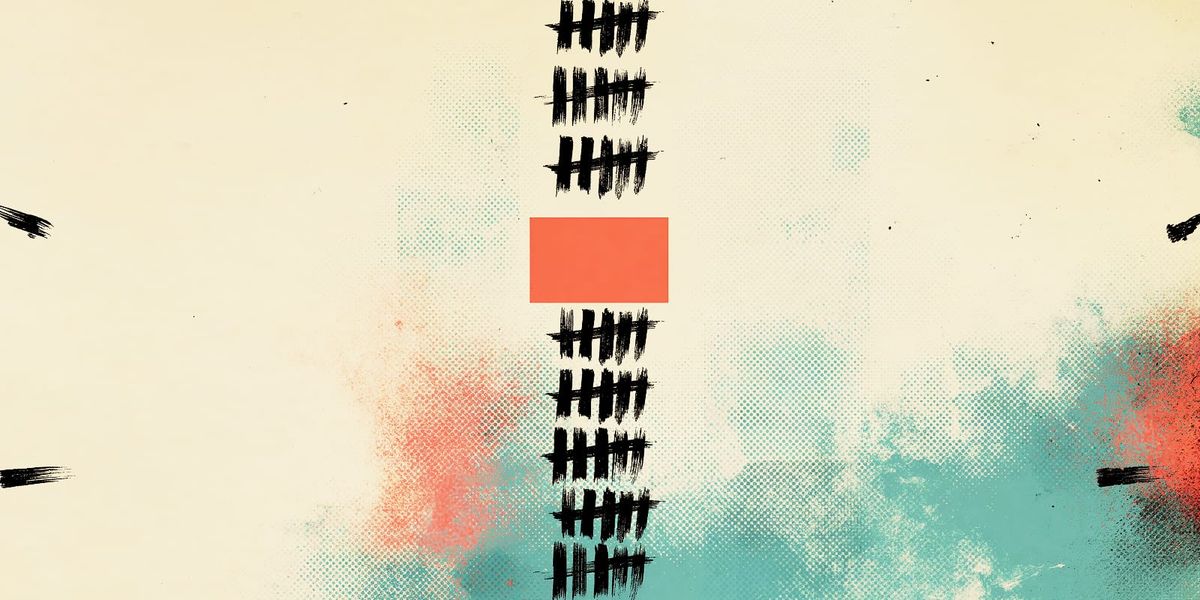
The federal government budgeted to collect 136,000 firearms under its Assault-Style Firearms Compensation Program. Three weeks after the declaration deadline, the running tally sits at roughly 67,000. That is not a rounding error. It is less than half the program's own planning estimate, collected after nearly six years of runway, a multi-year budget line, and the political capital of multiple successive Public Safety ministers.
If you earned your PAL in the last couple of years, this file may have felt like background noise. It is not. It is the clearest evidence, to date, that the direction Canadian firearms policy has taken since 2020 is not producing the outcomes it was sold on. The program's own numbers are now the argument. You do not need to take anyone's editorial word for it.
Here is what actually happened, in the plainest terms the file will support.
What the program set out to do
On May 1, 2020, the federal Cabinet issued an Order in Council prohibiting roughly 1,500 specific makes and models of firearms, almost all of them sporting rifles that had been legal to own in Canada for decades. The legal mechanism was not a bill through Parliament. It was an OIC, signed at Cabinet, with the political rationale that these firearms should not be in civilian hands.
Around that OIC, the government built a compensation program. It estimated the civilian population of affected firearms at roughly 136,000. It budgeted to buy them back from licensed owners. It committed to a compliance window, ending with an amnesty on the former fixed deadline. And it set a declaration deadline of March 31, 2026, by which anyone wanting compensation had to formally declare the affected firearms they owned.
That is the program as designed. The timelines have shifted and the cost estimates have moved, but those are the load-bearing numbers.
What the program delivered
The final declaration tally, published after the March 31 deadline, is roughly 67,000 firearms from 37,869 Canadians. Across nearly six years, that is the full size of the population that affirmatively stepped forward to turn their firearms over.
Seven provinces and territories have publicly refused to help administer the program. Alberta invoked the Alberta Sovereignty Within a United Canada Act and directed provincial entities not to assist. Saskatchewan enacted its own Saskatchewan Firearms Act to the same effect. Owners in Alberta who did declare firearms under the federal program are now in the strange position of being legally committed to surrender them, with no provincial collection infrastructure to send them through and, as of this month, no confirmed path to compensation.
On March 19, 2026, the Supreme Court of Canada granted leave to hear a set of four appeals against the underlying OIC, the CCFR's challenge among them, with arguments to be heard together. The CCFR has since filed an injunction asking the court to extend the amnesty past the date of any final decision. The NFA, CCFR, and CSSA - the three largest Canadian firearms rights associations, which rarely agree on operational specifics - issued a joint statement urging affected owners to withdraw their declarations where possible and wait out the court process.
That is the program as it actually landed. A 50% collection miss. Provincial refusal in two of four Prairie provinces. A pending Supreme Court hearing. An injunction motion on the amnesty. Three advocacy organizations publicly aligned.
Why the shortfall is the story
A program that collects half of what it budgeted for is not "disappointing but fixable." That framing has been offered by PolySeSouvient, Canada's most prominent gun-control organization, which called the turnout "far from catastrophic." Accept the charitable version of that position for a moment. Even under it, the best available reading is that the policy has cost Canadians considerably more in administration than in compensation, while producing less than half of the inventory reduction it promised.
There is also a quieter question sitting under the 136,000 number: how good was the estimate in the first place? The Parliamentary Budget Officer's 2021 analysis put the true population of affected firearms well above Cabinet's planning figure, in the hundreds of thousands. If the denominator was always bigger than the government said, the 67,000 figure is an even smaller fraction of the real inventory than the program's own math suggests. Either way, the policy has not touched most of the firearms it meant to remove, and it has not touched the firearms driving violent gun crime in Canadian cities, which continue to trace overwhelmingly to the illicit market.
Violent gun crime in Canada is a real problem. It is also not a problem the licensed PAL-holding population is driving. The RCMP Canadian Firearms Program's continuous eligibility screening data, Statistics Canada's firearm-related offence reporting, and the Toronto Police Service's annual crime-gun tracing all tell the same story about where crime guns come from. It is not a mystery. The buyback was never the answer to it.
What this means if you are new to the file
For a newer Canadian firearms owner, three things are worth carrying away.
First, the program was not aimed at a criminal population. It was aimed at the licensed, vetted, RCMP-tracked population that had bought these firearms legally, stored them legally, and transported them under the rules. That is the population it targeted. That is the population it inconvenienced. That is the population it failed to persuade.
Second, the public-safety case for the policy has not been made. A program that cannot collect even half of what it claims exists has not measurably reduced Canada's inventory of anything. There is no credible link between the May 2020 OIC and the city-level violent-crime numbers that sparked the political response. If you are new to the hobby, you should not feel you are supposed to apologize for the rifle in your safe because a cabinet concluded, six years ago, that someone else should not have one like it.
Third, the rules are not as stable as a new owner might assume. Six years ago, the firearms affected by the May 2020 OIC were legal, registered, and in current retail circulation. They became prohibited overnight, through a mechanism that did not pass through Parliament. The Supreme Court's willingness to hear the appeal is an acknowledgement that how that mechanism can be used is, at minimum, a live legal question. Whatever happens next, the regulatory environment a Canadian PAL holder lives under is the environment they should understand, not the one they were told to expect.
Where to watch next
Two dates matter. the former fixed deadline, when the amnesty currently expires. And whichever date the Supreme Court ends up setting for arguments. The CCFR injunction, if granted, extends the amnesty past the final SCC decision; if denied, the October date becomes a hard backstop. The Canada Gazette, the CCFR's court schedule page, and the Department of Justice's public filings will carry the official updates as they come.
If you are newer to this file, resist the temptation to take a long-time forum poster's word for any of it. Read the OIC. Read the compensation program's own pricing documents. Read the PBO cost analyses. Read the CCFR statement of claim. All of it is public. The program is going to generate more news before it is done, and the numbers it has already produced are enough to start with.
Half of what the government promised. Roughly six months of amnesty left. A Supreme Court hearing on the horizon. That is the file, plainly stated. The math does the work.
---
This is an opinion piece. The Holdover position is pro-ownership, calmly argued. Full editorial stance: editorial-stance.md.
The amnesty file is still moving.
If this piece sent you back to government pages, do not wait for the next portal, Gazette, or court move to find you by accident.
The Dispatch follows Public Safety, RCMP, Canada Gazette, court, compensation, collection, and amnesty updates so the next change comes with the source that moved.
Safety note: the tracker is a worksheet for source hygiene, not legal advice or a substitute for current official guidance.