June 6 should teach the first *zero*
National Range Day is strongest when it gives new Canadian shooters one useful piece of competence: an honest first zero.

Update, June 9, 2026. Public Safety Canada has extended the relevant amnesty period. The old the former fixed deadline date referenced below is no longer the operative expiry; the amended expiry is 90 days after the Supreme Court of Canada renders its decision.
Opinion. National Range Day is four days away, which means Canadian clubs are about to do something Ottawa has made oddly necessary: show normal people that normal firearms owners exist.
The official National Range Day site frames June 6 around 2.3 million licensed Canadian gun owners. BCWF is pointing to family-friendly B.C. events, with qualified club members and elected officials invited to see what range life actually looks like.
But if National Range Day is going to work for newer shooters, it should send them home with more than a pleasant impression and a ringing appreciation for why hearing protection exists.
Teach them the first zero.
Range Day is not a lecture
The temptation, especially after six years of OICs, buyback deadlines, FRT anxiety, and political theatre, is to treat every public-facing range event as a chance to explain the file. Licensed owners are not the problem. The policy has targeted the regulated population. The public keeps hearing about guns from people who have never sat beside a PAL holder at a club bench.
It is also a lot to unload on someone who came out because their friend said there would be .22s, clays, coffee, and a chance to see the place without committing to a membership.
The better range-day argument is quieter. Let the visitor see sign-in routines, benches, targets, volunteers, questions, corrections, and the mild domestic chaos of a range bag with exactly one item missing.
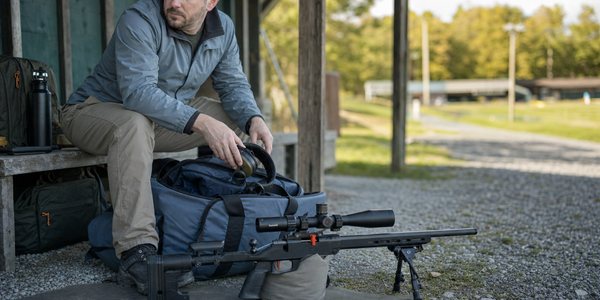
When I shoot at Stittsville for 4-6 hours on a weekend, the useful parts of the day rarely feel dramatic. A rifle, an optic, and a group on paper become a small audit of the note in my head. Sometimes the note survives. Often enough, the target has the better argument.
That is the culture worth showing.
The first useful skill is boring
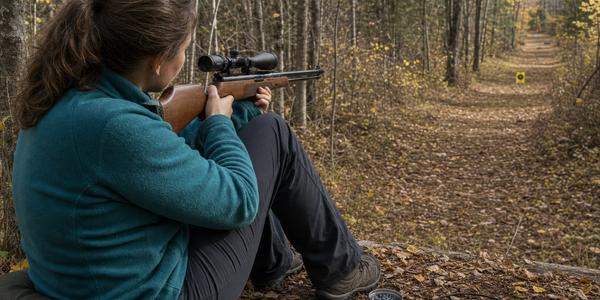
A zero is the distance where the bullet lands where the rifle is aimed. In precision shooting, it is the first honest number. Everything else - dial-ups, holds, data books, match confidence, and the expensive little lies we tell ourselves about new equipment - starts from that one reference point.
New shooters often treat zeroing as the administrative step before the fun starts. Get on paper, click the turret, call it good, and go do something more exciting. That is understandable. It is also how a person spends the rest of the day blaming wind, ammunition, scope rings, barrel break-in, or their own moral character when the actual problem was that the rifle was never honestly centred.
Show the visitor a group. Explain that the centre of the group matters more than the one shot everyone wants to believe. Explain that a lucky hole is not a zero. Explain that a rifle, a scope, a cartridge, and a shooter all need one shared reference point before the rest of the sport becomes measurable.
No lecture. No mystical ballistics performance. Just the target backer, the group centre, and the dull little truth that precision usually begins as paperwork's more interesting cousin.
Precision has a Canadian on-ramp
This matters more in 2026 than it did a few years ago because the Canadian precision ladder is getting easier to see.
NRL22 Canada describes itself as a national precision rimfire league with monthly matches, resources, standings, and a format built for every level. That is a very good sentence for a newer shooter. Rimfire lets people learn positions, wind calls, stage pressure, target transitions, and match routine without turning every practice day into a banking decision.
On the centrefire side, the Precision Rifle Series now has current Canadian event structure worth paying attention to. The 2026 Apex Rocky Mountain Challenge is scheduled for July in Foothills No. 31, Alberta as a PRS 2-Day Pro Series match, with train-up opportunities and junior support attached to the weekend. Not necessarily the immediate path for the person visiting a club on June 6, but a visible one.
A first zero is the doorway into that path because it teaches the right habit early: verify before you trust. The rifle may be excellent. The scope may be excellent. The person behind it may be getting better. None of that removes the need for evidence.
This is where the sport becomes accessible without being dumbed down. A new shooter needs a decent starting point, a patient club member, and someone who can say, "Find the middle before you chase the last shot."
The policy argument is hiding in the group
Public Safety Canada's current buyback page says the federal government has banned more than 2,500 makes and models since May 2020, and that owners must dispose of or permanently deactivate affected prohibited firearms before the SCC appeals + 90-day amnesty endpoint or risk criminal liability.
That is the formal climate around lawful ownership. It is why even a range open house carries more weight than it should.
Supporters of the bans argue that removing certain firearms from civilian circulation is necessary for public safety. That is the strongest version of the position. The problem is that Canadian firearms policy keeps putting enormous effort into the people the state can already find: PAL holders, clubs, retailers, instructors, and owners with records, safes, receipts, and range memberships.
The RCMP's 2024 Commissioner of Firearms Report recorded 2,412,122 valid PALs at the end of 2024. It also describes a federal system built around licensing, registration, safety training standards, compliance, and administration.
A public range day has a different job. It makes the regulated population visible as people building skill.
That is advocacy with less shouting and more evidence. A visitor who watches a club member explain group centre, wind, support, trigger control, and range routine has seen the thing the stereotype hides. The lawful owner is not an abstraction. The lawful owner is the person making the boring correction before the next string.
Give them something to take home
If a visitor leaves thinking firearms are less mysterious, good. If they leave knowing that lawful owners are screened, organized, and generally less dramatic than the politics around them, better. If they leave understanding one actual shooting concept, better still.
The first zero is the right concept because it is simple, humbling, and expandable. It gives the new person a question to ask at their next range visit: "How do I know this is actually zeroed?"
Buying comes quickly enough. Everyone discovers the invoice portion of the hobby, some with almost religious speed. The more useful early habit is learning to prove one thing before adding three more variables to the pile.
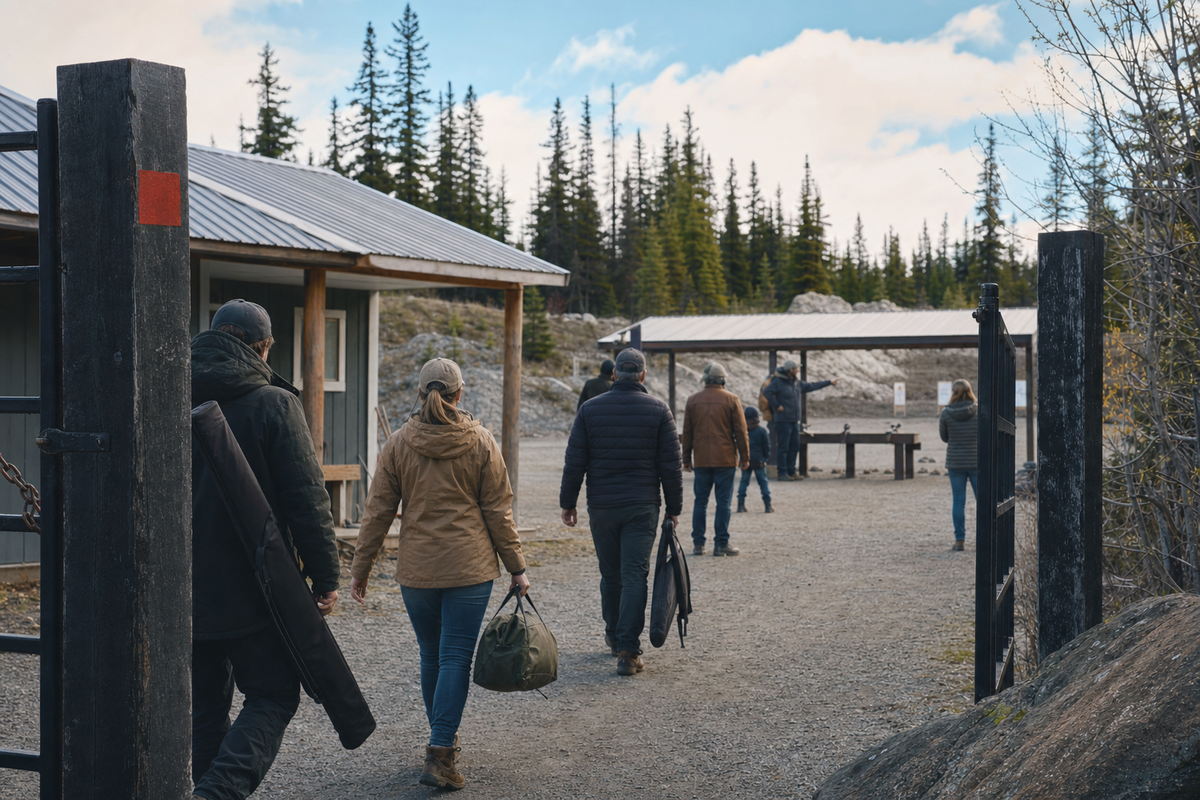
June 6 should show the gate, the people, the range, and the community. Then it should show the group centre.
The first honest zero is not the whole sport. It is where the sport stops being noise and starts becoming evidence.
Sources
- National Range Day, June 6, 2026: https://nationalrangeday.ca/
- B.C. Wildlife Federation, "National Range Day": https://bcwf.bc.ca/national-range-day/
- Royal Canadian Mounted Police, "2024 Commissioner of Firearms Report": https://rcmp.ca/en/corporate-information/publications-and-manuals/2024-commissioner-firearms-report
- Public Safety Canada, "Assault-Style Firearms Compensation Program": https://www.canada.ca/en/public-safety-canada/campaigns/firearms-buyback.html
- NRL22 Canada: https://nrl22canada.ca/
- NRL22, "NRL22 Canada" match listing, May 30, 2026: https://nrl22.com/match/nrl22-canada/2026-05-30/
- Precision Rifle Series, "2026 Apex Rocky Mountain Challenge": https://www.precisionrifleseries.com/m/8178/2026-apex-rocky-mountain-challenge/
- Apex Optics, "Apex Rocky Mountain Challenge": https://apexoptics.co/apex-rocky-mountain-challenge/
Shortlist the rifle before the checkout page.
If this piece helped you narrow the rifle question, keep the tradeoffs visible before the next tab becomes a shopping cart.
Use the Holdover Rifle Cartridge Shortlist Card to compare use case, distance, recoil, ammunition availability, rifle fit, optics plan, budget, and what you will actually practice.
Safety note: the card is a planning worksheet, not buying advice, legal advice, hunting guidance, load data, or a substitute for current manufacturer, range, provincial, federal, or qualified-instructor guidance.