Air Canada excludes *prohibited firearms* from checked baggage
A prohibited-rifle moving question meets Air Canada baggage exclusions, postal limits and the need to confirm both lawful movement and carrier acceptance.

Opinion
A rifle owner planning a permanent move from Ontario to B.C. asked r/canadaguns on September 30 how to get their prohibited ARs across the country. They planned to fly. Driving was out, they wrote, leaving Canada Post or the aircraft as the options they were considering.
Air Canada's current baggage policy gives one firm answer: it excludes firearms prescribed as prohibited. The ordinary postal rule for individuals also leaves prohibited rifles outside its permitted classes. An owner considering those options needs to resolve the rifle's journey before buying the ticket.
I buy most of my firearms online, so delivery arrangements are a familiar part of ownership. For a move involving a rifle retained under an amnesty, I would want the exact legal basis and an accepting carrier established while I still had time to change my plans.
I checked the carrier and government sources below on October 1. The fresh development here is the owner's question; these are the current published rules, with no new airline policy announcement identified.
Air Canada names the excluded class
In the Firearms details on its Canadian baggage page, Air Canada lists firearms it prohibits for travel. One item reads: “Any firearm prescribed as prohibited.”
That excludes the class the poster described from the passenger-baggage service covered by the page. General instructions for travelling with sporting firearms cannot settle the question once the airline expressly excludes the firearm's classification.
WestJet's published accepted-firearms list names restricted and non-restricted firearms. A reader who stops at the word rifles further down that list could miss the class heading above it. Anyone approaching a carrier should identify the firearm's current classification and the proposed service from the outset.
These pages establish the airlines' published baggage terms. Holdover has not obtained a carrier's offer to transport the poster's rifles, and the sources do not establish a ban on every form of air transportation. Claiming that the owner has exhausted every possible carrier would run beyond the evidence.
The postal list includes prohibited handguns
Section 16 of the individual storage and transport regulations names three classes an individual may ship by post: non-restricted firearms, restricted firearms and prohibited handguns. A prohibited rifle falls outside that list. Its former restricted classification does not put it back into the listed class.
The RCMP's mailing guidance gives the same three categories. A forum reply about someone mailing an ordinary hunting rifle therefore answers a different eligibility question.
Holdover's earlier Canada Post article covers the postal service and packaging requirements. For this move, the class restriction comes first. Spending money on a suitable case or selecting a secure delivery service cannot extend the classes the regulation names.
The amnesty has purpose-specific movement provisions
For AR-type rifles covered by the May 2020 prohibition, start with the current 2020 amnesty order. The order identifies the people and firearms it covers. A social-media description alone cannot establish that a particular owner meets those conditions.
Section 2(2)(a)(vii) addresses transport for storage, subject to conditions elsewhere in the order. For storage with another person under section 2(1)(d), that person must hold the qualifying licence and the storage must be a condition of the owner's licence. The transport provision also requires prior notice to the Chief Firearms Officer for that arrangement. Other carrier-delivery provisions have specified purposes, including destruction and deactivation.
Those distinctions matter when asking about a move. A provision written for delivery to a destruction programme supplies no general answer about shipping a retained rifle to a new home. The owner needs the provision that covers the actual purpose, firearm and destination.
The RCMP's general authorization-to-transport page says owners personally moving restricted or prohibited firearms to a new address need an Authorization to Transport, or ATT, from the provincial or territorial Chief Firearms Officer. It also says an ATT is unnecessary when a licensed carrier ships firearms on the owner's behalf.
The Canadian Firearms Program still needs to address the amnesty conditions for the particular rifle and proposed movement. Reading that general carrier statement as a completed relocation plan would leave both the applicable permission and the carrier's acceptance unresolved.
Ask for an answer you can plan around
I would put the exact firearm and current classification to the relevant Chief Firearms Officer or Canadian Firearms Program contact, along with the origin, destination, timing and intended carrier. The useful answer identifies the rule that permits the proposed movement and the conditions the owner must meet.
Then I would ask the carrier to confirm acceptance of that classification for that service. I would keep the correspondence with the arrangements for the move. A broad statement that a company transports firearms leaves too much room for misunderstanding when its published categories may exclude the item in question.
If the rifle cannot travel with the owner as planned, any alternate storage proposal also needs a qualified answer about the recipient and applicable conditions. Assuming that a friend can keep it until a convenient trip creates another question to resolve.
An airline can publish a clear exclusion without solving every unusual ownership problem. The Canadian Firearms Program has a broader responsibility to explain how owners covered by an amnesty can carry out the movements the order permits. A permanent move is a predictable part of owning property over several years.
Owners should be able to establish a lawful relocation route, including the role of an accepting licensed carrier when appropriate, early enough to plan their departure. I want the Canadian Firearms Program to make that answer easier to find than a collection of forum guesses.
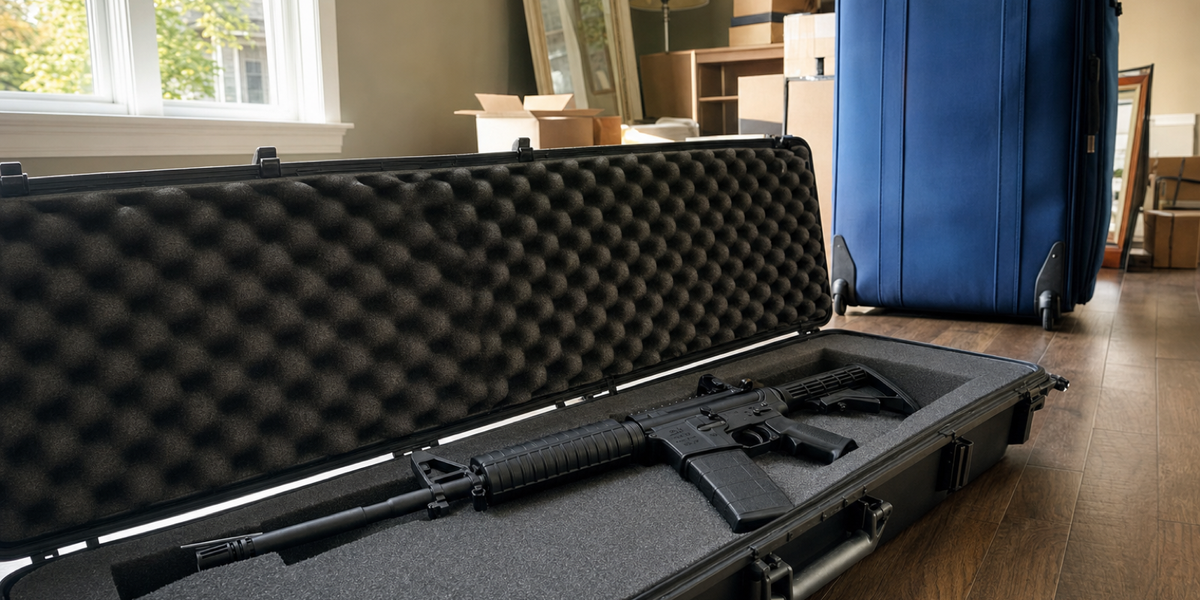
Feature photograph: generated illustration of an AR-pattern rifle during domestic moving preparation. It depicts no actual owner, airline, accepted shipment or completed journey.
Keep the official sources close
The Dispatch follows Canadian ownership and policy changes with links to the official record. Get the Canadian Firearms Policy Source Tracker through The Dispatch to keep the next rule change with its source.
Sources
- r/canadaguns, Shipping Prohibs for Moving, September 30, 2026, 21:08 Toronto. An unverified owner account used as the question prompting this article.
- Air Canada, Special items, restricted and prohibited items, Firearms details, Canadian English page accessed October 1, 2026.
- WestJet, Fishing and hunting equipment, accessed October 1, 2026.
- Department of Justice, Storage, Display, Transportation and Handling of Firearms by Individuals Regulations, SOR/98-209, section 16, current to September 21, 2026; accessed October 1.
- RCMP, Authorization to transport, accessed October 1, 2026.
- Department of Justice, Order Declaring an Amnesty Period (2020), SOR/2020-97, section 2, current to September 21, 2026; last amended June 5, 2026; accessed October 1.