Make the first rifle *boring*
Canadian shooters are hungry for new semi-auto rifles. New PAL holders should still make the first serious rifle boring on purpose.

Update, June 9, 2026. Public Safety Canada has extended the relevant amnesty period. The old the former fixed deadline date referenced below is no longer the operative expiry; the amended expiry is 90 days after the Supreme Court of Canada renders its decision.
Opinion. The current Canadian semi-auto mood is not subtle.
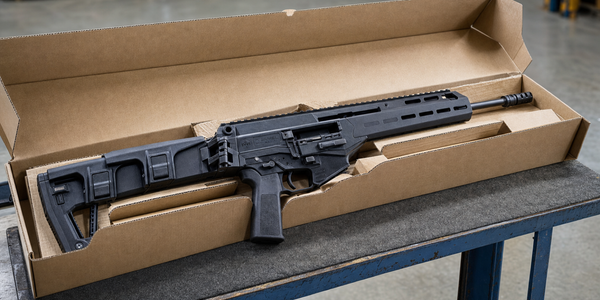
The top r/canadaguns post in the past day was a joke about what happens when a non-Canadian or non-Turkish semi-auto hits the market. It worked because the frustration underneath it is real. A few hours later, another thread was already asking what 1913 stock should go on the incoming Makasi. That is the Canadian rifle market in miniature: starved enough that a new platform arrives as product and group therapy.
I get it. I buy most of my firearms online, which makes the disease worse. A new product page can make a rifle feel proven before anyone has put a season on it. The photos are clean. The specs are tidy. The credit card is behaving like it has never met consequences.
But if a newer PAL holder asks what their first serious rifle should be, the answer should still be boring on purpose.
The first rifle has a job, and that job is not to satisfy the internet's hunger for something fresh. It is to get the shooter onto the range, through their first season, into good habits, and away from avoidable classification drama.
The hunger is real
The last six years have trained lawful owners to look at every new centrefire semi-auto through two lenses at once. One lens is normal enthusiasm: reliability, magazines, stock interface, optics, parts, and Canadian availability. That is the healthy part of the conversation.
The other lens is classification risk. That is the Canadian tax on interest.
The RCMP's public Firearms Reference Table page was last updated on May 21, 2026. The same page states, plainly, that the FRT is not a legal instrument. It is an administrative document created by RCMP firearms experts to help police, customs officers, and regulators identify and classify firearms.
That distinction matters. It also does not make the FRT irrelevant at the counter. Retailers, importers, police, border officers, and owners all end up living with the practical result of those entries.
That is why the hunger feels different now. People are excited that something might survive the process long enough to become normal.
What boring actually means
Boring, here, is a compliment.
Boring means common action, settled cartridge, long market history, dull magazine question, dull parts question, dull optic-mounting question, dull range-day setup. A first rifle should create fewer mysteries than it solves.
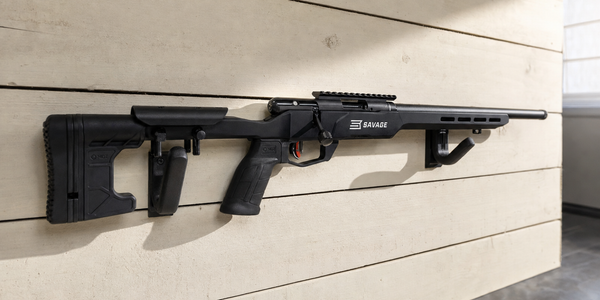
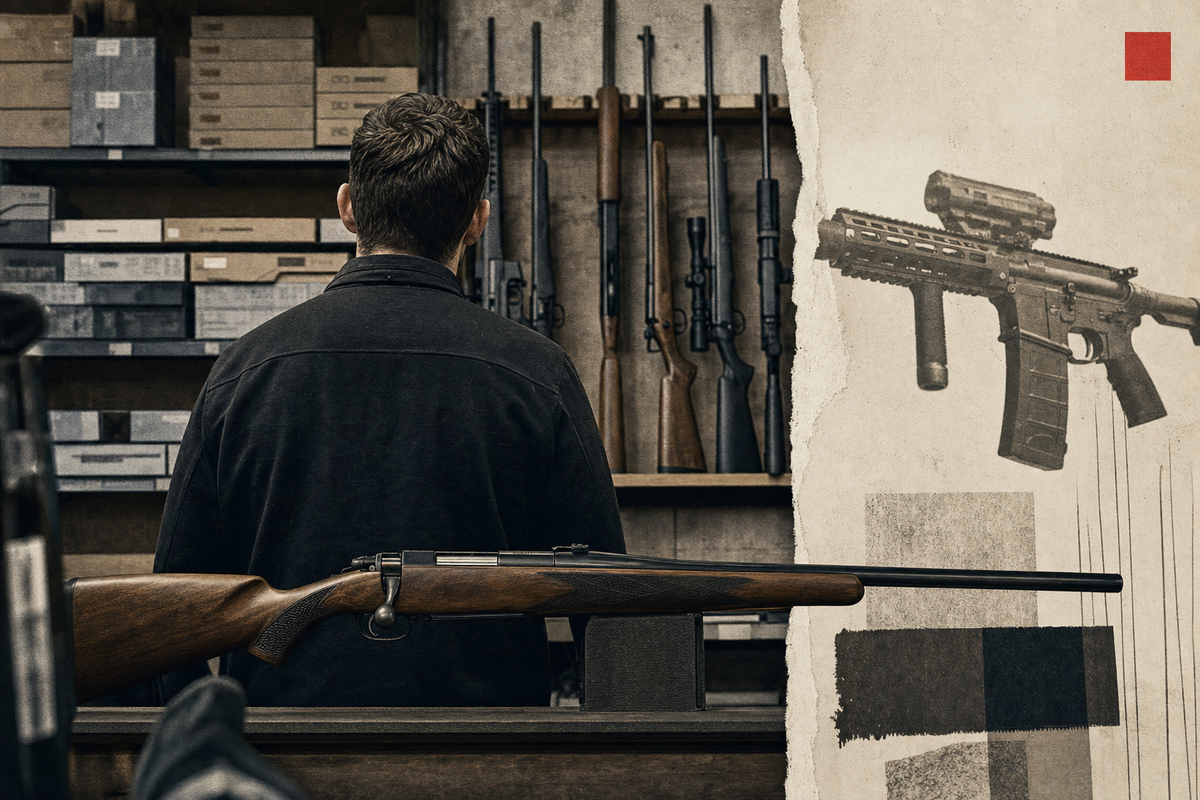
For a new Canadian shooter, that usually points toward a manually operated rifle: bolt, lever, or pump, chambered in something common enough to be found at multiple Canadian retailers without a treasure map. .22 LR, .223 Remington, .308 Winchester, 6.5 Creedmoor, .30-06 Springfield, or a similarly settled cartridge depending on the use case.
If the platform has been on Canadian shelves for years, if it is not trying to live beside a prohibited lineage, and if every gunsmith in the province knows how to mount glass on it, that is a feature. The first rifle is where a shooter learns zero, ammunition cost, range routine, and what kind of shooting still feels worth doing after the first dozen range days.
The interesting rifle can come later. It will still be interesting. It may even be better understood by then.
Classification risk is a gear attribute
One public example explains why this has become part of the buying decision. In July 2025, the Sterling Arms R9 MK1, a Canadian-designed pistol-calibre carbine sold as a lawful non-restricted rifle, was classified as prohibited in the FRT. Reporting at the time described retailers and owners caught with inventory and lawfully purchased rifles that could no longer be used or sold in the ordinary way.
That is not a review of the R9. I have no interest in pretending to have tested a rifle I have not tested. It is a worked example of the mechanism.
The RCMP's own classification page says only Parliament and the Governor in Council can change the classification criteria. It also says information can arise on inspection that influences how a firearm is classified. The law sets the criteria, but the assessment of a particular firearm can still move.
That movement is now part of the product. It belongs beside weight, magazine pattern, barrel length, stock interface, and price.
That risk profile is a terrible thing to make a first-year shooter carry.
Ottawa made boring valuable
Public Safety Canada's current buyback page says more than 2,500 makes and models have been prohibited since May 2020. The individual declaration period has ended, collection and compensation processes are expected to run from spring to early fall 2026, and owners must comply before the amnesty period now runs to the SCC appeals + 90-day endpoint. The Supreme Court OIC appeal is active, with Alberta, Saskatchewan, and Ontario all appearing as interveners.
That is the background music for every Canadian rifle purchase now. It does not mean panic. It does not mean every interesting rifle is doomed. It does mean pretending classification risk is separate from gear advice is unserious.
The opposing view is easy to understand. People want the rifles they were promised the lawful market could still produce: modern ergonomics, familiar controls, useful stocks, and something that does not feel built out of apology. Fair. A healthy firearms culture needs more than museum pieces and bolt actions.
But a first rifle is the first tool. It should build confidence, not turn the new shooter into a policy analyst before they have a decent data book.
Let the second rifle be interesting
The practical rule is simple: make the first rifle boring, and let the second rifle be interesting.
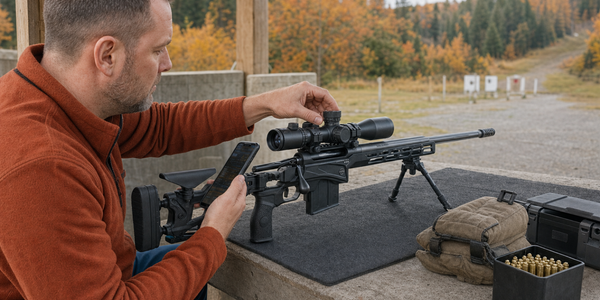
A boring first rifle gets shot. It gets zeroed, cleaned, carried to the bench, dragged through weather, fed different ammunition, and used often enough that the shooter learns what matters. It teaches hold, recoil, glass, ammunition, position, etiquette, and the private little humiliation of realizing the problem was not the rifle.
The interesting second rifle arrives when the shooter knows what they are buying into. By then, they can read a spec sheet with less optimism. They know whether the stock interface matters, whether the magazine question is a nuisance or a deal-breaker, and what classification risk feels like as ownership rather than an abstract argument.
That is the sequence I would give a new PAL holder standing at a Canadian counter or staring at a product page at midnight. Buy the rifle that lets you become a shooter first. Buy the exciting rifle when it has earned more than a thread.
Boring is not a lack of imagination. In Canada in 2026, boring is a hedge against someone else's.
Sources
- r/canadaguns, "Mfw a non Canadian or Turkish semi hits the market": https://www.reddit.com/r/canadaguns/comments/1tsz0gt/mfw_a_non_canadian_or_turkish_semi_hits_the_market/
- r/canadaguns, "Best 1913 stocks?": https://www.reddit.com/r/canadaguns/comments/1ttim4s/best_1913_stocks/
- Royal Canadian Mounted Police, "Firearms Reference Table": https://rcmp.ca/en/firearms/firearms-reference-table
- Royal Canadian Mounted Police, "Classifying and re-classifying firearms": https://rcmp.ca/en/firearms/classes-firearms/classifying-and-classifying-firearms?wbdisable=true
- Public Safety Canada, "Assault-Style Firearms Compensation Program": https://www.canada.ca/en/public-safety-canada/campaigns/firearms-buyback.html
- Supreme Court of Canada, docket 41859, "Canadian Coalition for Firearm Rights, et al. v. Attorney General of Canada": https://www.scc-csc.ca/cases-dossiers/search-recherche/41859/
- Yahoo News Canada / CBC News, Sterling Arms R9 MK1 reporting: https://ca.news.yahoo.com/calgary-based-firearms-manufacturer-shuts-205912322.html
- Canadian Sporting Arms and Ammunition Association, "Sterling Arms R9 MK1 Classified As Prohibited": https://www.csaaa.org/2025/07/07/sterling-arms-r9-mk1-classified-as-prohibited/
Keep the first PAL steps in order.
If this piece has you mapping the licence process, keep the official steps and follow-up notes together.
Use the Holdover PAL/RPAL First-Steps Checklist to keep the official forms, course booking, references, photo, fees, and follow-up notes in one place while you work through the process.
Safety note: the checklist is an orientation aid, not legal advice or a substitute for current RCMP/CFP/CFO guidance or instructor direction.