MDT's Scope Tube Mount, for *rings worth keeping*
MDT's separate scope-tube collar lets owners keep their existing rings. The Canadian listing is C$89.99; tube diameter and control clearance still matter.

Product research and opinion
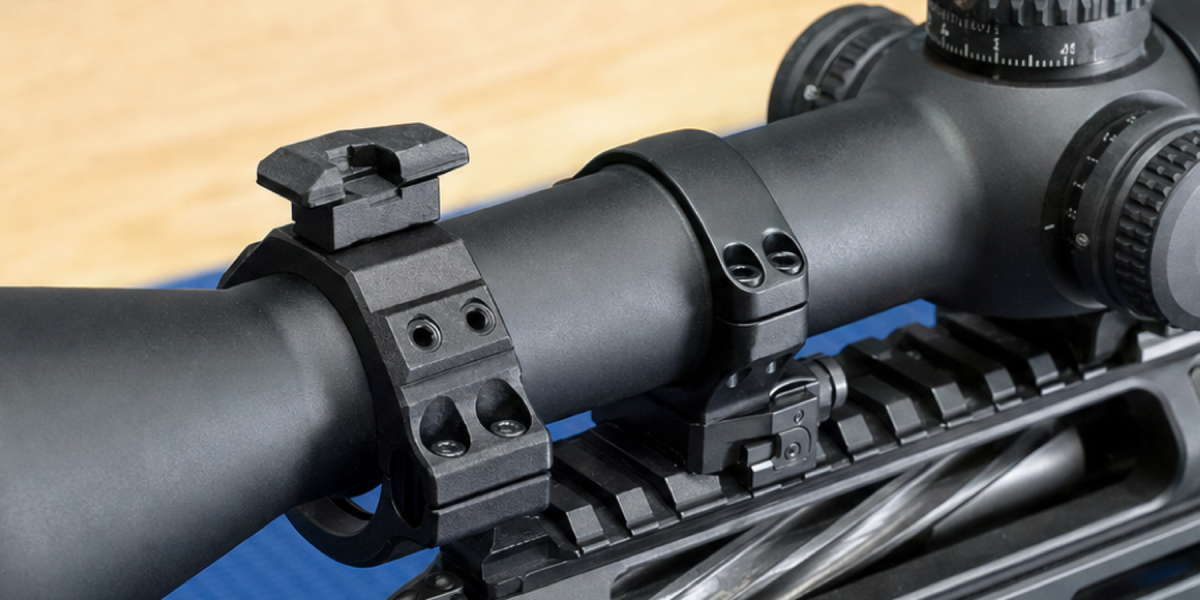
MDT's new Scope Tube Mount adds an accessory point around the optic's tube. An owner with satisfactory rings can keep them and give a compatible level, card holder, or other device a separate place to attach.
The manufacturer's announcement dated October 13 gives October 9 as the availability date. Its Canadian store lists the collar at C$89.99. That makes this a small, specific buying decision for Canadian shooters: whether an extra attachment solves a problem on the scope already in front of you.
The facts here come from MDT's current product information and Canadian listing; the judgement is about the arrangement those sources describe.
Good rings can stay
My Cadex Covert setup already includes a Vortex Strike Eagle and Vortex 34 mm Precision Riflescope rings. A new accessory would have to fit around that existing arrangement. I would want a reason to disturb it.
The separate collar interests me for that reason. It clamps onto the exposed tube and carries its own accessory interface. The primary rings continue supporting the optic. You can consider the attachment point as its own purchase, with the ring system you already chose still in the picture.
That is a more useful proposition than simply adding another small black component to a precision rifle. I can manage the small black components. Explaining why each one arrived takes longer.
For someone who wants a level near the viewing position or a convenient place for a card holder, the first question is where that device should sit. The answer depends on the space around the optic and how you use its controls. Choosing the attachment after answering that question gives the hardware a defined job.
MDT also describes a benefit when moving an optic: an accessory attached to the tube moves with it. Treat that as an attachment-location advantage. Alignment, fit, and zero after a change still need their own checks.
Two routes to an accessory point
MDT already sells Accessory Scope Ring Caps for its Elite Scope Rings and One-Piece Scope Mount. Those replace the upper caps on the compatible primary mounting system.
The scope-tube collar offers a different route. Its attachment goes around the tube, independently of the main rings. Someone with the compatible MDT system can compare both approaches. Someone using another ring brand can examine the collar's fit while retaining the main support system.
The kit includes the two-piece collar, a short V-Mount-to-Picatinny adapter, and six screws. The adapter provides an option for a compatible Picatinny accessory; the collar also has V-Mount locations. The particular device and its mounting interface still determine which connection you need.
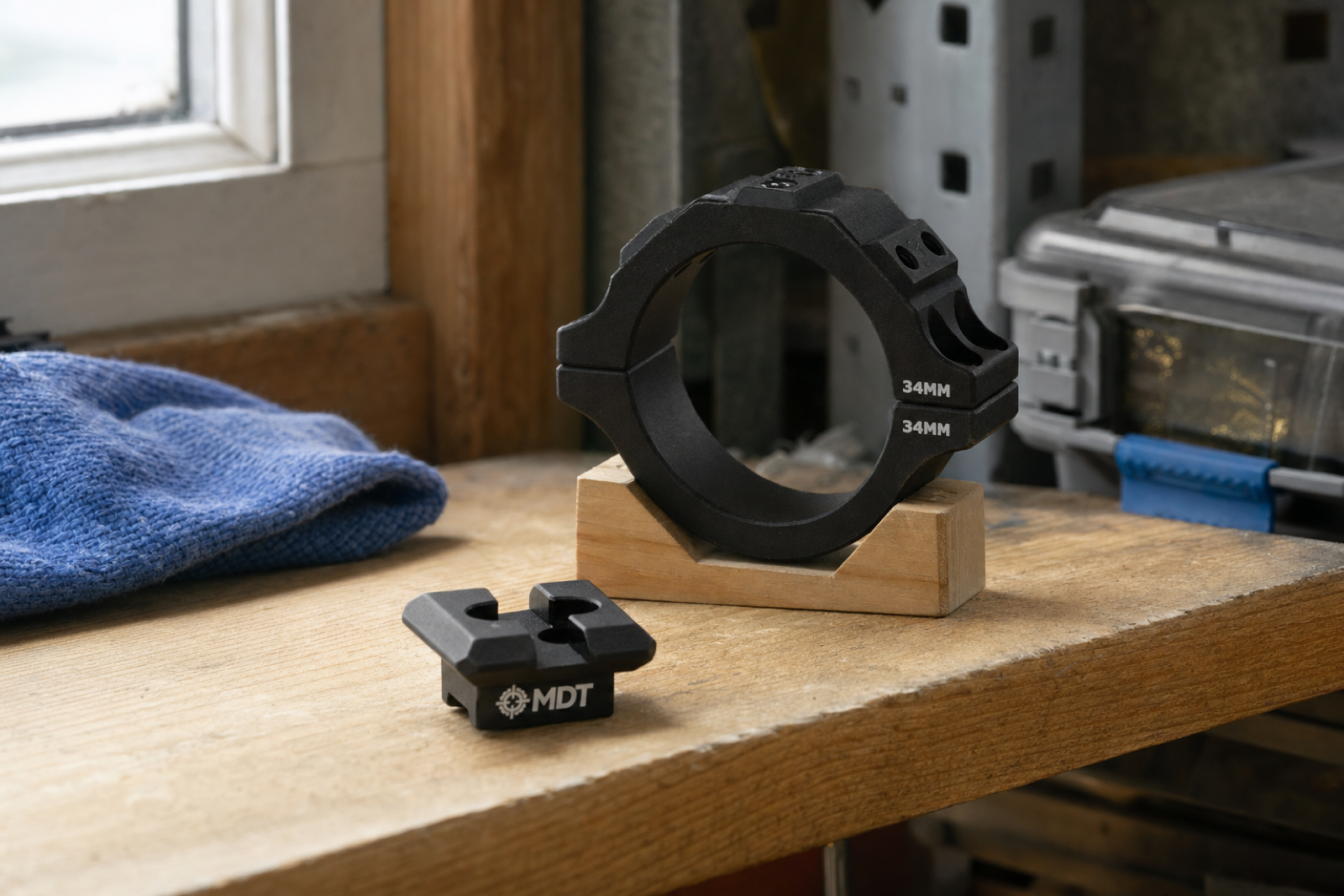
There is little value in buying an adapter first and discovering the intended accessory needs a different interface afterwards. I would write down the exact device, its attachment, and the position I want before ordering either caps or a collar. That is an ordinary compatibility check, and it can save another parcel of little parts.
Fit is the purchase
MDT offers 30, 34, 35, and 36 mm versions. Match the collar to the scope's tube diameter. The objective-lens size in an optic's name answers a different measurement question.
Diameter is only the beginning. You also need a suitable stretch of exposed tube and room to reach the controls. MDT's announcement tells shooters to choose the collar's orientation and mounting position with the turrets, parallax, illumination, and magnification controls in mind.
I would look at the proposed position from behind the scope, where the accessory will actually be seen. A fitting that looks tidy from the side can still put a device somewhere awkward to read or reach. The manufacturer sources establish the mounting choices; the owner has to judge the layout on the particular optic.
MDT lists 12-15 in-lb for this accessory's hardware. Keep that specification attached to this component. The scope and primary-ring makers' instructions govern their respective parts; this product page supplies no blanket permission to apply one torque value throughout the optical assembly.
Anyone needing an exact clearance answer should put the scope model and proposed accessory to MDT before buying. A list of four tube sizes cannot establish every possible combination of optic housing, ring spacing, and accessory.
A Canadian price to work from
On October 13, MDT's Canadian storefront showed C$89.99 for all four sizes, with each variant marked available in its public product data. Taxes, shipping, and the accessory you intend to attach remain separate purchase questions. Stock status can change.
The Canadian store identifies support in Chilliwack, B.C. It says in-stock orders are processed and shipped within one to two business days. That is the seller's despatch estimate; an actual arrival date depends on the order and destination.
For my existing ring setup, the collar earns a closer look if I have a specific device to place and a clear section of tube that suits it. I would begin there, then compare the available mounting routes. Keeping good rings is appealing. Giving the extra collar a useful job is what would justify the purchase.
Sources
- MDT announcement, The Tactical Wire, October 13, with October 9 availability stated.
- MDT Canadian Scope Tube Mount listing and Canadian variant data, checked October 13.
- MDT Accessory Scope Ring Caps, for the stated compatible primary mounts.
Keep the range notes worth reading later.
If this piece has you thinking about range time, keep the notes useful enough to read later.
Use the Holdover Range Bench Log Card to record rifle, optic, ammunition, distance, weather, zero, group notes, correction, and next test without turning a range trip into a memory test.
Safety note: the card is a note-taking worksheet, not shooting instruction, load data, legal advice, or a substitute for range rules, official guidance, manufacturer manuals, or qualified instruction.