Nine groups fill the firearms appeal's pending column
Five replies landed on July 27-28, yet nine private applicants remain pending in Canada's Supreme Court firearms appeal.

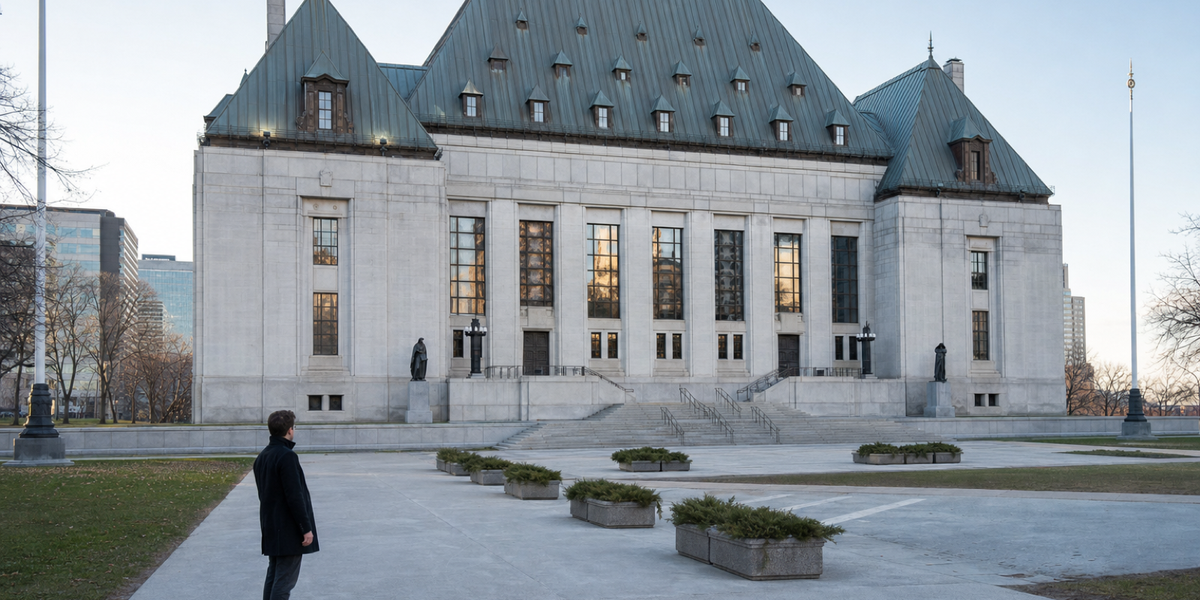
Opinion / Canadian Context. The Supreme Court docket changed again on July 28. Nine private applicants remain in the same status column: pending.
That word deserves more attention than the latest organization announcement. The official record for docket 41859 shows five completed replies dated July 27 and 28 from the Canadian Taxpayers Federation, International Practical Shooting Confederation Canada, Ontario Rifle Association, Safari Club International, and Canadian Shooting Sports Association.
Canada's National Firearms Association also filed a reply on July 27. The docket marks it incomplete because proof of service is missing. The Attorney General of Canada's response, dated July 23, was completed on July 27. The Canadian Coalition for Firearm Rights filed a letter-form response earlier.
Those entries move the intervention process forward. The public docket does not disclose the filings' substance. Admission still requires a Court order.
Nine applicants, several different lanes
The pending list is broader than a roll call of firearms organizations.
The Canadian Shooting Sports Association, IPSC Canada, Ontario Rifle Association, Canada's National Firearms Association, and Safari Club International bring obvious connections to sport shooting, ownership, ranges, or hunting. The Canadian Constitution Foundation and British Columbia Civil Liberties Association come from constitutional and civil-liberties work. The Canadian Taxpayers Federation has a public-spending lens. The Canadian Coalition for Gun Control approaches firearms policy from the other direction.
Their names establish identity. The motions themselves would establish what each applicant proposes to add, and those documents are not posted on the Court's case page. Responsible coverage has to stop at that line.
The breadth still matters. The appeal asks how far Cabinet's regulation-making power extends under section 117.15 of the Criminal Code. The Court's own summary highlights the statutory restriction concerning firearms with reasonable utility for hunting or sporting purposes and the question of unconstitutional vagueness. Those issues touch sport, regulated ownership, civil liberties, public administration, and the case made by gun-control advocates.
I have developed one deeply unglamorous habit while publishing Holdover: check the primary-source status column before repeating the headline. It has saved me from turning "asked to join" into "joined" more than once. Court dockets reward the same discipline as load labels. The smallest line can govern the whole reading.
Active and pending are different jobs
Three provincial attorneys general already appear as active interveners: Saskatchewan, Alberta, and Ontario. Their route into the case follows notices of intervention respecting the constitutional question. A July 9 Court order also gives each province up to 10 minutes of oral argument at the hearing.
The nine private organizations occupy a different procedural position. They filed motions for leave to intervene and now wait for the Court's decision. The current Rules of the Supreme Court of Canada give an appeal-stage applicant four weeks after the appellant's factum to make that motion. The Court's filing guide treats the motion, response, and reply as separate steps.
A completed reply closes a filing loop. The order still decides admission, scope, page limits, and any oral time.
The Court has also published a useful notice on interventions. Interveners are supposed to offer useful perspectives that differ from the parties' submissions. They cannot introduce new evidence, expand the case, or turn the appeal into their own dispute. The Court also watches for imbalance.
That is the strongest answer to anyone treating nine applications as nine automatic endorsements of one side. Intervention serves the Court's need for distinct legal assistance. An applicant's preferred outcome does not give it control of the appeal.
The sporting voice has to earn its place
Holdover is plainly pro-ownership. The sporting organizations on this list should be able to explain, with precision, how delegated prohibition affects licensed people, clubs, disciplines, businesses, and firearms that had lawful sporting uses before Cabinet changed their legal status.
That perspective belongs in a case whose published questions expressly mention reasonable utility for hunting and sport shooting. It still has to be useful, legally relevant, and different from the appellants' case. Repetition will not help the Court, even when the repeated point is one owners strongly support.
The civil-liberties applicants may sharpen the vagueness and state-power issues. The taxpayer applicant may identify public-administration consequences. The gun-control applicant can put the strongest opposing policy perspective before the judges. A serious appeal benefits when the Court receives the best version of each relevant argument and keeps every participant inside the legal issues it agreed to hear.
Licensed owners should want that discipline. The federal prohibition changed the status of property people acquired lawfully, and the resulting amnesty now runs on a clock tied to these four joined appeals. A durable judgment needs a record strong enough to withstand agreement and disagreement alike.
The hearing remains scheduled for November 9. Before then, the Court will decide which private applicants may file factums and whether any receive oral time. Until that order appears, the accurate count is simple: three active provincial interveners, nine pending private applicants.
Read the names. Then read the status column.
Sources
- Supreme Court of Canada, docket 41859, Canadian Coalition for Firearm Rights, et al. v. Attorney General of Canada, accessed July 29, 2026.
- Supreme Court of Canada, Notice to the profession: Interventions, November 2021.
- Department of Justice Canada, Rules of the Supreme Court of Canada, rule 56, current to May 26, 2026.
- Supreme Court of Canada, Guidelines for preparing documents to be filed with the Court, accessed July 29, 2026.
- Department of Justice Canada, Criminal Code, section 117.15, current to May 26, 2026.
The amnesty file is still moving.
If this piece sent you back to government pages, do not wait for the next portal, Gazette, or court move to find you by accident.
The Dispatch follows Public Safety, RCMP, Canada Gazette, court, compensation, collection, and amnesty updates so the next change comes with the source that moved.
Safety note: the tracker is a worksheet for source hygiene, not legal advice or a substitute for current official guidance.