Ottawa found the owners, then lost the *who*
Q-1053 shows the buyback can find licensed owners well enough to process them, but not readily describe who is actually in the program.


Update, June 9, 2026. Public Safety Canada has extended the relevant amnesty period. The old the former fixed deadline date referenced below is no longer the operative expiry; the amended expiry is 90 days after the Supreme Court of Canada renders its decision.
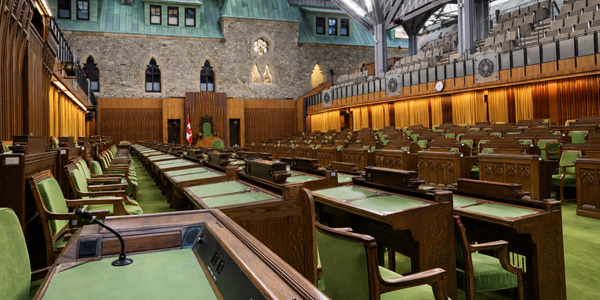
Opinion. The useful word on the June 2 House Order Paper was "illegal."
A motion listed that day called for federal action on extortion tied to organized crime or the use of an illegal firearm. Whatever one thinks of the motion's politics, that phrase points in the right direction. Illegal firearms are a public-safety problem. Organized crime is a public-safety problem. Extortion crews are a public-safety problem.
Licensed owners are a different population.
That distinction should be obvious in a country with PALs, RPALs, Chief Firearms Officers, continuous eligibility screening, restricted registrations, transport rules, and a federal agency that can phone you about a form while somehow sounding both helpful and mildly disappointed.
Then Q-1053 landed.
The question was basic
Q-1053 was asked by Conservative MP Alex Ruff on April 13 and answered on May 29. It was not a request for names, addresses, serial numbers, safe locations, or private owner histories. It asked the government to describe the participant population inside the Assault-Style Firearms Compensation Program.
How many registered participants had a criminal record? How many had restricted PALs? How many were on an initial licence versus a renewed licence? How many were members of the Canadian Armed Forces, the RCMP, veterans, or federal public servants? How many were Indigenous owners licensed under the Aboriginal Peoples of Canada Adaptations Regulations?
Those are fair questions. They are not anti-safety questions. They are program-governance questions.
Public Safety Canada's answer for the criminal-record and federal-affiliation parts was the familiar federal paragraph: the department did a preliminary search, the detail was not systematically tracked in a centralized database, and producing a comprehensive answer would require manual collection that could not be completed in the time allowed without risking incomplete or misleading information.
The RCMP gave the same answer in its own lane. For the PAL/RPAL and Indigenous-licensing questions, it said the information was not in one centralized database. Relevant data sat between Public Safety's compensation program and the Canadian Firearms Program's licensing records, and a complete answer would require collecting data from Public Safety and cross-referencing it with the Canadian Firearms Information System.
In plain English: the program can process owners, but it cannot readily answer Parliament's basic "who is in the program?" question.
Illegal is not a synonym for licensed
This is where the June 2 Order Paper matters.
When Parliament talks about extortion, organized crime, and illegal firearms, it is talking about the population that actually belongs at the centre of public-safety policy. Statistics Canada's 2024 Juristat release says 80% of people accused of firearm-related homicides did not hold a valid licence for the classification of firearm involved. It also says nearly six in 10 people accused of firearm-related violent crime in 2024 had recent police contact for at least one prior violent crime.
That is not the same world as a licensed owner waiting for a portal message about a firearm that was lawful when acquired and prohibited later by regulation.
The RCMP's 2024 Commissioner of Firearms Report counted 2,412,122 valid PALs and 13,505 valid minor's licences at the end of 2024. It describes a program built around licensing, registration where required, safety-course standards, continuous eligibility monitoring, inspections, range approvals, and support for law enforcement.
That is the regulated side of the file. It is visible by design.
The federal buyback leans hard on that visibility. Public Safety's current program page says the individual declaration period has ended, collection and compensation are expected to run from spring to early fall 2026, and owners must dispose of or permanently deactivate affected firearms before the SCC appeals + 90-day amnesty endpoint or risk criminal liability.
So the owner is visible enough to declare, wait, be assessed, be messaged, sign, surrender, validate, and face a criminal deadline.
But not visible enough for the program to answer who is participating without a manual scrape.
That is not comforting.
New shooters see the bargain early
New shooters often discover the political file before they discover the fun part of the sport.
Before a person has figured out which .22 ammunition their rifle actually likes, or why optics become a second mortgage with turret caps, they run into the Canadian paperwork stack. PAL. RPAL. Transfer. FRT. OIC. Amnesty. Compensation. Portal. Declaration. Collection.
That is a strange way to welcome someone into what should be a practical, disciplined, occasionally expensive hobby.
But there is one useful lesson in it: Canadian ownership is a record-keeping culture.
At my bench, if I cannot tell which tray is which, I do not call it data. I call it a problem I created for myself. The same goes at the range. If I change three things and then declare the group meaningful, the target has every right to laugh at me. Quietly, of course. Targets have manners.
The discipline is boring because the discipline works. Label the variable. Know the source. Keep the record. Do not pretend a result is more precise than the process that produced it.
Government should not get a lower standard than a reloading bench.
The ledger should survive a question
The strongest argument for the federal compensation program is easy to state fairly. The government believes certain firearms are unsuitable for civilian ownership, and compensation gives eligible owners a path to comply with the law.
That is the best version of the other side's argument.
The problem is not that the program has privacy limits. Of course it does. No serious person is asking Ottawa to publish private owner details. The problem is that Q-1053 asked for aggregate counts on a major public-safety program, and the answer was effectively: not centralized, not readily cross-referenced, not possible in time.
That matters because these counts are not trivia.
If the program is about public safety, then participant composition matters. If criminal records are relevant to the public argument, count them. If the program disproportionately touches veterans, serving members, public servants, Indigenous owners, restricted licence holders, first-time licence holders, or long-time renewed licence holders, Parliament should be able to know that in aggregate.
The public does not need names.
It does need enough information to know whether the program understands the people it is burdening.
Public safety starts with the right population. Illegal firearms. Organized crime. Repeat violent offenders. Smuggling. Actual violent use.
The licensed owner is not automatically innocent of every possible problem. No population is. But the licensed owner is already the person the Canadian system can see, screen, renew, refuse, revoke, message, inspect, and regulate. That is why the buyback found him.
It should not be why the buyback chose him.
If Ottawa can find the owner, it can count the who. If it cannot, the program is not as serious as its deadline.
Sources
- House of Commons, Order Paper and Notice Paper No. 127, June 2, 2026.
- House of Commons, Q-1053 response, tabled May 29, 2026 as Sessional Paper 8555-451-1053.
- Rebel News, Government unable to say if criminals are participating in gun confiscation program, June 1, 2026.
- Public Safety Canada, Assault-Style Firearms Compensation Program, page details May 20, 2026, accessed June 3, 2026.
- Royal Canadian Mounted Police, 2024 Commissioner of Firearms Report.
- Statistics Canada, Samuel Perreault, Firearms and violent crime in Canada, 2024, released April 21, 2026.
The amnesty file is still moving.
If this piece sent you back to government pages, do not wait for the next portal, Gazette, or court move to find you by accident.
The Dispatch follows Public Safety, RCMP, Canada Gazette, court, compensation, collection, and amnesty updates so the next change comes with the source that moved.
Safety note: the tracker is a worksheet for source hygiene, not legal advice or a substitute for current official guidance.