A promise to scrap *SIAF*, days before Quebec votes
The PCQ promises to abolish SIAF and leave the buyback. We examine the existing law, Quebec’s collection agreement and the duties owners still have.

The Conservative Party of Quebec has put two firearms promises on the same page: abolish SIAF and refuse to participate in the federal buyback. Its justice and public-security platform, presented on September 29, would redirect the savings toward protecting police and public-security budgets. With Quebec voting on October 5, the proposal deserves a close read.
One promise concerns the provincial law covering ordinary non-restricted rifles and shotguns. The other concerns Quebec's part in collecting federally prohibited firearms. Each would require different work after the election. Owners still have today's rules to follow while politicians campaign on tomorrow's.
Opinion. Holdover endorses no political party.
The registry has a law behind it
SIAF is Quebec's Firearms Registration Service. The registry it administers is the FIAF. Under the Firearms Registration Act, non-restricted firearms present in Quebec generally require registration, subject to the Act's exceptions. Federal registration continues to govern restricted and prohibited firearms.
Section 3 puts the application obligation on the owner when taking possession. Section 17 sets a $500-to-$5,000 fine for an individual possessing a firearm that should be registered and is not. Registration carries no fee under section 26, although owners still have the application and recordkeeping to deal with.
The National Assembly adopted the legislation on June 9, 2016, by 99 votes to eight; it received assent the next day. A government pursuing repeal would need to put a change through the legislature and bring it into force. The promise itself gives an owner no exemption from the existing law.
For an Ontario owner, the duration of the rifle's stay matters. Section 2 exempts a firearm present in Quebec for 45 days or less. A weekend match can fit that exception. A longer stay can raise a registration obligation even if its owner continues living in Ontario. Permanent relocation is only one possible reason a firearm might remain there.
Quebec has already signed a collection agreement
Ottawa and Quebec announced a contribution agreement on January 7, with up to $12.4 million for Quebec's costs in coordinating collection under the federal compensation programme. The announcement described police services gathering firearms without diverting resources from other policing priorities.
That funding ceiling tells us what Ottawa agreed to make available. It does not establish how much Quebec has spent or how much a withdrawal would save. Anyone pricing the PCQ promise needs those further numbers, along with the terms for ending or changing the agreement.
The published schedule also needs care. Public Safety's collection timeline lists June through September 2026 for Quebec and says dates are approximate and may change. Its September 23 guidance for individuals still describes collection and compensation extending through fall 2026. September ending proves that the estimate has aged. It gives us no completed collection count.
Quebec accounted for 10,060 declared firearms in the federal June 8 table. Those declarations establish neither completed pickups nor payments. To explain what withdrawal would change, a future government would need to say what remains outstanding and how it would treat people already moving through the process.
Federal prohibitions would continue unless changed through the relevant federal legal process. The current amnesty order ties its endpoint to the 90th day after the last of four specified Supreme Court appeals ends by judgment, dismissal or discontinuance. A provincial decision about collection participation leaves that federal rule in place.
A count can answer only so much
Quebec makes a serious case for its registry. Its explanation of the file describes police use in domestic-violence responses, suicide prevention, seizures and investigations. Information about firearms can matter during those interventions. That is the strongest reason to defend keeping a record.
Quebec has also published registration figures. In its 2024–25 budget responses to the National Assembly, the public-security ministry reported 1,624,482 non-restricted firearms entered since the registry began, as of February 29, 2024. The same response said the total number present in Quebec was difficult to estimate.
That cumulative figure cannot supply a current compliance percentage, or tell us how often information changed a police response. The PCQ says the programmes do nothing to curb crime. Establishing that claim would require outcome evidence too. A campaign document can state a conclusion much faster than anyone can test it.
My firearms licence arrived after roughly ten months of waiting following the application. I accept the training, references and serious vetting that belong to ownership. That experience also makes me want a clear explanation for each additional obligation. The RCMP describes continuous eligibility screening throughout the licence term. Quebec's separate firearm record deserves scrutiny of its additional benefits and the work it asks of owners.
Removing an obligation that cannot justify its cost would be worthwhile. The useful comparison includes administration, owner effort and demonstrated police benefits. Counting entries alone leaves that judgement unfinished.
The documents to watch after Monday
For now, owners register firearms when the existing provincial law requires it. People in the federal compensation process still need to follow their programme notices and the applicable federal rules. An election promise changes neither obligation on its own.
After the vote, the useful documents would be repeal or amendment text with an effective date, and a clear account of any change to Quebec's collection agreement. They should explain the treatment of registry records and outstanding collection appointments. Those details would let owners see exactly what relief a government intends to deliver.
Follow verified Canadian ownership-policy developments in The Dispatch.
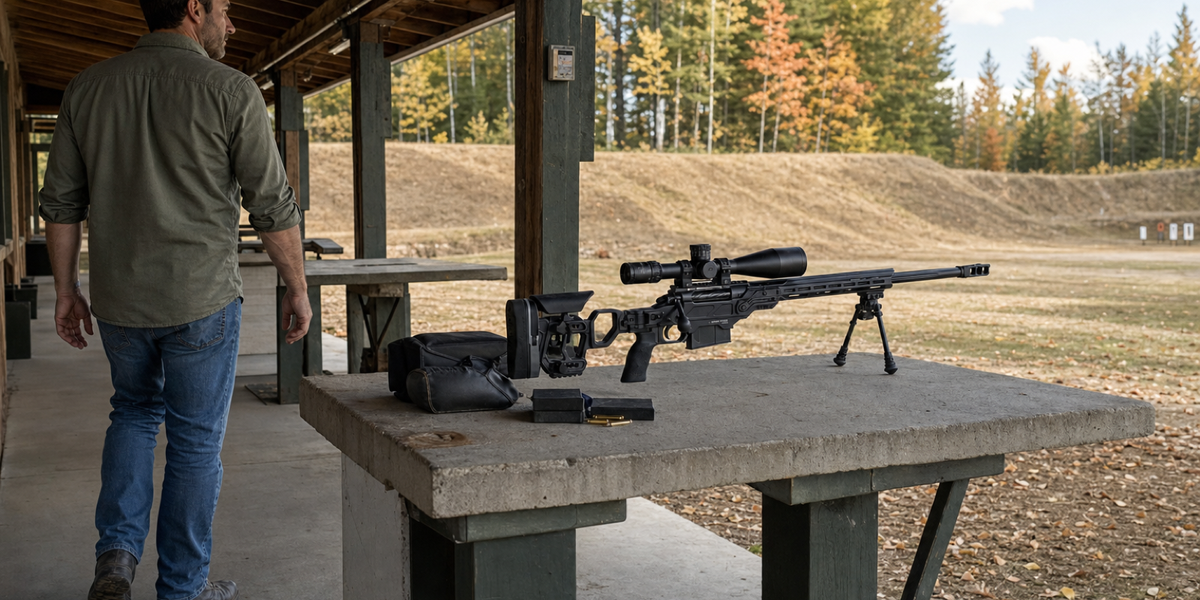
Feature photograph: generated illustration of a fictional Quebec club member with an unbranded bolt-action rifle. No actual person, club, event or political affiliation is depicted.
Sources
- Parti conservateur du Québec, 2026 justice and public-security platform, PDF page 3.
- La Presse Canadienne, September 29 campaign report.
- Élections Québec, October 5 polling day.
- LégisQuébec, Firearms Registration Act, sections 1–3, 17 and 26; Assemblée nationale, Bill 64 history.
- Québec, owners covered and registry explanation.
- Ministère de la Sécurité publique, 2024–25 estimates responses, question 038, PDF page 51.
- Public Safety Canada, Quebec agreement, estimated collection dates, individual next steps, and June 8 declarations.
- Canada Gazette, SOR/2026-114.
- RCMP, 2025 Commissioner of Firearms Report.
The amnesty file is still moving.
If this piece sent you back to government pages, do not wait for the next portal, Gazette, or court move to find you by accident.
The Dispatch follows Public Safety, RCMP, Canada Gazette, court, compensation, collection, and amnesty updates so the next change comes with the source that moved.
Safety note: the tracker is a worksheet for source hygiene, not legal advice or a substitute for current official guidance.