RCBS ChargeMaster Link *powder dispenser review*
The RCBS ChargeMaster Link made my reloading bench faster than a manual measure and separate scale. It also made charge confidence feel more negotiable than it should.

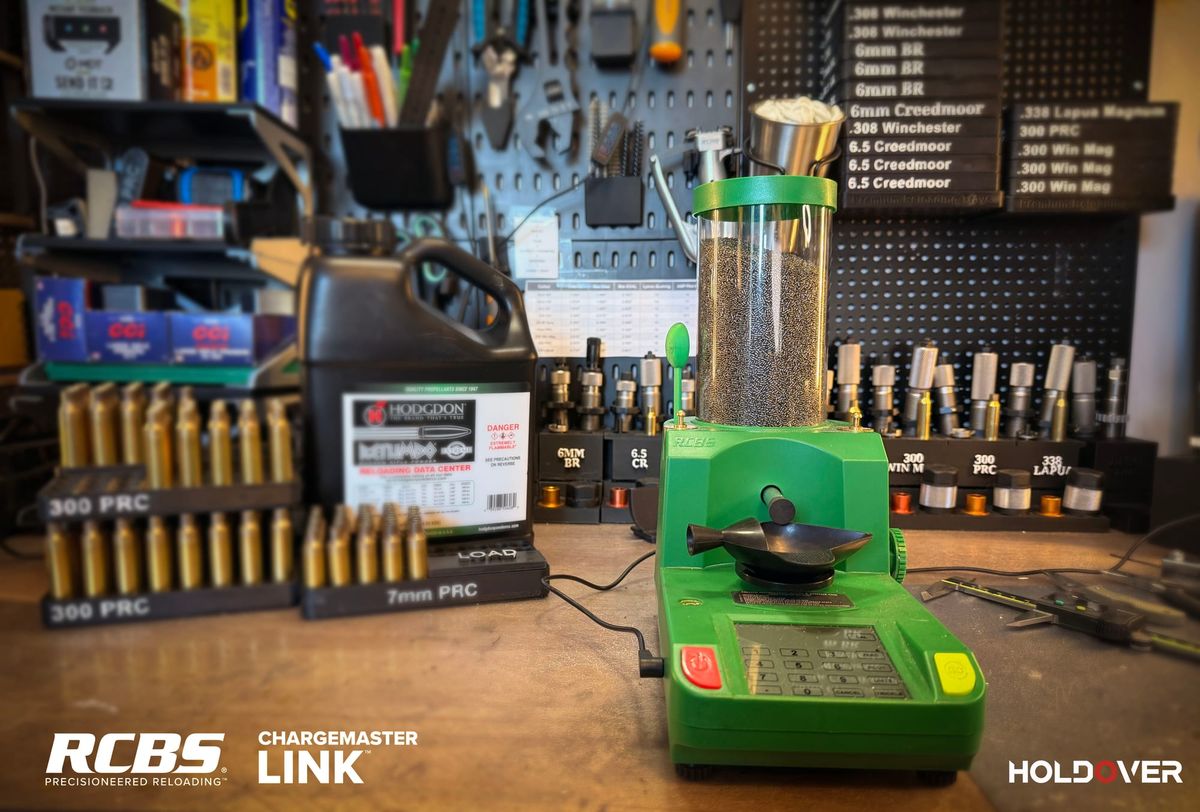
A welcome upgrade that never quite earns trust.
I bought the RCBS ChargeMaster Link because I had already learned that a separate powder measure and scale can make reloading feel like clerical work with gunpowder.
That was early in my handloading life. I had started with an RCBS Rebel starter kit and the older powder-dispensing routine. It worked, in the way many bench tools "work" if you are willing to move one small object between stations while quietly questioning your choices.
Then I saw the ChargeMaster Link at Bass Pro. I did not build a spreadsheet or compare owner threads for three evenings. It was there. It was RCBS green. It promised to dispense and weigh in one unit. The price was close to C$600, which was not an impulse-buy number, but I figured I was in this for the long haul.
I still think that instinct was partly right. The Link is a welcome upgrade from a manual powder measure and a separate scale. It is also the first reloading tool I bought that made me think the category is due for a serious 21st-century intervention.
Holdover Score
Owner review. RCBS ChargeMaster Link model 98944. Canadian handloading bench use. Equal weighting.
A useful first electronic dispenser if speed is the problem, but not a bench tool I would buy as my final answer for precision handloading.
Five reloading-tool criteria, equal 20% weighting, whole-number criteria, overall rounded to one decimal.
RCBS advertises 0.1-grain accuracy and the Link usually does the job, but frequent post-dispense display shifts and drift undermine confidence.
Warm-up, repeated calibration, two 50-gram weights, basic menu navigation, and app reliance make setup feel older than the product category should.
Compact, portable, and serviceable enough, but the segment display, interface, and powder-retention areas do not feel premium at the Canadian price.
A meaningful upgrade from manual dispensing and separate weighing, especially for larger batches, but environmental sensitivity and cleanup interrupt the advantage.
Current Canadian price can be substantially below what I remember paying, but value depends on accepting the confidence and interface compromises.
What it gets right
The best thing about the ChargeMaster Link is that it makes a tedious workflow less tedious. On a real bench, that matters.
If you are dispensing powder with one device, moving the pan to a separate scale, waiting for the reading, adjusting, checking again, then repeating the whole routine for a batch, the Link feels like progress. It combines dispensing and weighing, tucks into different corners of the bench, and does not demand a permanent altar in the loading room.
RCBS lists the Link as a Bluetooth-enabled electronic powder dispenser with 0.1-grain advertised accuracy, 2,000-grain capacity, a 350-grain dispensing range, and a 16-segment LCD touchscreen display. The company also says most standard charges under 60 grains can be dispensed in less than 30 seconds. That matches the basic appeal. For batch loading, especially if you are not doing a slow trickle-up routine by hand, it saves time.
It is also green in the very RCBS way. If your bench already looks like an RCBS catalogue had a productive afternoon, it fits right in. If your bench leans another colour, it announces itself like farm equipment at a wedding. Some of us apparently need our tools to look like they could also bale hay.
The number should not move after the job is done
My biggest issue is confidence.
The Link will dispense a charge, reach the target on screen, then switch to a session-count display before returning to the weight reading. Too often, when it comes back, the number is different. It reaches 85.0, flips away, returns, and now shows 85.3.
I am not saying powder magically appeared in the pan while the screen was busy counting. I am saying the interface makes a completed charge feel unfinished. That is a problem for a device whose main job is to remove doubt.
To be fair, electronic scales are sensitive instruments. RCBS's manual says the scale should warm up before calibration, be calibrated before use, and be recalibrated if temperature changes by more than a few degrees. It also names non-level surfaces, off-centre weights, jarring, and static as causes of inaccurate readings. A Canadian Gun Nutz thread from January 2025 shows the same split you often see with this category: one owner was furious about overthrows, another said his worked well with Varget, and another pointed back to level, air movement, and unstable surfaces.
That context matters. It does not fully rescue the experience.
On my bench, the Link is fussy enough that I often turn off nearby sources of air or vibration before I trust it. Portable air conditioner, fan, music speaker, whatever else is making the room feel less like a cave - all of it can make the numbers wander. Watching 85.1 become 85.2, then 84.9, then 85.3 makes a person wonder how much confidence costs in the next model up.
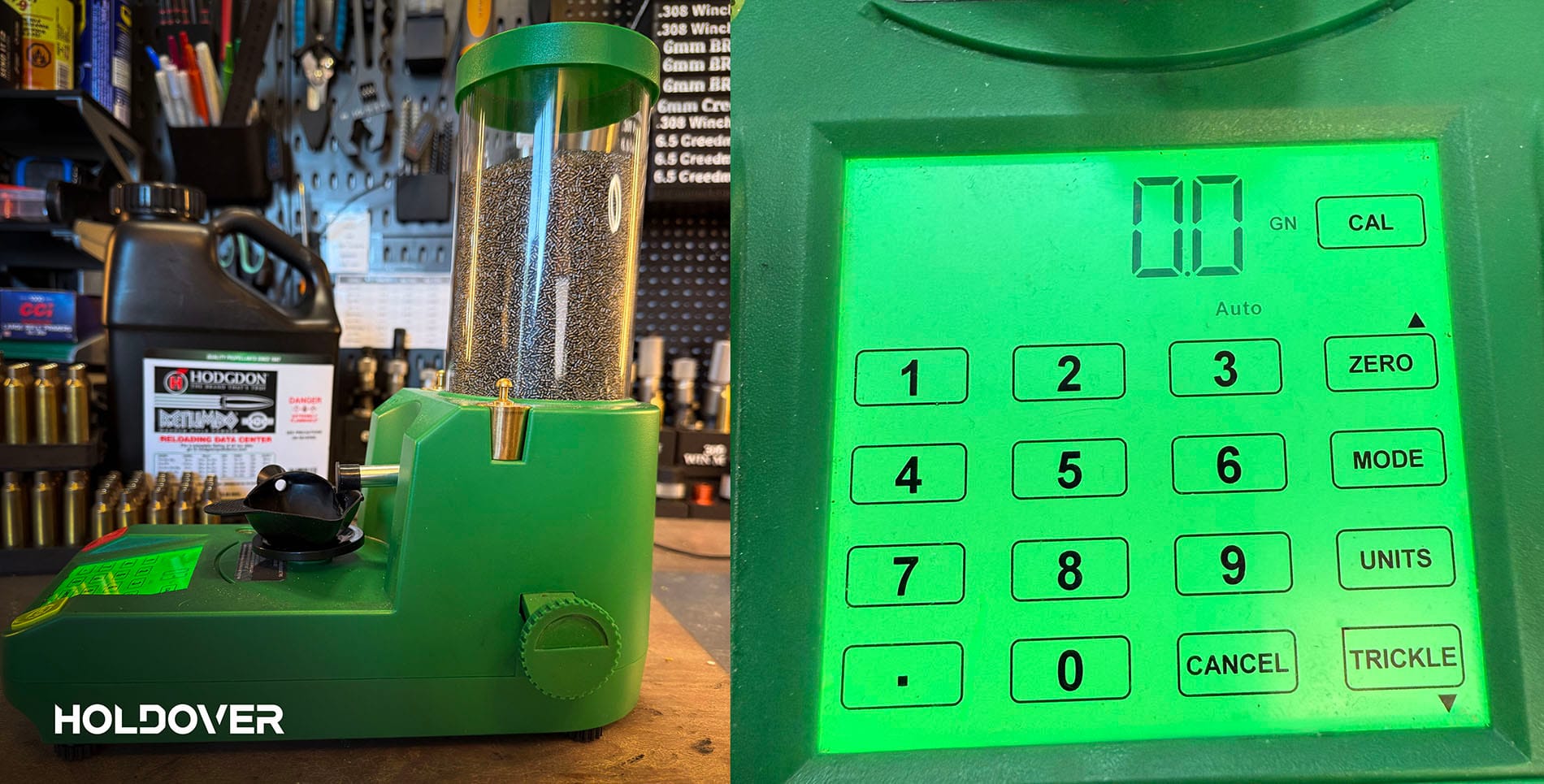
Calibration feels older than Bluetooth
The calibration routine is not hard. It just feels old for a Bluetooth electronic dispenser.
The manual calls for a warm-up, then calibration without the powder pan on the platen. The process uses two supplied 50-gram weights: first one weight, then both together, then back to the powder pan and zero. Mechanically, I understand the point. Emotionally, moving little calibration weights on and off a powder platform in 2026 feels like asking a smart thermostat to prove itself with a sundial.
The app helps. The RCBS Reloading App can guide calibration, control the dispenser, select auto or manual mode, track thrown charges, and note overthrows or underthrows. It is a genuine plus because the unit's own interface is not pleasant. It is also part of the indictment. I should not need to pull out my phone to make full use of a scale that already has a screen and controls.
RCBS calls it a 16-segment LCD touchscreen display. In plain language, it feels closer to a calculator or alarm-clock display than to a modern interface. A reloading tool does not need to feel like an iPad. But when a simple configuration change, like turning auto-dispense on or off, takes longer than it should because the menu is trapped inside segmented characters and button sequences, dated design becomes a workflow issue.
The cleanup is not as tidy as the footprint
The Link's compact body is useful until you start changing powders.
There are enough little places for powder to hang around that I never feel the emptying process is as clean as it should be. RCBS includes a quick-drain process in the manual and tells the user to clean the reservoir with the supplied brush. It also notes that powder can get caught in the tube seals and recommends removing and cleaning them when finished.
That is not a scandal. For someone who uses one powder for a long session, it may be a small complaint. For someone switching powders and wanting a clean reset, it matters. I do not want yesterday's grains freelancing in the next batch.
Who I would recommend it to
If you are coming from a manual powder measure and a separate scale, the ChargeMaster Link is absolutely an upgrade. It is faster. It is compact. It can make larger batches feel less like punishment. If the price is closer to current Canadian sale listings than to what I remember paying, the value case gets better.
But I would not recommend it as the final answer for a precision handloading bench. Not for me. Not at the price I paid.
The person who should buy it is the handloader who wants a first electronic dispenser, understands that bench environment matters, is willing to calibrate carefully, and can live with a dated interface because speed is the main pain point. The person who should skip it is the one who already knows that confidence is the main pain point.
That is where I landed. I do not hate the ChargeMaster Link. It got me away from the old workflow, and that counts for something. I just do not love it.
My next dispenser needs to feel less like a calculator from the early 1990s that discovered Bluetooth late in life. It needs to make the number feel settled, empty cleanly, behave around normal bench life, and stop making me wonder whether turning off the music improved my ammunition.
Maybe reloading is never supposed to feel fully modern. The bench has always had a little abacus energy hiding under the precision language. Still, this category is ready for someone to do better.
The ChargeMaster Link is not the tool I regret buying. It is the tool that taught me what I want to stop tolerating.
Sources
- RCBS, ChargeMaster Link Electronic Powder Dispenser, accessed June 25, 2026.
- RCBS, ChargeMaster Link instruction manual, accessed June 25, 2026.
- The Shooting Centre, RCBS ChargeMaster Link Electronic Powder Dispenser, accessed June 25, 2026.
- Apple App Store, RCBS Reloading App, accessed June 25, 2026.
- Google Play, RCBS Reloading App, accessed June 25, 2026.
- Canadian Gun Nutz, RCBS Chargemaster Link review, posted January 24, 2025, accessed June 25, 2026.
Set up the bench before the first mistake.
If this piece has you thinking about a first reloading bench, slow the buying part down and make the safety/process part visible.
Use the Holdover Reloading Bench Setup Checklist to track manuals, press, dies, scale, calipers, case prep, labels, storage, bench layout, safety routine, and what still needs an experienced second look.
Safety note: the checklist does not provide load data, recommend charge weights, teach reloading, or replace current published manuals, manufacturer instructions, qualified instruction, or applicable law.