Section 23, from the seller's side of the table
Canada recorded 421,022 reference-number requests in 2025. Firearms Act section 23 puts the request, identity check, and 90-day clock on the seller's side.

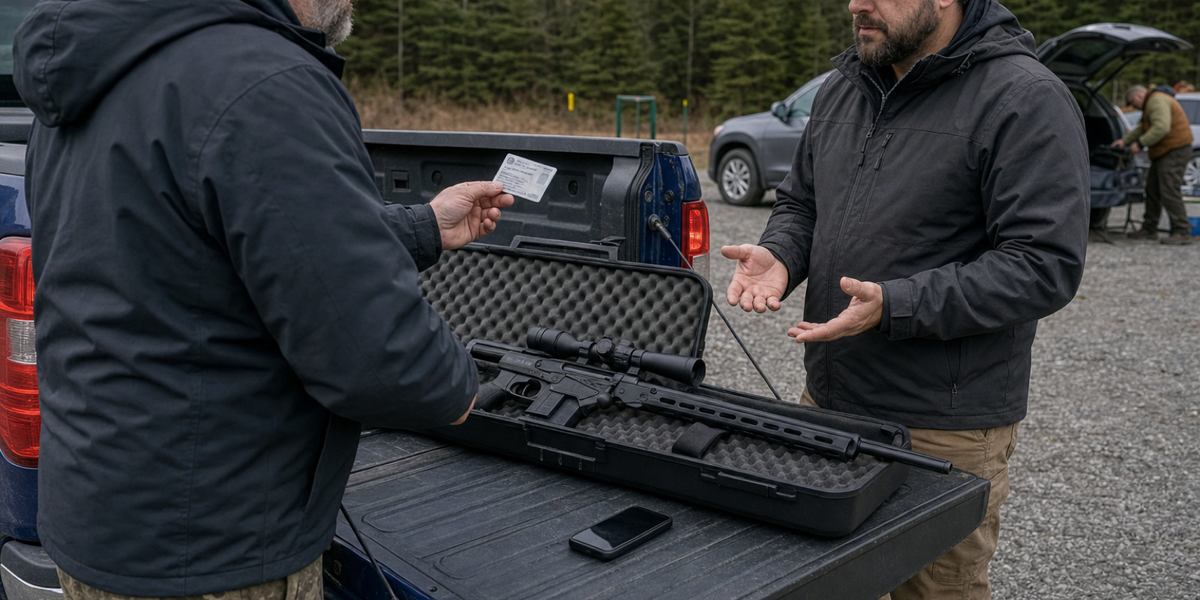
The 2025 Commissioner of Firearms Report records 421,022 requests for reference numbers on non-restricted firearm transfers. Every request starts on the seller's side of the deal.
The total makes one procedural detail worth getting right. In a private sale, the buyer supplies licence information. The seller establishes identity, asks the Registrar for the number, and waits for it to issue before the firearm moves.
Holdover produced the feature as a fictional private-transfer identity check using current official firearm-family references. The people, rifle, vehicle, and session do not document an actual sale.
Section 23 assigns the request
Firearms Act section 23 sets three conditions for transferring one or more non-restricted firearms. The buyer must hold a licence authorizing acquisition and possession of a non-restricted firearm. The Registrar must have issued a reference number at the transferor's request. That number must remain valid when the transfer takes place.
The next subsection gives the buyer the opening job: provide the prescribed licence information so the transferor can make the request.
Section 23 also covers non-restricted transfers beyond private individual sales. This article stays with the familiar person-to-person deal, where the wording can feel counterintuitive. The buyer finds the listing, asks the questions, arranges the drive, and arrives with the money. When the legal transfer begins, the person taking the money becomes the person responsible for the request.
I buy most of my firearms online. The transaction can feel nearly finished before two people share a parking space. At that late point, the seller still has to establish who holds the licence and request the number.
The identity check comes first
The Conditions of Transferring Firearms and Other Weapons Regulations supply the practical details. The buyer provides the information shown on the front of the licence. The seller then takes reasonable steps to establish that the buyer is the licence holder.
In person, the regulation calls for comparing the licence photograph with the person standing there. For a transfer completed at distance, the same photo-to-person comparison can happen by video, which the RCMP gives as an example. If that comparison cannot be made, the regulation allows the seller to compare the licence information with another piece of photo identification issued by a federal, provincial, or municipal government.
A licence photograph sent from an unknown number leaves the central question unanswered. It shows a card. The regulation asks the seller to establish that the person in the deal holds it.
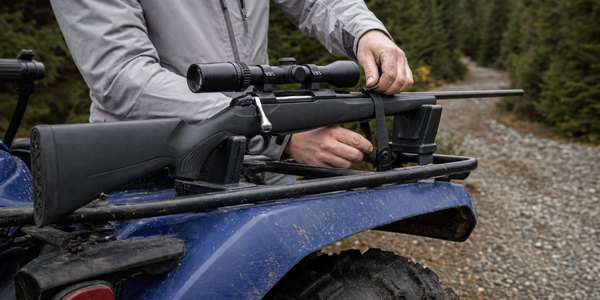
The feature photograph captures that quiet moment at a tailgate: card turned toward the seller, buyer in front of them, rifle supported in its open case, phone ready for the request. Nobody has to make the process theatrical. The identity comparison simply has to happen.
The number carries a 90-day clock
The RCMP's current transfer page says the seller initiates the request through Individual Web Services or by telephone. The request uses the buyer's firearms-licence number, date of birth, and email address. The seller also declares that the identity-verification step was completed.
For an online request, both parties receive a portal message and the reference number appears on screen moments after the completed request is submitted. A telephone request produces notice by email or mail. The RCMP says the number remains valid for 90 days or until the buyer's licence expires, whichever comes first. Section 7 of the regulations supplies the 90-day period.
If the number is not issued, the sale waits. The seller directs the buyer to the Canadian Firearms Program for more information.
The clock matters most when payment, shipping, or a long drive separates the request from possession. A number obtained in June does not float beside the deal forever. The transfer has to occur while both the number and the buyer's licence remain valid.
What 421,022 requests tell us
The 2025 report puts this procedure in scale. Canada had 2,473,661 individual firearms-licence holders at year end. During the year, the Registrar received 421,022 reference-number requests, issued 417,748, and did not issue 3,274.
Those totals describe a routine national checkpoint. They do not tell us how many separate firearms changed hands because one request can cover one or more non-restricted firearms. The report also states that the Registrar does not collect information about the non-restricted firearm being transferred.
That boundary is part of the design. The request checks whether the buyer is currently eligible. It does not attach a make, model, or serial number to the reference-number record. Supporters can point to a live eligibility check at the transfer point. Critics can point to the absence of a firearm-specific trace in that request. Both descriptions begin with the same official record.
For an owner completing a sale, the policy argument changes none of the sequence. Licence, identity, request, issuance, validity, then handoff.
Five steps on the seller's side
The practical version fits in one paragraph. Confirm that the buyer has a licence authorizing possession and acquisition of a non-restricted firearm. Establish that the person in the transaction holds that licence. Submit the request as the transferor. Wait for the Registrar to issue the reference number. Complete the transfer while the number and licence remain valid.
Restricted and prohibited firearms follow different transfer and registration processes. Section 23 governs non-restricted transfers; the five steps here describe an individual private sale.
The rifle may be sitting on the buyer's side of the tailgate. Until the number issues, the legal work remains on the seller's side of the table.
Sources
- Justice Laws, Firearms Act, section 23, consolidation current to June 14, 2026.
- Justice Laws, Conditions of Transferring Firearms and Other Weapons Regulations, SOR/98-202, sections 5–7, consolidation current to June 14, 2026.
- Royal Canadian Mounted Police, Buying and selling (transferring) firearms, modified November 5, 2025.
- Royal Canadian Mounted Police, 2025 Commissioner of Firearms Report, page modified June 30, 2026.
The amnesty file is still moving.
If this piece sent you back to government pages, do not wait for the next portal, Gazette, or court move to find you by accident.
The Dispatch follows Public Safety, RCMP, Canada Gazette, court, compensation, collection, and amnesty updates so the next change comes with the source that moved.
Safety note: the tracker is a worksheet for source hygiene, not legal advice or a substitute for current official guidance.