The evidence should exist before the *cheque*
A $742 million firearms program should not need an access request to find its public-safety argument. Licensed owners deserve evidence before policy burden.


Update, June 9, 2026. Public Safety Canada has extended the relevant amnesty period. The old the former fixed deadline date referenced below is no longer the operative expiry; the amended expiry is 90 days after the Supreme Court of Canada renders its decision.
Opinion. The analysis should exist before the cheque.
That should not be a controversial standard. It is the minimum price of asking the public to accept a major program, a major property consequence, and a major claim about safety.
On May 12, the Canadian Taxpayers Federation said it had asked Public Safety Canada, through access to information, for "all analysis from the department on the efficacy of the assault style firearms compensation program and its effect on crime rates/public safety." According to the CTF, the department responded that no information related to the request exists within Public Safety Canada.
That is a narrow claim, and it should be treated carefully. It does not prove that nobody in Ottawa has ever read a study, held a briefing, or made an argument about firearms policy. It does not, by itself, settle the question of whether the Assault-Style Firearms Compensation Program will have any effect.
But it does raise the right question.
If the department responsible for the program cannot produce responsive analysis on the program's effect on crime rates or public safety, why is the burden being carried by licensed owners with more confidence than the evidence appears to deserve?
The question was fair
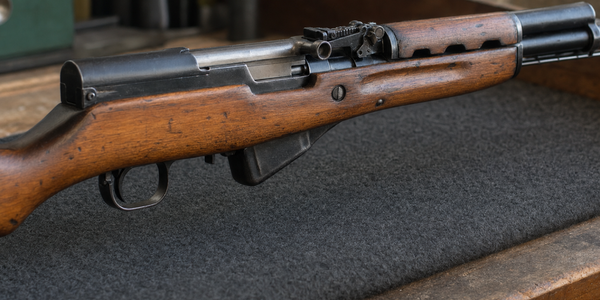
Public Safety Canada's own page says the federal government has banned more than 2,500 makes and models of so-called assault-style firearms since May 2020. It says the compensation program was developed to give eligible businesses and individuals a way to comply with the law. It also says participation in the program is voluntary, but compliance with the law is not.
That last sentence is doing a lot of work.
Individual owners and businesses must dispose of or permanently deactivate affected firearms before the amnesty period now runs to the SCC appeals + 90-day endpoint, or risk criminal liability for illegal possession of a prohibited firearm. This is not a symbolic newsletter signup. It is a state-backed deadline attached to property that many people lawfully acquired before the government changed the rules.
Budget 2025 puts the program inside an existing $742 million funding envelope. Public Safety says more than 67,000 firearms were declared by 37,869 owners during the individual declaration period. Earlier, the small Cape Breton pilot collected and destroyed 25 prohibited firearms.
Those numbers are not small enough to excuse thin reasoning.
They are exactly why the reasoning matters.
The strongest argument for the federal approach is straightforward: some firearms, in the government's view, are too dangerous for civilian circulation; removing them reduces risk; compensation gives owners a lawful path to compliance; and public safety justifies the burden. That is the argument Ottawa has chosen.
Fine. Then show the work.
The policy found the easiest people
The great convenience of licensed firearms owners is that they are visible.
They took the course. They applied for the licence. They passed the background check. They accepted continuous eligibility screening. They buy from businesses that keep records. They store, transport, register where required, and answer paperwork that most Canadians never see.
That visibility is often treated as if it proves policy relevance. It does not.
It proves only that the state can find them.
Statistics Canada's 2024 firearms and violent crime release gives the harder picture. Nationally, firearm-related violent crime declined from 2023 to 2024, from 37.6 to 36.0 incidents per 100,000 population. That is worth acknowledging. The same release says the 2024 rate was still 44% higher than in 2014. Toronto's rate reached its highest level in 15 years. StatsCan also reported that in 80% of firearm-related homicides in 2024 where the accused was known, the accused did not have a valid firearm licence for the classification used.
Then there is the repeat-offender problem. Nearly six in 10 people accused of firearm-related violent crime in 2024 had previous police contact for at least one violent crime from 2018 to 2024. Seventy per cent had recent police contact for a Criminal Code offence, excluding traffic offences.
That is not a small footnote. That is a flashing sign.
It does not mean lawful owners are beyond scrutiny. It does not mean diversion never matters. It does not mean every regulation is illegitimate. Canada is not the United States, and serious Canadian firearms owners know perfectly well that licensing, training, storage, transport, and classification are part of the system here.
The point is allocation.
When the measured problem is violent crime, gang-linked offending, repeat violent contact, illegal possession, and accused persons without the right licence classification, a program aimed at property held by already-licensed people needs a clear causal chain. It needs to explain how the object being taken connects to the harm being measured.
"We know where these owners live" is not a public-safety theory.
It is an administrative convenience.
New shooters see the bargain early
This matters for new shooters because the political weather is often the first thing they encounter.
Before a new PAL holder has learned which .22 ammunition their rifle likes, which range bag is too large, or why the cheapest optic is rarely the cheapest optic, they are already being asked to understand the handgun freeze, OIC prohibitions, the FRT, transfer language, amnesty orders, and compensation deadlines.
That is a strange welcome mat.
The ordinary public image of firearms ownership in Canada is usually some mixture of crime headlines, American culture-war spillover, and federal press language. The actual experience is much more boring: course dates, licence delays, club rules, range briefings, locked cases, safe storage, small parts, cold fingers, bad groups, better groups, and the slow realization that most competent shooters are quietly trying to become slightly less wrong.
That lawful culture can live with rules. It already does.
What it should not be asked to live with is policy that treats evidence as optional once the target population is easy enough to identify.
If Ottawa wants new shooters to believe the system is serious, the system should behave seriously. It should not ask them to accept that a $742 million program is a public-safety measure while the responsible department, according to an access-to-information response reported by the CTF, cannot produce analysis on the program's effect on crime or safety.
That is not how trust is built.
That is how cynicism gets its PAL.
Serious people measure before they conclude
At the reloading bench, guessing is expensive.
Not always dramatically expensive. Sometimes the cost is just wasted components, a useless range session, a chronograph string that tells you nothing, or 20 rounds built around a bad assumption. Still, the discipline is the same: label the brass, separate the batches, record the variable, change one thing at a time, and do not pretend the target confirmed a theory it did not test.
My bench is built around that kind of traceability. Labelled drawers. Cartridge-specific trays. Known process stages. The point is not that the gear looks organized. The point is that memory is a poor quality-control system.
Policy should not get a lower standard than handloading.
If a shooter says a rifle is half-MOA, the first question is "with what load, over how many groups, in what conditions?" If a company says its optic tracks, the first question is "how was it tested?" If a government says a firearms compensation program improves public safety, the first question should be just as ordinary: "show us the analysis."
That is not anti-government. It is pro-adult.
The people who support the federal program should want the same thing. If the policy is sound, evidence helps it. If the causal chain is strong, publish it. If the program is the best use of public money compared with border enforcement, gang investigations, bail reform, prosecution resources, or targeted action against repeat violent offenders, say why.
The silence is the problem.
Public safety is not a magic phrase
"Public safety" is one of those phrases that can either discipline an argument or smother it.
Used properly, it forces the hard questions. What harm are we trying to reduce? Who is causing it? Which intervention reaches that group? What does the evidence say? What is the opportunity cost? What happens if the money goes somewhere else? What do we measure after implementation?
Used lazily, it becomes a passkey.
Say "public safety" and the ordinary rules of proof are expected to step aside. The burden shifts to the person being regulated to explain why the policy is unfair, ineffective, or misdirected. The government gets the emotional high ground by default, and the licensed owner is left arguing from the low ground, holding the receipt.
That is backwards.
The state has the power here. It wrote the regulation. It set the deadline. It controls the program. It holds the budget. It decided which property moved from lawful to prohibited. It chose the language. It can compel compliance after the amnesty expires.
With that power comes the obligation to be specific.
Not perfect. Specific.
Nobody serious expects a government to produce laboratory certainty on a national crime problem. Crime data are messy. Firearm categories are messy. Police-reported data have limits. Policy sometimes has to move with incomplete information.
But incomplete information is not the same as no responsive analysis.
For a program of this scale, a reasonable public record should be able to answer basic questions: how many affected firearms were expected to be in lawful hands, how many were likely to be diverted into crime absent the program, how compensation and collection would change that risk, how the effect would be measured, and why this spending produces more public-safety value than alternatives aimed directly at violent offenders and illicit supply.
Those are not hostile questions.
They are the questions a serious program should have asked itself before launch.
The cheaper argument is not the better one
There is an easier way to defend the buyback.
Call the firearms "assault-style." Invoke mass shootings. Say communities will be safer. Thank participating owners. Treat anyone asking for the analysis as if they are arguing against safety itself.
That works in a press release. It should not work in a serious country.
Licensed owners know what it is like to be treated as the convenient surface for somebody else's anxiety. The pattern is now familiar. A criminal problem becomes a political announcement. A political announcement becomes a classification list. A classification list becomes a compliance burden. The burden falls most cleanly on people already inside the law because those are the people the law can reach without much effort.
Meanwhile, the harder work remains hard.
Illegal supply is hard. Organized crime is hard. Repeat violent offenders are hard. Border enforcement is hard. Prosecutions are hard. The parts of the problem that do not politely fill out forms are, inconveniently, the parts most relevant to public fear.
That is the allocation problem in one paragraph.
It is also why the CTF's access-to-information hook landed. You do not need to be a policy obsessive to understand it. If the government is spending this much money and imposing this much burden, the public-safety analysis should not be hard to find.
The cheque is real.
The evidence should be too.
Show the work
The fair position is not "no firearms regulation." Canada has firearms regulation. Serious owners operate inside it every day.
The fair position is not "nothing can ever be prohibited." Parliament and cabinet have legal powers, courts review them, and citizens can argue about whether those powers are being used well.
The fair position is simpler: when the government says a program aimed at licensed owners will make the public safer, it should produce the evidence in public, in terms ordinary people can understand, before spending the money and imposing the burden.
That is especially true for newer shooters, who are deciding whether this culture is worth entering at all. They should see a country where lawful ownership is regulated firmly and intelligently, not a country where the regulated population becomes a substitute for a measured crime strategy.
If Ottawa has the analysis, publish it.
If it does not, say that plainly and stop pretending confidence is the same thing as evidence.
Licensed owners have been asked to carry the burden. It is not too much to ask the government to carry the proof.
Sources
- Canadian Taxpayers Federation, Ottawa has no idea if its gun grab will make Canadians safer, May 12, 2026, accessed May 14, 2026.
- Public Safety Canada, Assault-Style Firearms Compensation Program, date modified April 21, 2026, accessed May 14, 2026.
- Government of Canada, Budget 2025, Chapter 4: Protecting Canada's sovereignty and security, "Removing Assault-Style Firearms from our Streets," accessed May 14, 2026.
- Public Safety Canada, Number of assault-style firearms declared by province and territory, date modified April 1, 2026, accessed May 14, 2026.
- Public Safety Canada, Declaration period for the Assault-Style Firearms Compensation Program closing with more than 67,000 firearms declared for compensation, April 1, 2026, accessed May 14, 2026.
- Statistics Canada, Firearms and violent crime in Canada, 2024, released April 21, 2026, accessed May 14, 2026.
- Public Safety Canada, Assault-Style Firearms Compensation Program Pilot: Lessons learned, accessed May 14, 2026.
The amnesty file is still moving.
If this piece sent you back to government pages, do not wait for the next portal, Gazette, or court move to find you by accident.
The Dispatch follows Public Safety, RCMP, Canada Gazette, court, compensation, collection, and amnesty updates so the next change comes with the source that moved.
Safety note: the tracker is a worksheet for source hygiene, not legal advice or a substitute for current official guidance.