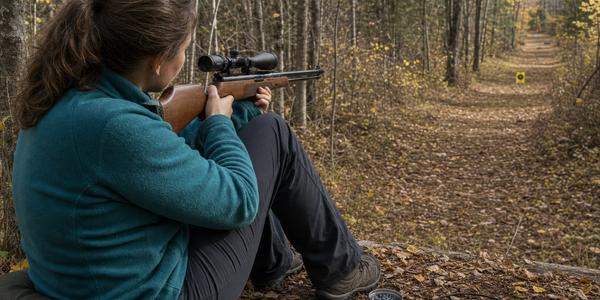
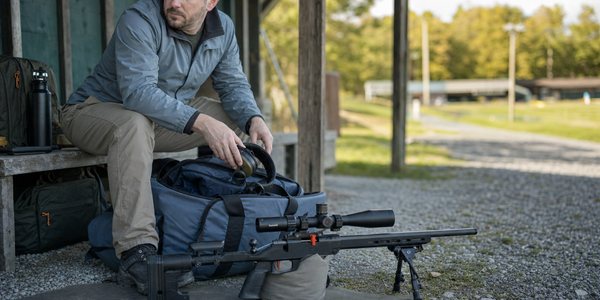
The target does not care what I *bought*
Accuracy is worth chasing. It is also very good at making expensive confidence look foolish, which might be the part of precision shooting I needed to learn most.

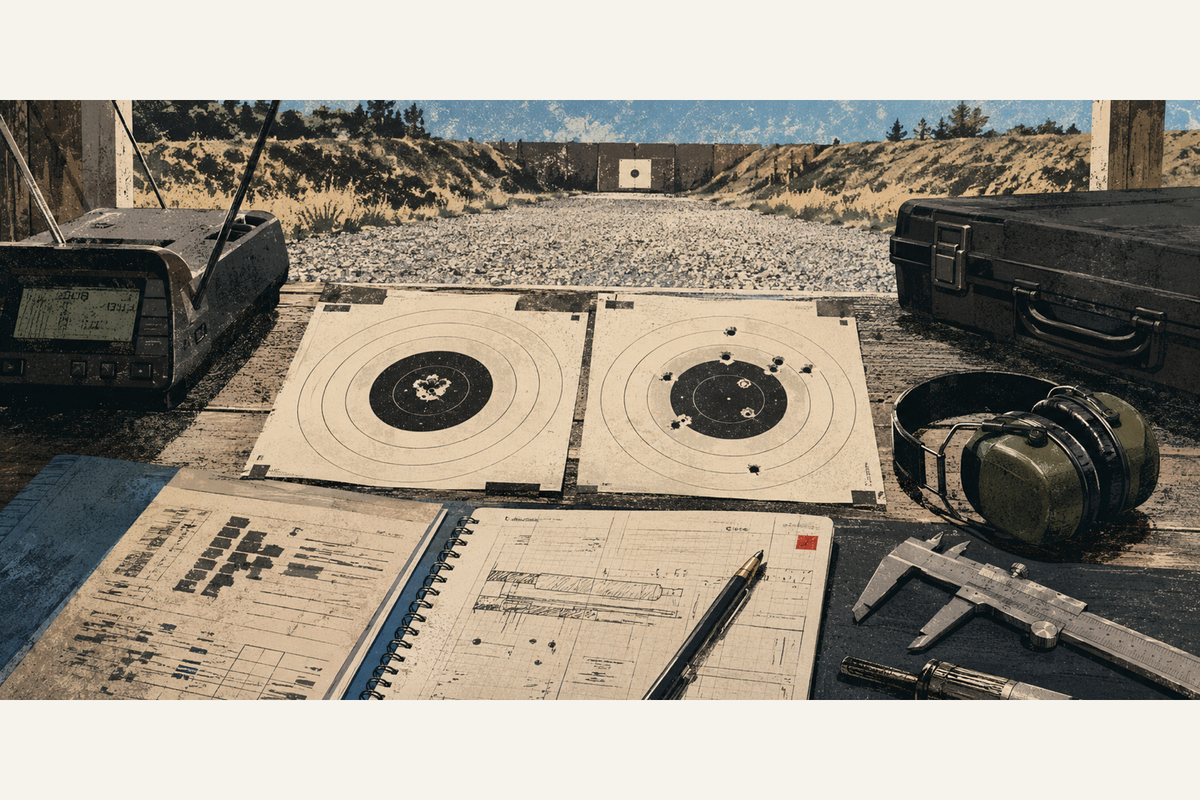
The target does not care what I bought.
That is rude, frankly. I have tried to make it care. I have tried with better rifles, better brass, better projectiles, better tools, better notes, and enough YouTube-adjacent anxiety to qualify as a minor medical condition. I have brought the target all the evidence of my seriousness.
It remains unmoved.
I started shooting less than a year ago, which is a dangerous sentence to write because it sounds like the preamble to a reasonable learning curve. Mine was not reasonable. I got interested, then serious, then fixated, then whatever the word is for looking at your reloading bench and realizing it has become a small manufacturing concern with lighting problems.
Accuracy got into my head early. Not "can I hit the paper?" accuracy. Not "can I make a rifle do normal rifle things?" accuracy. I mean the kind of accuracy where a good group briefly convinces you that you are becoming the person you meant to be, and a bad group makes you question whether your hands are independently sabotaging you.
This is not a gear review. It is not a load-development article. I am not publishing charge weights, seating depths, or a fake breakthrough I did not earn.
It is a confession from the 100-yard bench.
The shopping cart phase
I did what a certain kind of new shooter does when the bug bites hard: I tried to accelerate competence with equipment.
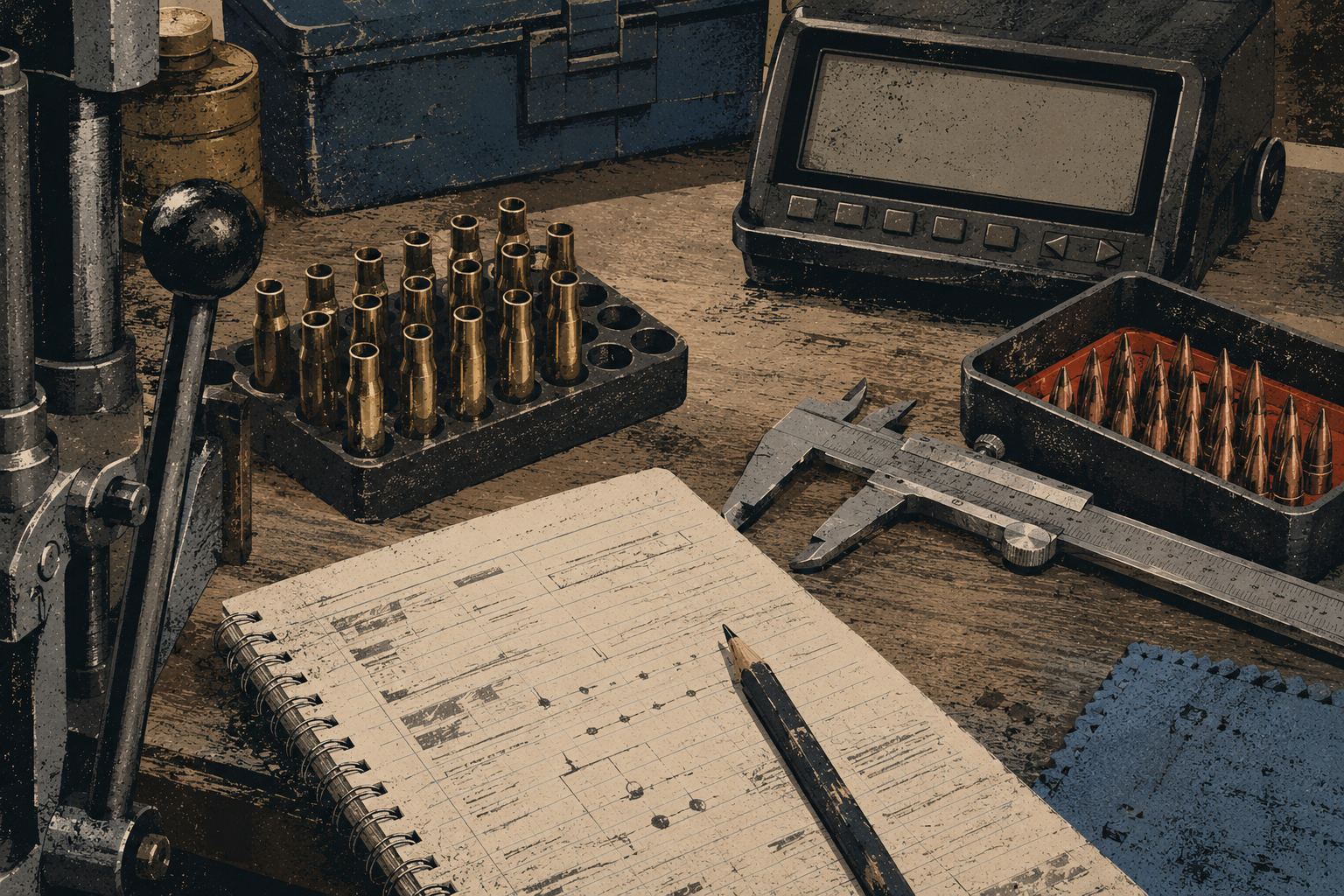
High-end rifles. Reloading gear. Then different reloading gear. Then better components. Then better brass. Then better projectiles. Then a chronograph, because apparently I needed my ammunition to disappoint me numerically as well as emotionally.
Some of this was rational. Better tools do matter. Better components do matter. Consistent brass, a decent projectile, sane case prep, and a load that is not being assembled by guesswork all help remove noise from the system. The chronograph is not a toy; it tells you when a load that looks good on paper is hiding velocity spread large enough to matter later. A rifle that is mechanically capable gives you a better chance of separating shooter error from equipment limits.
I believe all of that.
I also believe I went a little nuts.
There is a specific comfort in buying the next technical answer because it lets you postpone the less pleasant question: am I actually doing my part? A new die, a better scale, a different projectile, a nicer bag, another rifle, another optic, another range trip with a fresh theory. None of those things is automatically foolish. Some of them are excellent. Several of mine were excellent.
But the target has a talent for stripping away the romance.
Dan and the weekly interrogation
My favourite range officer at Stittsville Shooting Ranges is Dan, and I have probably asked him enough questions by now that he deserves either a consulting fee or a hidden exit route.
Stittsville is where a lot of this education has happened for me: the bench, the targets, the conversations, the little corrections, the quietly useful comments from people who have seen more shooters than I have fired rounds. The official range page lists rifle distances out to 200 yards on one range and 50, 100, and 300 yards on another, which is a tidy administrative way of describing a place where confidence is built and dismantled every weekend.
Dan has been one of those steady sources of range wisdom. Not mystical. Not performative. Just the kind of person who can give you a small practical note that lands harder than a 40-minute internet argument. I would ask him about groups, rifles, loads, technique, optics, bags, wind, and all the small things that seem too minor to matter until they are the only things left.
I wanted nuggets. That was the word in my head. I wanted one more nugget, then another, then another, as if the whole thing might eventually click into place if I collected enough of them.
Has it helped?
Probably. It would be silly to pretend otherwise. I know more than I did. My bench process is better. My notes are better. My ammunition is more consistent. My rifles are better understood. The questions I ask now are less embarrassing than the questions I asked at the beginning, which is not nothing.
But improvement is not the same thing as control.
That has been the difficult part to accept.
The same rifle, the same load, a different person
There are days when I shoot tight groups at 100 yards and leave the bench with the calm satisfaction of a man who has solved something.
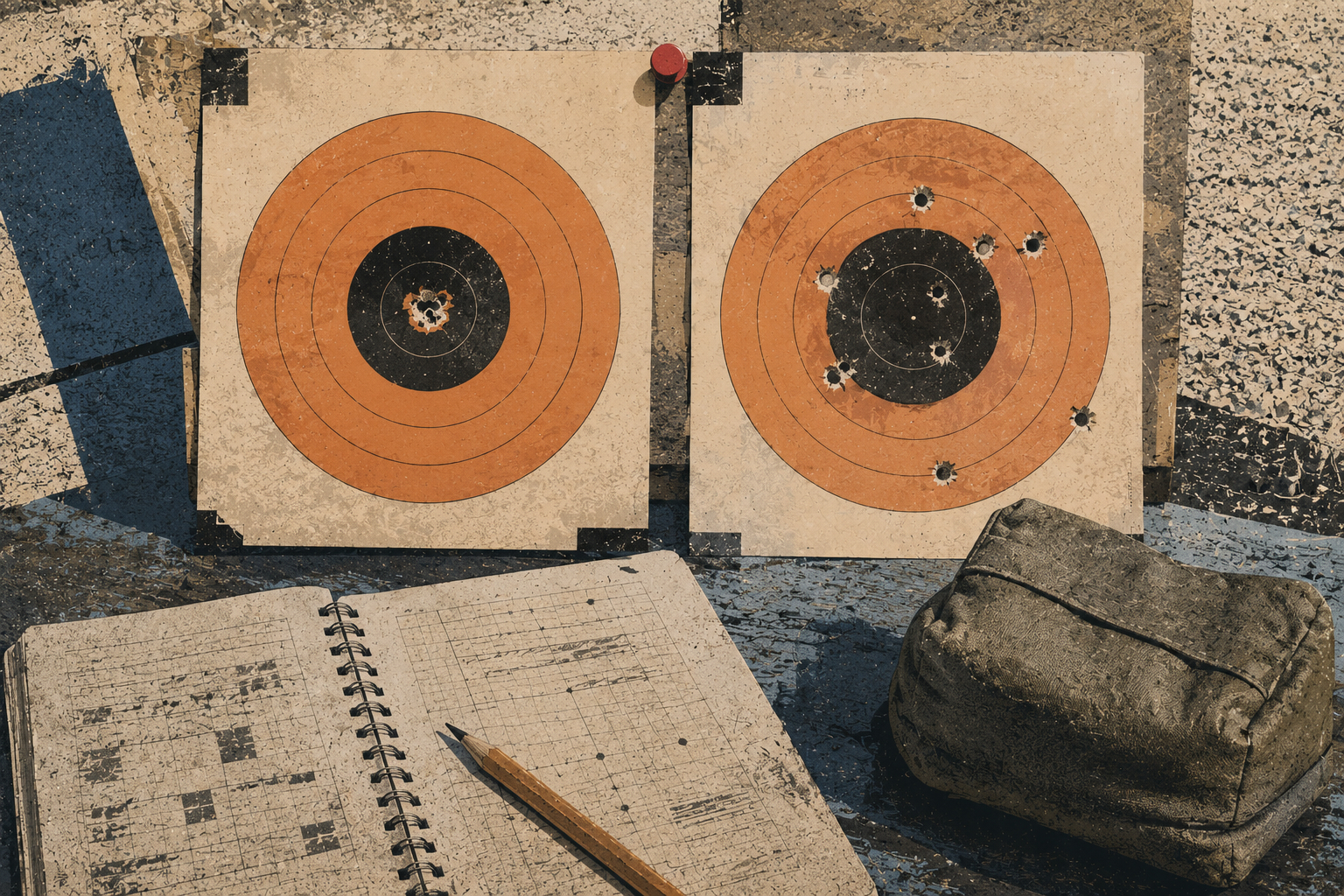
Then I come back the next week with the same rifle, the same load, the same distance, and apparently a different central nervous system. The group opens up. A shot leaks out. Then another. The target starts looking less like data and more like testimony.
The technical part of my brain immediately wants to hold court.
Was the load different? Was neck tension different? Did I seat something inconsistently? Did the barrel need cleaning? Was the bag position slightly off? Did the chronograph tell me something I ignored? Was the wind doing something I failed to see? Did the scope get bumped? Did I torque something wrong? Did I develop a new flaw between breakfast and the firing line?
Some of those questions are useful. Some are just anxiety wearing a lab coat.
The hard truth is that the shooter is a variable. Not in a sentimental way. In a real, mechanical, observable way. Trigger press, shoulder pressure, cheek weld, breathing, follow-through, position, patience, and the little internal twitch that shows up when a group starts going well and you suddenly become aware that you might ruin it.
That last one is my favourite, by which I mean I hate it.
A rifle can shoot. A load can shoot. A target can prove both. Then the person behind the rifle still has to show up that day in a shape capable of doing the same thing again.
Some weekends, I do.
Some weekends, the target files a complaint.
Confidence moves down the bench
I often bring multiple rifles to the range. Sometimes six. This is not the behaviour of a minimalist, and I accept that.
What I have noticed is how much the first rifle can set the tone for the rest of the morning. If the first one performs well and I perform well, the next rifle often behaves. Then the next one. Then the next. The confidence seems to move down the bench with me, like I am handing myself forward from calibre to calibre.
That sounds suspiciously unscientific.
Maybe there is a technical explanation. Maybe the conditions are good. Maybe I am setting up more carefully. Maybe my position becomes more consistent after the first string. Maybe I am reading the wind better, settling into the bags better, or simply paying more attention because the morning feels promising.
Or maybe the first good group lets me stop flinching at the idea of the next bad one.
That is the mental part I was slower to respect. I wanted accuracy to be hardware, ammunition, and method. Those are knowable. They can be bought, measured, improved, sorted, logged, and argued about. Confidence is more irritating. You cannot anneal it. You cannot trickle it to the kernel. You cannot order a box of 500 and sort by lot number.
But it is there.
On a good day, confidence is not swagger. It is quieter. It is the absence of extra noise. The rifle settles. The reticle movement looks familiar instead of threatening. A slightly imperfect hold does not turn into a panic event. A shot that lands where it should feels like confirmation, not surprise.
On a bad day, the opposite happens. The rifle feels alien. The bag is wrong. The trigger break is late. The target starts to feel personal, which is absurd because paper has no moral authority.
Still, there it is.
The guy at the next bench
There is another shooter I often see at the range. Let us call him Jeff.
I have learned a lot from Jeff, and I mean that sincerely. He is not a world champion. He is not pretending to be. But he has picked up practical things, and he has passed some of them along generously. I appreciate that.
Jeff also has a way of pushing. Technique. Equipment. State of mind. Consistency. Setup. Fundamentals. The whole stack.
Most of that advice is probably correct. That is what makes it annoying.
After a while, though, it started to wear on me. My range time began to feel less like range time and more like an exam I had failed before I opened the case. Instead of enjoying the work, I was measuring myself against an imaginary version of competence that kept moving farther away as I got closer to it.
That is a miserable way to enjoy a hobby.
It is also easy to slip into because shooting gives you a brutally simple artifact at the end of the process. The group is right there. You can circle it. Measure it. Photograph it. Send it to a friend. Stare at it in the passenger seat like it might confess under pressure.
The group feels like the truth.
It is a truth. That is different.
It tells you what happened in that string, under those conditions, with that rifle, that load, that setup, and that version of you. It does not tell you whether you belong at the range. It does not tell you whether the money was wasted. It does not tell you whether the whole project is foolish.
It certainly does not tell you whether the guy beside you is doing the sport correctly and you are not.
The budget rifle problem
There is always someone who can make the whole thing worse by doing more with less.
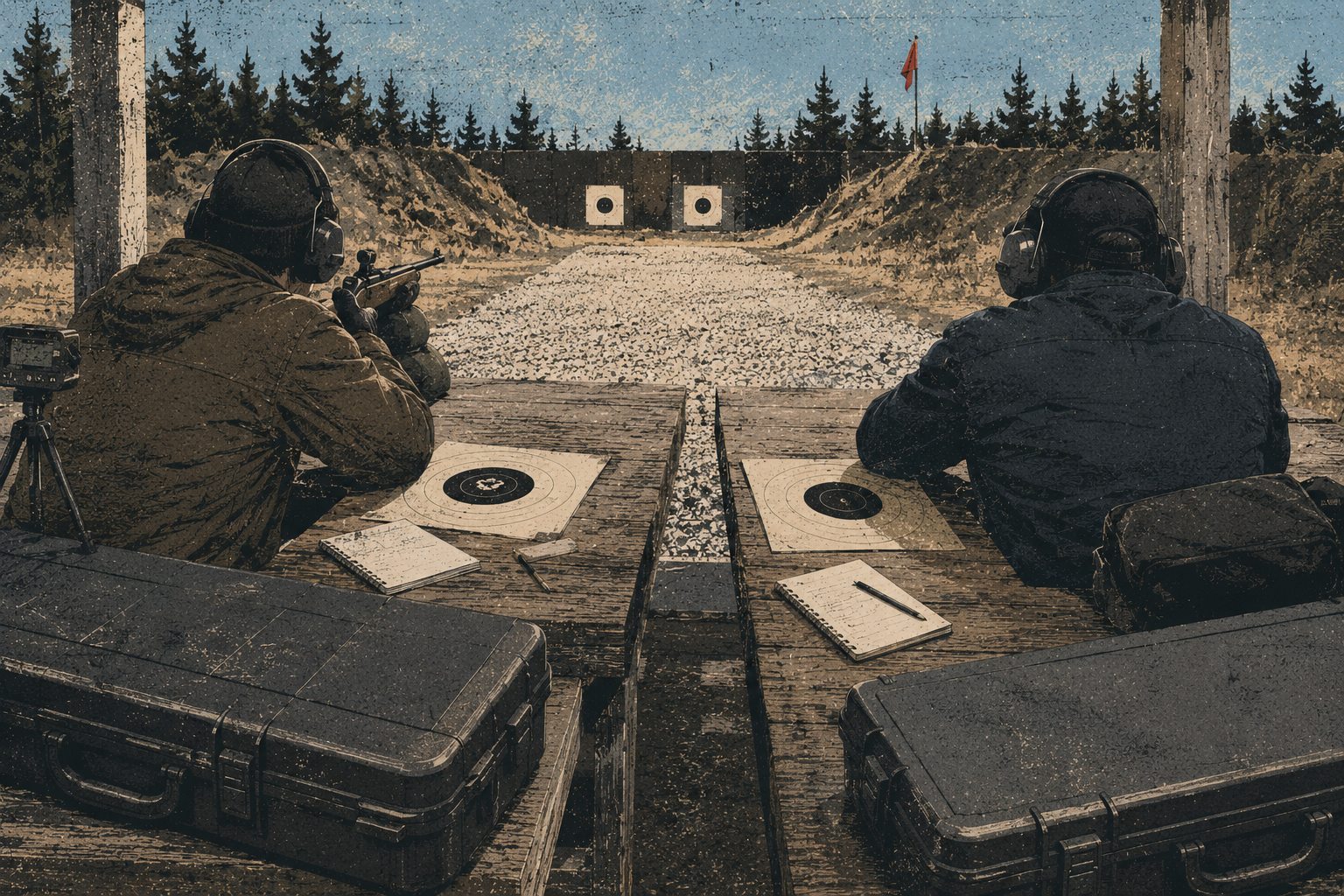
The guy two benches over has a budget rifle, factory ammunition, a bag that looks like it was bought in a hurry, and a calm little sub-MOA group that makes your expensive setup feel overdressed. He is not doing it to hurt you. He may not even know he is ruining your morning.
Meanwhile, you may be sitting there with a rifle that, by all rights, should be stacking holes. Good barrel. Good optic. Good brass. Good projectiles. Handloads assembled with enough ceremony to qualify for a small religious exemption.
And the target says no.
That is when comparison becomes poisonous. Not because other shooters cannot teach you. They can. Not because standards are bad. They are not. Not because sub-MOA does not matter. It matters if that is the work you are doing.
Comparison becomes poisonous when it turns someone else's good day into evidence against your own.
The better question is simpler: what am I trying to get out of this?
If the goal is to compete seriously, there is a path. It involves structured practice, better data, more discipline, match exposure, honest self-critique, and less romance about equipment. It is not mysterious. It is just work.
But if the goal is what it is for most people at the range - to learn, improve, spend time with rifles, enjoy the problem, and go home a little better than you arrived - then the standard has to leave room for being human.
That is not an excuse for sloppy shooting.
It is a defence of proportion.
Let the chase stay fun
I still care about accuracy. Deeply. Too deeply some weekends.
I still want the rifles to perform. I still want the loads to tighten. I still want the chronograph to show numbers that do not make me sigh. I still want the target to confirm that the time, money, notes, and attention are turning into something real.
That part has not changed.
What is changing is how much authority I give a bad day.
A poor group is information. It may be useful information. It may point to technique, setup, load consistency, wind, fatigue, impatience, or one of the hundred small things that live between a rifle that can shoot and a shooter who did. I should pay attention to it.
I just do not have to make it my identity.
The same is true in the other direction. A great group is satisfying. It should be. Stack a few shots into a small ragged hole and you are allowed to enjoy it like a civilized person for at least several minutes. But it is not a permanent promotion. It is a good group. Learn from it, smile at it, and then keep going.
That is where I have landed, at least for now.
Chase accuracy. Buy the good gear if you can afford it and it genuinely helps. Ask the range officer questions. Listen to the Jeffs, then decide which advice serves the kind of shooter you are trying to become. Build better loads. Take better notes. Be honest about your mistakes.
Then let the day be a day.
The guy beside you may shoot beautifully with a rifle that costs less than your optic. Good for him. You may shoot badly with a rifle that should know better. Fine. The target can tell you what happened.
It does not get to tell you whether the day was worth having.
Related Holdover Tools
Useful calculators and references from the same corner of the Holdover bench.
Sources
- Stittsville Shooting Ranges, Facilities, accessed May 11, 2026.
- Stittsville Shooting Ranges, Activities, accessed May 11, 2026.
Keep the range trip from becoming a guess.
If this piece has you thinking about actual load work, keep the range data tidy before you start comparing groups.
Use the Holdover Load Development Worksheet to record charge, velocity, group size, pressure signs, weather, and the repeat-test plan before you enter the data in the Load Development Plotter.
Safety note: the worksheet does not provide load data or recommend charge weights. Start from current published manuals and work carefully.