An August zero carries two temperatures
A cold-season zero changes through the powder and the atmosphere. Write both conditions down before November asks the rifle to prove them.

Precision. The zero in the notebook usually gets a distance and a turret value. The weather that produced it often disappears.
That gap matters in Canada. Ontario's 2026 moose tables put the earliest resident rifle season on September 19. Plenty of rifles being checked in August will be carried in October or November, after the temperature has moved far enough to change both the ammunition and the air around it.
The more time I spend thinking about useful work at 300 yards, the less I trust a naked turret number. A zero belongs to a day. The notebook should preserve enough of that day to rebuild the answer later.
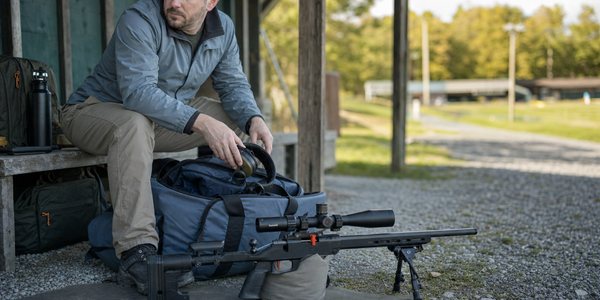
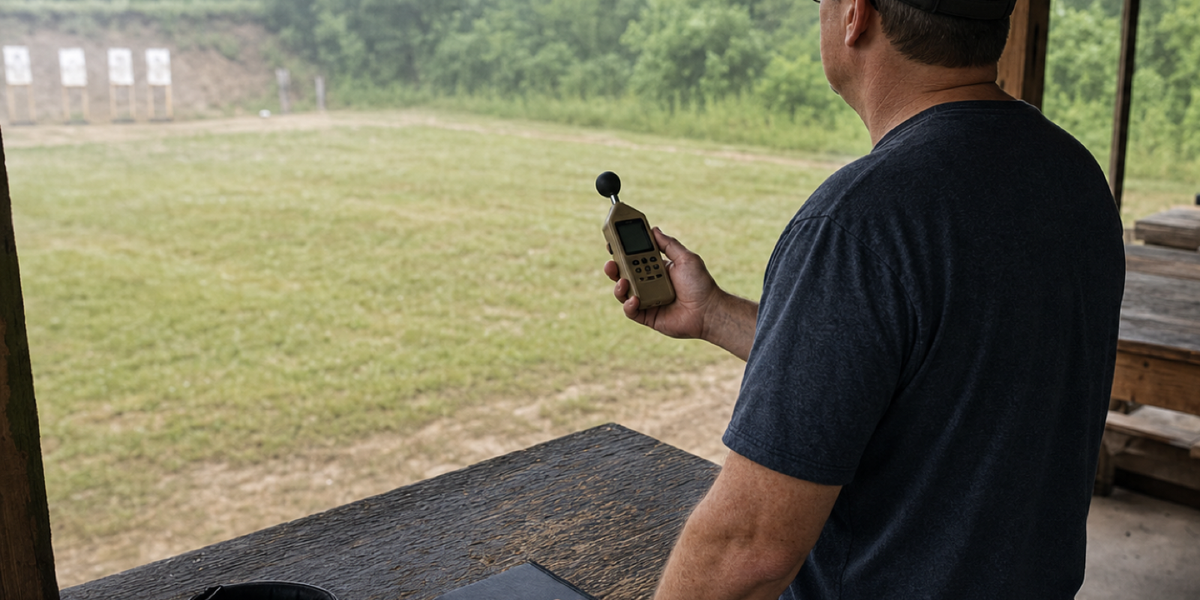
Holdover produced the feature as a fictional range-conditions check. The person, range, weather meter, and notebook are generic and do not depict Steve's equipment or a documented session.
The powder has its own temperature
Hodgdon's current reloading education page describes its Extreme powders as designed to limit velocity changes across hot and cold conditions. The company also keeps an older first-party comparison PDF on its site. In the .308 Winchester table, Hodgdon reports an 8 fps extreme velocity spread for Varget and 114 fps for Winchester 748 across 0 F to 125 F.
Those figures belong to Hodgdon's cases, primers, bullets, charges, and test equipment. The PDF carries a 2012 footer. It works as a demonstration of the size of the powder variable inside one controlled comparison. It cannot predict the exact change in another rifle or a different component lot.
The practical lesson survives the caveat. Propellants can respond differently to temperature. A handloader choosing a powder with a published stability claim can reduce one source of seasonal movement. A factory-ammunition shooter can learn the same thing by recording velocity in warm and cold conditions.
That makes temperature stability a useful buying criterion when the rifle has a real cold-season job. Start with current published load data for the exact cartridge and component combination, then treat the stability claim as one property among pressure, accuracy, availability, and consistency. The last 30 fps on a warm development day may carry less value than a load that behaves predictably across the months when the rifle leaves the safe.
Factory ammunition deserves the same discipline. Keep the lot number with the zero record. A later box with a different lot can move velocity before the weather gets a vote. The notebook should make that change visible instead of asking the scope to absorb every unknown.
The atmosphere keeps moving
Temperature-stable powder addresses the launch. The bullet still flies through the air of the day.
The U.S. National Weather Service gives the dry-air relationship as density equal to pressure divided by the gas constant and absolute temperature. Hold pressure constant and air at -15 C is about 15.9 per cent denser than air at 26 C. Real range conditions also move through pressure and humidity, so that comparison describes the mechanism rather than a complete firing solution.
Denser air creates more drag. Distance decides how much the change matters. At common shorter woodland distances, field position, wind, and the rifle's own dispersion may swallow the atmospheric difference. Farther out, the missing weather inputs earn more weight.
Hornady's current 4DOF page pairs its solver with onsite environmental measurements for exactly this reason. A ballistic profile built with August conditions can produce a clean, precise answer to the wrong November question.
Give the zero a proper record
The fix fits in five lines:
- Record the date, distance, and point of aim.
- Record air temperature at the firing point.
- Record station pressure, the actual pressure at the range rather than the
sea-level-corrected number from a weather report.
- Record humidity and wind well enough to recognize the day later.
- Record the factory lot or handload that produced the group.
That list asks little of a shooter. A small weather meter can supply the environmental fields. A phone can do the same job when the source and pressure setting are understood. The useful part is consistency: the summer zero and the cold confirmation need the same kind of record.
This also improves how the rifle gets blamed. A lower cold impact can come from muzzle velocity, the atmosphere, the shooter, the support, or some combination of them. Conditions in the notebook give the owner somewhere sensible to start before touching hardware.
Confirm the season you plan to use
A rifle already zeroed with a repeatable process needs a small cold check rather than a fresh load-development project.
Use the same ammunition. Let the rifle and ammunition reach the outdoor conditions. Update the solver with the current temperature, station pressure, and humidity. Fire a careful confirmation group at the distance that matters to the season.
Three rounds can show whether the group remains near the expected point of impact. They cannot characterize full dispersion or establish a powder's temperature coefficient. Holdover's earlier look at how 15 rounds are split explains why a flattering small group carries limited statistical weight. The cold check has a narrower job: catch a useful seasonal shift before the field does.
If the group lands where expected, the August zero gains context. If it moves, the record helps separate a solver-input problem from a rifle problem. Either answer costs fewer rounds than guessing through the season.
Write the weather beside the zero. Then give the rifle one cold morning to answer back.
Set up the bench before the first mistake.
If this piece has you thinking about a first reloading bench, slow the buying part down and make the safety/process part visible.
Use the Holdover Reloading Bench Setup Checklist to track manuals, press, dies, scale, calipers, case prep, labels, storage, bench layout, safety routine, and what still needs an experienced second look.
Safety note: the checklist does not provide load data, recommend charge weights, teach reloading, or replace current published manuals, manufacturer instructions, qualified instruction, or applicable law.