Twenty-four handguns, wrong target
Halton police found 24 U.S.-sourced handguns in a trafficking file. Ottawa should notice the difference between a criminal pipeline and licensed-owner paperwork.

Update, June 9, 2026. Public Safety Canada has extended the relevant amnesty period. The old the former fixed deadline date referenced below is no longer the operative expiry; the amended expiry is 90 days after the Supreme Court of Canada renders its decision.
Opinion. Halton police just gave Ottawa the argument it keeps walking past.
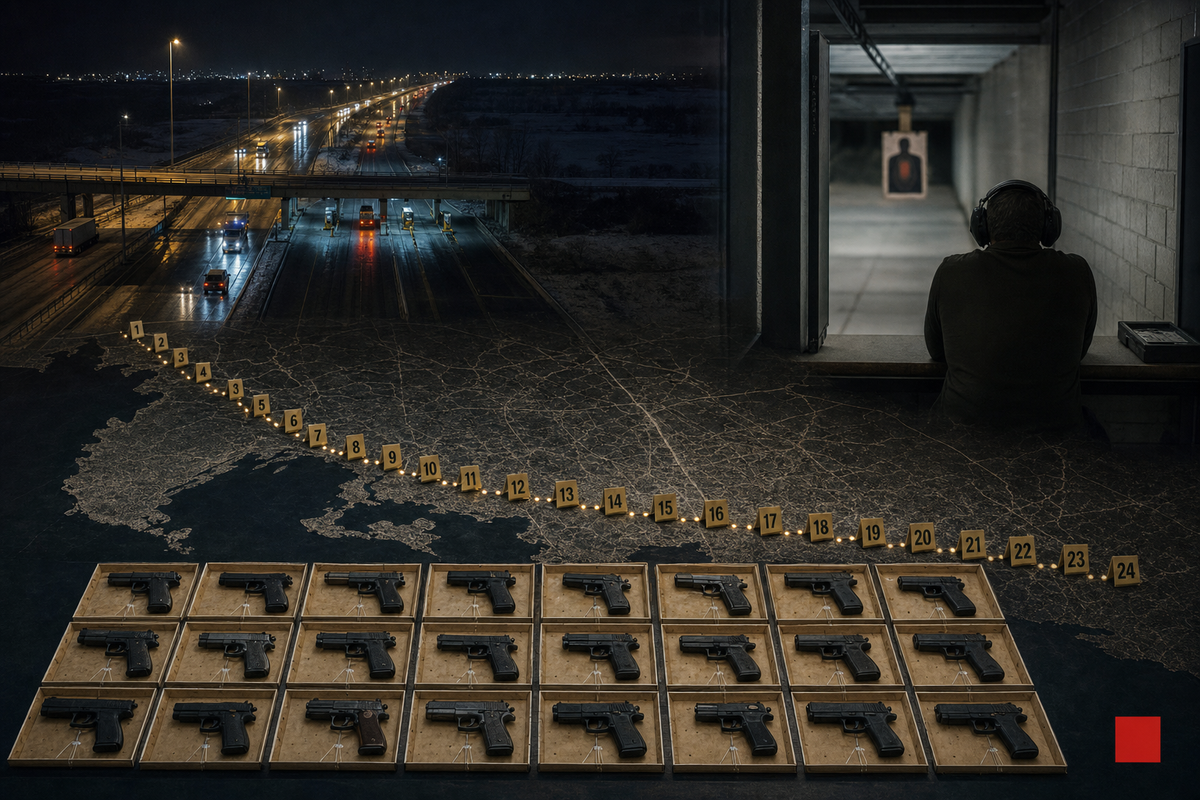
Project Cyprus, announced May 19, was the largest firearms seizure in Halton Regional Police Service history. Police say a six-month drug-trafficking investigation across Halton, Toronto, York, and Durham led to 75 judicial authorizations, nine search warrants, four arrests, and 24 seized handguns.
Investigators also reported 20 prohibited over-capacity magazines and ammunition, 16.5 kilograms of cocaine, more than 16,000 Oxycodone tablets, liquid Hydrocodone, liquid Codeine, and more than $375,000 in bundled Canadian currency and cryptocurrency.
Then comes the line every federal firearms policy writer should be forced to read slowly before opening another spreadsheet: police confirmed that all 24 handguns originated in the United States.
That is the crime-gun problem Canadians keep being sold. Not a theory. Not a slogan. Not a rural owner with a clean PAL and a safe full of legally acquired property. A multi-region trafficking file. Drugs. Money. Prohibited devices. Handguns moving through criminal networks from outside the country.
That is where the target is.
Project Cyprus aimed at the actual pipeline
Nothing about this seizure should make lawful owners defensive about police work. Good investigations into trafficked handguns are exactly what the public expects. If officers disrupt a network moving guns and drugs across the GTA, that is public safety with the muzzle pointed in the right direction.
The useful distinction is pipeline versus paperwork.
Project Cyprus was aimed at people accused of trafficking, unauthorized possession, prohibited devices, drugs, and proceeds of crime. That is a very different world from the one occupied by licensed owners trying to understand whether their property has been reclassified, frozen, listed, declared, compensated, deactivated, exported, or orphaned by regulation.
I spend most of my shooting life in the boring, lawful version of the sport: range benches, target cards, chronograph numbers, model names, torque settings, and the private humiliation of learning that expensive gear will not save a poor wind call. The paperwork is always nearby. Exact names matter. Dates matter. Classifications matter. Current sources matter.
That is compliance culture. It is not a trafficking network.
The federal debate keeps treating the two as if they belong in the same moral photograph. They do not.
The other world is paperwork
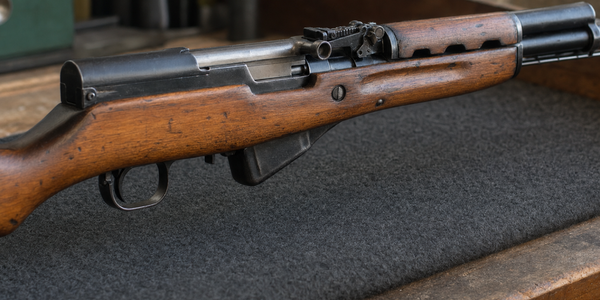
Public Safety Canada's Assault-Style Firearms Compensation Program page says the federal government has banned more than 2,500 makes and models of "assault-style" firearms since May 2020. It says the individual declaration period has ended, collection and compensation are expected to run from spring to early fall 2026, and the amnesty period now runs to the SCC appeals + 90-day endpoint. The page also makes the pressure clear: participation in compensation may be voluntary, but compliance with the law is not.
That is the world Ottawa built for licensed owners.
It is a world of program pages, amnesty orders, model lists, eligibility windows, inventory problems, and owners waiting to be told what happens next to property the state already knows how to find. Retailers get pulled into it. Ranges feel it. New PAL holders learn it before they even figure out what kind of shooting they actually enjoy.
Meanwhile, Halton police say the seized handguns in Project Cyprus came from the United States.
There is the contrast. One file is about a criminal supply chain. The other is about a regulated-owner compliance chain. Ottawa keeps spending its public-facing energy on the second one because the second one is legible. Licensed owners have names, addresses, licence numbers, purchase records, club memberships, transfer histories, and a bad habit of answering government mail.
The illicit side is harder to count, harder to reach, and harder to make into a clean press conference.
So the compliant side gets the machinery.
Visibility is not risk
This is the conceptual mistake at the centre of the OIC and buyback era. Ottawa keeps confusing visibility with risk.
Licensed owners are visible because the system was designed to make them visible. They took the course. They got the licence. They submitted to screening. They learned storage rules. They bought from businesses that keep records. Some owned restricted firearms that were already registered. Many are now reading federal pages to understand what they can no longer use, sell, move, or reasonably plan around.
That visibility is being treated as policy opportunity.
New shooters should pay close attention to that distinction. If you are coming into the sport now, you will hear a lot of big language around "gun violence", "assault-style firearms", and "community safety." Some of it will be attached to real criminal files like Project Cyprus. Some of it will be attached to lawful owners and regulated property because that is the part of the system easiest to administer.
Do not let the language blur the categories.
If the evidence says handguns are being trafficked from the United States through organized networks, then serious policy follows that route: border enforcement, intelligence, prosecution, repeat violent offenders, smuggling methods, criminal money, and the people building a business out of moving guns and drugs.
If the policy instead spends its visible force on people already inside the licensing system, then it may be busy without being well aimed.
That is not a subtle difference. It is the whole argument.
Aim at the pipeline
There is a tired little trick in Canadian firearms politics where licensed owners are expected to pre-apologize every time criminals commit crimes with guns. Project Cyprus is a useful antidote to that nonsense because it describes the problem plainly.
Police did not announce a six-month investigation into a precision rifle match. They did not find a handloading bench, a range bag, a stack of scored targets, and a guy trying to convince himself his last flyer was "probably the wind." They targeted a trafficking network and found handguns, prohibited magazines, drugs, and money.
That matters because policy should follow evidence.
The country already has one of the more demanding licensing systems in the democratic world. The people who entered through the front door do not become the threat because the back door remains open.
Halton's seizure deserves credit because it was aimed at the back door.
Ottawa should notice.
If the evidence points to a criminal pipeline, aim at the pipeline. If the guns are coming from the United States, say that clearly and resource the answer accordingly. If the file involves trafficking, prohibited devices, drugs, and cash, keep the argument there.
Do not turn around and present licensed owners as the nearest available target because their names are already in the filing cabinet.
Twenty-four U.S.-sourced handguns should make the policy conversation sharper, not sloppier.
Aim at the pipeline, not the paperwork.
Sources
- Halton Regional Police Service, "Project Cyprus: Largest Firearms Seizure in HRPS History", May 19, 2026, accessed May 20, 2026. https://www.haltonpolice.ca/news-releases/posts/project-cyprus-largest-firearms-seizure-in-hrps-history/
- CityNews Toronto, "Halton police dismantle drug and gun network in largest firearms seizure in service history", May 19, 2026, accessed May 20, 2026. https://toronto.citynews.ca/2026/05/19/halton-police-drug-gun-network-project-cyprus-arrests/
- Public Safety Canada, "Firearms Buyback Program - Assault-Style Firearms Compensation Program", page details April 21, 2026, accessed May 20, 2026. https://www.canada.ca/en/public-safety-canada/campaigns/firearms-buyback.html
- Canada Gazette, Part II, "Order Amending Certain Orders Made Under the Criminal Code", October 22, 2025, accessed May 20, 2026. https://gazette.gc.ca/rp-pr/p2/2025/2025-10-22/html/sor-dors208-eng.html
The amnesty file is still moving.
If this piece sent you back to government pages, do not wait for the next portal, Gazette, or court move to find you by accident.
The Dispatch follows Public Safety, RCMP, Canada Gazette, court, compensation, collection, and amnesty updates so the next change comes with the source that moved.
Safety note: the tracker is a worksheet for source hygiene, not legal advice or a substitute for current official guidance.