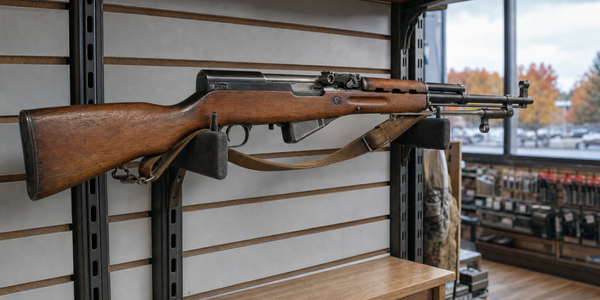
Ammunition storage at the *dwelling door*
Canada gives ammunition stored inside a dwelling a different set of requirements from a separate storage unit. Access, ignition hazards and moisture each need their own answer.

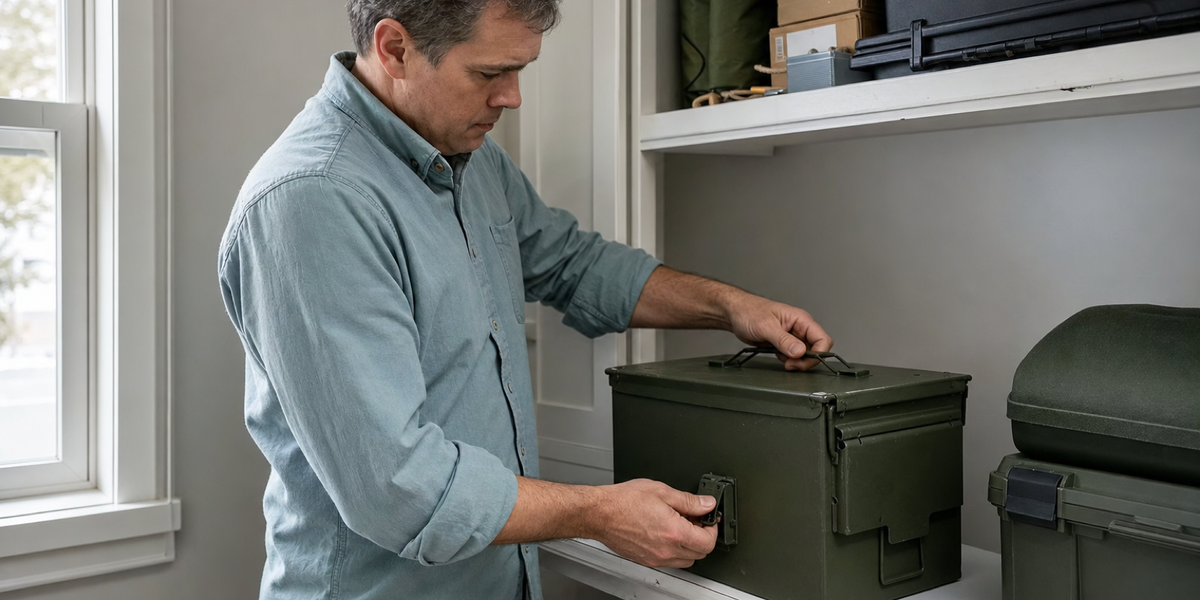
An ammunition box on a household shelf gives an owner several things to check: the contents, the latch, the damp corner that seemed dry in February. Canada's federal explosives rules add a question about the shelf itself. A container inside a dwelling falls under a different storage provision from one in a separate storage unit.
My own ammunition stays in locked, humidity-controlled boxes. That is a useful piece of the arrangement to get right. Reading the storage provisions also means looking beyond the container, at the building and the people who can reach it.
Section 281 of the Explosives Regulations, 2013 separates those two locations. Its dwelling subsection has two sentences. The storage-unit subsection has ten operative lettered paragraphs. The difference deserves a place in an owner's storage decisions alongside the moisture-control purchase.
Inside the dwelling
Section 281(1) addresses two things: separation from flammable substances and ignition sources, and access. It says people whom the user has not authorized must not receive unlimited access to the cartridges.
That wording gives the owner an actual responsibility to manage access. The subsection sets no numerical separation distance, humidity percentage, or particular model of ammunition container. Those omissions leave judgement to the owner; they also make it easy to read more certainty into a storage product than the text provides.
The location has a defined boundary. Section 6(3) describes a storage unit as an unlicensed building, structure, place, or container used to store explosives, while excluding dwellings and the structures, places, or containers inside them. Natural Resources Canada gives a house, apartment, or cottage as examples of a dwelling.
A cabinet inside the living space therefore belongs to the dwelling discussion. A separate shed used for unlicensed ammunition storage belongs to the storage-unit discussion. An ambiguous space, such as an attached garage, calls for advice about the actual building and arrangement. The wording alone does not settle every property.
Here, the licence discussed in the explosives provisions is an explosives-storage licence. A reader should keep that separate from the firearms-licensing requirements that govern ammunition purchases.
The separate storage unit
Section 281(2) adds requirements for the unit and its surroundings. It calls for a clean, dry interior, weather protection, and construction and maintenance that prevent unauthorized access. The unit must be attended while unlocked. The exits must remain usable, with the exact provision depending on whether the unit is a container.
The section specifies non-sparking shelving, giving wood and painted metal as examples. It also requires separation between ammunition and certain other explosives stored with it, and precautions against ignition or fire in or near the unit.
Then comes the sign. The unit needs a clearly visible bilingual fire-hazard warning and a no-smoking prohibition, with the required lettering or symbol at least 10 centimetres high. Anyone making that sign should follow the exact wording in paragraph 281(2)(j).
Those are physical obligations an owner can compare with a real storage space. A weatherproof box is one component of the arrangement. The regulation also reaches the unit's location, access, shelves, exits, and warning. For a proposed move into a shed, reading the full subsection early can reveal work the move will require.
I can support rules that identify a hazard and make the required precaution readable. Owners benefit when the requirement stays close to the thing they can inspect or change. A dwelling and a detached storage space pose different practical questions, even when the same ammunition box moves between them.
The firearm beside the ammunition
The explosives provision is one part of the federal picture. The Storage, Display, Transportation and Handling of Firearms by Individuals Regulations govern the stored firearm as well.
For an ordinary non-restricted firearm, section 5 includes a condition about readily accessible ammunition. The exception permits the firearm and ammunition to share a securely locked container or receptacle that meets the specified strength and break-in-resistance conditions. The firearm's other storage requirements still apply.
An owner assessing an arrangement needs to read those conditions together. Describing a locked ammunition box as the whole federal rule would leave out the firearm alongside it. Conversely, the shared-container exception means a blanket claim that federal law always demands a different room or separately locked ammunition would misstate the provision.
This is why a useful storage discussion needs to name the rule it is explaining. The firearm, the cartridges, and the location can each bring a different requirement into the same room.
Moisture still matters
A dwelling subsection without a humidity percentage leaves the preservation question open. The Sporting Arms and Ammunition Manufacturers' Institute addresses it in its storage and handling leaflet.
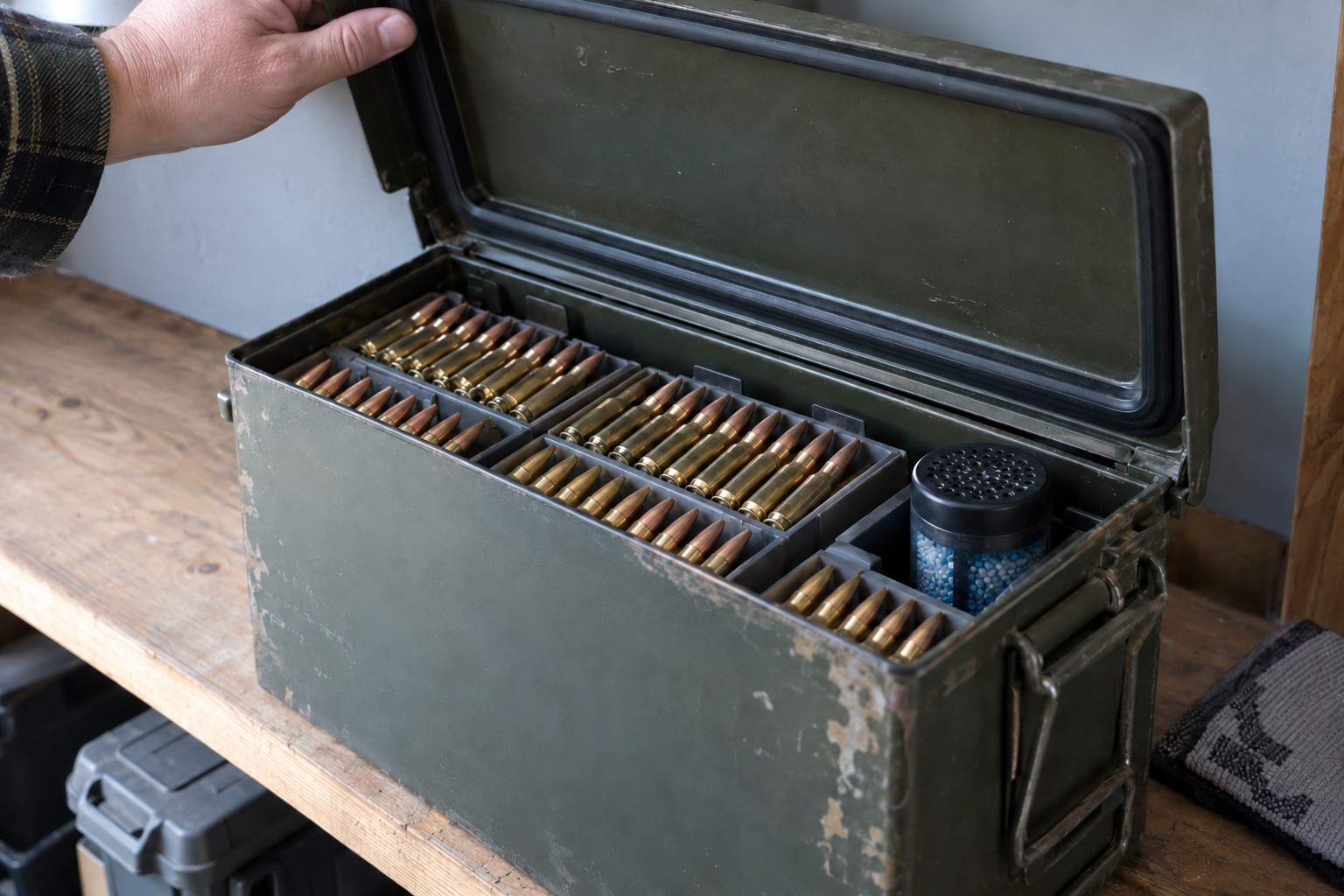
SAAMI warns that extended exposure to high temperatures or high humidity can damage ammunition. It recommends a cool, dry location away from solvents, other chemicals, heat sources, and open flames. Its packaging recommendation covers original packaging or packaging designed for the purpose. These are industry recommendations, distinct from the Canadian provisions above.
The leaflet also advises against leaving ammunition in a vehicle or trunk on a hot day. Heat and moisture both deserve attention when choosing a storage location, including a place used between the shop, home, and range.
My humidity-controlled boxes address a real preservation concern. The wider storage decision still includes their location, nearby ignition hazards, and access. I want those questions answered alongside one another, with the relevant provision open and the actual arrangement in view.
Sources
- Explosives Regulations, 2013, sections 278-281, Justice Laws, retrieved September 14, 2026; page states current to July 21, 2026 and last amended May 3, 2024.
- Explosives Regulations, 2013, section 6, storage-unit definition.
- Buying, selling and storing ammunition, Natural Resources Canada.
- Storage, Display, Transportation and Handling of Firearms by Individuals Regulations, including section 5.
- Recommendations for Safe Ammunition Storage and Handling, SAAMI, leaflet dated October 2016, retrieved from its current official website.
The amnesty file is still moving.
If this piece sent you back to government pages, do not wait for the next portal, Gazette, or court move to find you by accident.
The Dispatch follows Public Safety, RCMP, Canada Gazette, court, compensation, collection, and amnesty updates so the next change comes with the source that moved.
Safety note: the tracker is a worksheet for source hygiene, not legal advice or a substitute for current official guidance.