What a Seattle filing shows about the Tumbler Ridge *firearms*
An FBI affidavit describes alleged access to a family safe, ammunition and an SKS. The Canadian record still needs a firearm-by-firearm chronology.

An FBI affidavit filed in Seattle gives a new account of how the Tumbler Ridge shooter allegedly obtained firearms and ammunition. It describes claims about a family gun safe, an ammunition purchase by another person, and an SKS previously confiscated by police. Those details sharpen the questions Canadian investigators still need to answer about access.
U.S. prosecutors announced the charge against James Cody Bryant, 30, of Bellingham, Washington, on October 6. He faces an allegation of conspiracy to murder persons in a foreign country and is presumed innocent. Eight victims were killed in the February 10 attack: two at a home, followed by an educational assistant and five children at Tumbler Ridge Secondary School.
In September, Holdover called for a staged public account of how the firearms reached the shooter. The new American filing supplies additional allegations to examine. The RCMP's response explains why the Canadian account remains incomplete.
What the affidavit says about access
The 41-page complaint, filed October 2, includes an FBI agent's account of interviews, messages, and other investigative material. Its access passages need careful attribution.
According to the affidavit's account of a March 3 interview, Bryant said the shooter had told him, roughly six months before the attack, that she had taken guns and ammunition from her family's safe and hidden them in her room. He also said she told him she had persuaded another person to buy ammunition for her. These are statements investigators attribute to Bryant about what the shooter told him.
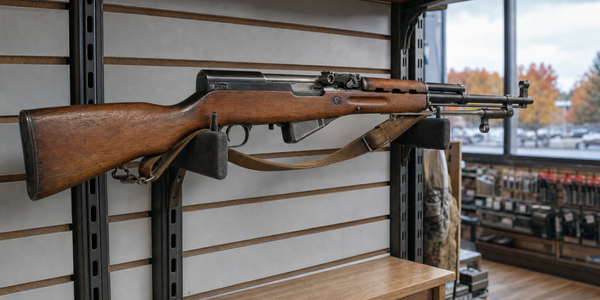
The affidavit separately quotes a late-December Discord message in which the shooter said police had confiscated her SKS and disturbed its sight setting. The quoted conversation describes subsequent use of that rifle. It does not establish which police force seized it, the legal authority, the date of seizure, or the process through which she regained access.
Those distinctions limit the conclusions readers can draw. A charging document sets out the prosecution's allegations. The public material leaves the access sequence, the identity of each firearm used, and the earlier police decisions to be reconciled.
The Canadian account has narrower wording
The RCMP's February 13 statement said the shotgun believed used at the residence had never been seized by police. It said the main firearm believed used at the school had never been seized by the RCMP, and its origin remained unknown at that time. Police also described recovering a long gun and a modified rifle at the school.
The affidavit's SKS passage cannot settle whether that rifle matches any of those descriptions. Readers need an identification and chronology from investigators before judging whether the two accounts conflict. Filling the gap with an imagined route through the home, vehicle, or school would add a story the sources have yet to establish.
On October 6, Assistant Commissioner Elija Rain said police had withheld some answers to protect investigations in Canada and the United States. He described more than 90 interview statements and said further Canadian charges remained under active consideration.
That explanation deserves weight. Public disclosure can affect an active investigation. The new affidavit also gives the public specific access claims to follow, making a later Canadian explanation more useful if it addresses the same sequence.
The rules around access and return
Canadian law already provides several routes for intervention. The relevant question is which route applied, what information authorities had, and how they used it.
Criminal Code section 117.04 allows a warrant based on safety concerns and permits seizure without one in specified urgent circumstances. Under section 117.05, police seeking a decision on the seized items must apply to a justice within 30 days of executing the warrant or making a warrantless seizure. The justice considers whether possession would be desirable in the interests of safety.
Section 117.06 addresses return where no timely application is made or the justice does not make the adverse safety finding. The affidavit does not establish that these provisions governed the SKS seizure it describes. A conclusion about that decision needs its actual record.
Storage and ammunition access raise separate questions. Section 5 of the storage regulations sets conditions for non-restricted firearms, including unloaded storage, prescribed locking or disabling arrangements, and ammunition accessibility. The phrase “family safe” tells us too little to assess compliance. Section 86 of the Criminal Code also addresses careless storage and reasonable precautions for others' safety.
For an ordinary ammunition transfer, section 25 of the Firearms Act requires the recipient to hold a licence authorizing firearm possession. Criminal Code section 101 supplies the transfer-without-authority offence. The allegation that somebody bought ammunition leaves open who that person was and what actually happened afterward.
An owner's reason to want the record
I own a surplus SKS, so the model name catches my attention. My judgement is that licensed owners should support effective intervention where evidence shows a person poses a risk, with fair procedures and decisions that can be examined afterward.
A strong argument for tighter controls starts with the same concern: a person gained access to firearms despite warning signs and prior intervention. That deserves an evidence-led response. The access history can help show whether authorities needed better information, different powers, or better use of existing ones. It can also prevent an untested assumption about one firearm model from doing the work of an investigation.
I want the Canadian account to explain who seized the SKS described in the messages, what happened next, and how each recovered firearm reached the shooter. Investigators may need to defer answers while potential charges remain active. As they release information, a dated chronology would let families, owners, and other readers assess each decision against what was known at the time.
Sources
- U.S. Department of Justice, October 6 announcement and criminal charge
- United States v. James Cody Bryant, complaint and affidavit, October 2, 2026, case 2:26-mj-00618-BAT (PDF)
- BC RCMP, October 6 statement
- BC RCMP, February 13 investigative update
- Criminal Code, sections 117.04, 117.05, 117.06, 86, and 101
- Firearms Act, section 25
- Storage, Display, Transportation and Handling of Firearms by Individuals Regulations, section 5
The amnesty file is still moving.
If this piece sent you back to government pages, do not wait for the next portal, Gazette, or court move to find you by accident.
The Dispatch follows Public Safety, RCMP, Canada Gazette, court, compensation, collection, and amnesty updates so the next change comes with the source that moved.
Safety note: the tracker is a worksheet for source hygiene, not legal advice or a substitute for current official guidance.